Building Blocks of Matter
Take the Subway
Mendeleev Was Here
Lets Get Quantitative
Mixed Bag
100
All Matter is made of these.
What is an Atom
100
These are the 3 subatomic particles
What are protons, neutrons, and Electrons
100
Organizes all the known elements
What is the periodic table of elements?
100
This is how you determine atomic mass/weight
What is add protons and neutrons?
100
The only subatomic particle not considered to have mass.
What is the electron?
200
This law is the reason that all chemical reactions must be balanced
What is the Law of the Conservation of matter?
200
The only subatomic particle with no charge
What is the neutron?
200
The atomic number of Neon
What is 10?
200
What is the atomic number of an atom that has 14 protons, 14 Neutrons and 15 electrons?
What is 14?
200
What is the charge of an atom that has 14 protons, 14 Neutrons and 15 electrons?
What is -1
300
an Ion that has the same number of protons and electrons but has more neutrons.
What is an Isotope
300
These are important in chemical reactions
What are the valence electrons?
300
Mendeleev had a break through on organizing the periodic table because he stored atoms according to this property.
What is atomic mass?
300
What is the mass number of an atom that has 14 protons, 14 Neutrons and 15 electrons?
What is 28?
300
Dalton's Atomic theory
Any one of the following:
All matter is made of atoms that cannot be divided, created, or destroyed.
During a chemical reaction, atoms of one element cannot be converted into atoms of another elements
Atoms of one element are identical to each other, but different to all other elements
Atoms combine in specific ratios
400
When electrons are transferred from one atom to another
What is an Ionic bond
400
When electrons are shared evenly
What is a covalent bond?
400
The physical characteristic that all elements of a particular period have.
What is the same energy level/electron shell?
400
This is the atomic mass of sodium chloride.
What is 58 atomic mass units?
400
the bond of atoms that share electrons unevenly.
What is nonpolar covalent
500
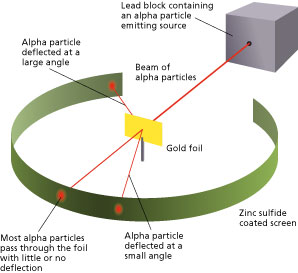
Model on the whiteboard and explain with words how Rutherford developed our understanding of the atom
He discovered the nucleus by conducting the gold foil experiment. By shooting positive alpha particles at a thin sheet of gold when the particles deflected he knew there must be a dense positive center.
500
Subatomic particles such as protons and neutrons are made of these. Electrons are not.
What are quarks
500
Causes the noble gasses to form very few compounds
Having a full valence shell of electrons that has no electrons to give or take from other atoms
500
This is the atomic mass of ammonium (NH4+)
What is 18 atomic mass units
500
Draw a diagram on the board and with your words explain how JJ Thompson's experiment altered our understanding of the Atom.
By observing negatively charged cathode rays deflect towards a positive charged plate he discovered the electron
