Describing Matter
The Atom - History & Structure
Subatomic Particle Numbers
Periodic Trends
Ionic Compounds
Covalent Compounds
100
A phase change from a solid to a liquid.
What is melting?
100
The first scientist credited with theorizing the existence of "the smallest possible" part of matter.
Who is Dalton?
100
Found by rounding the atomic mass from your periodic table to the nearest whole number.
What is the mass number?
100
Atomic radius increases as you go down a group due to the increasing number of these.
What are electron shells/levels?
100
The name of the compound with chemical formula Na2CO3.
What is sodium carbonate?
100
The way that covalent compounds are formed.
What is electron sharing?
200
A substance that contains more than one element or compound and its parts are clearly visible.
What is a heterogeneous mixture?
200
The scientist that theorized the existence of energy levels using evidence from passing electric currents through different gases and observing the light created.
Who is Neils Bohr?
200
A neutral atom with 30 protons.
What is zinc?
200
Metals in these groups are more reactive than metals in group 3.
What are groups 1 & 2?
200
The chemical name of this compound.
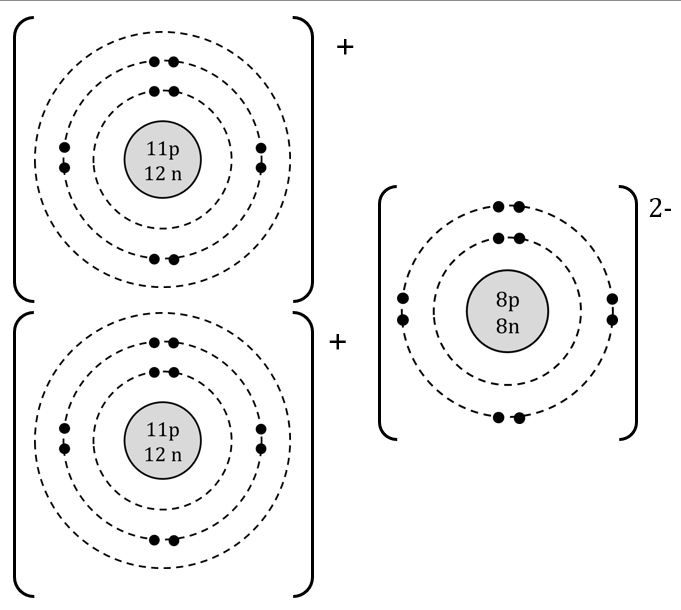
What is sodium oxide?
200
The formula of the compound dinitrogen monoxide.
What is N2O?
300
A property that can be observed or studied without changing the chemical structure of a compound.
What is a physical property?
300
The model of the atom created by Thomson.
What is the "raisin bun" model?
300
An ion with 20 protons and 18 electrons.
What is Ca2+?
300
This is how the reactivity of non-metals changes as you move down a group.
What is decreasing?
300
The chemical formula of cobalt (II) phosphate.
What is Co3(PO4)2
300
The name of this compound.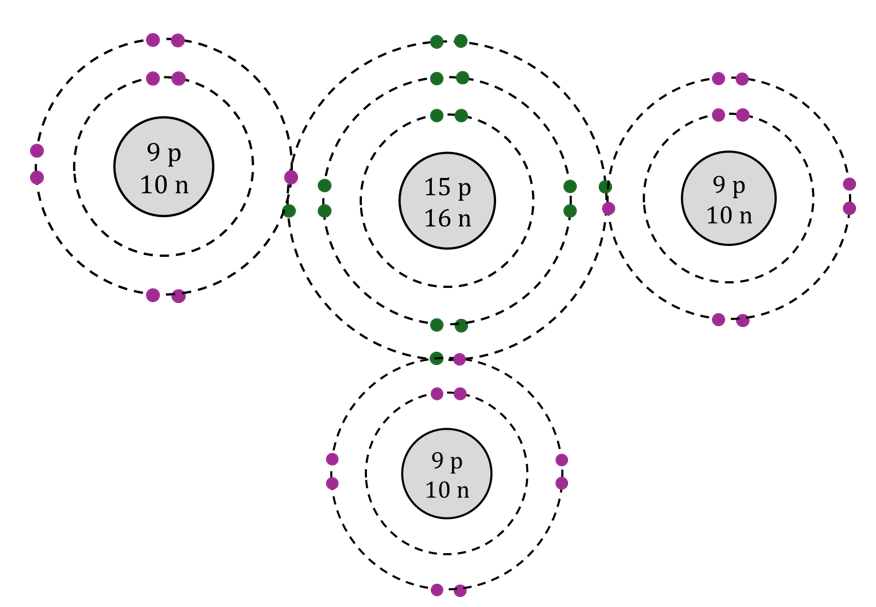
What is phosphorous trifluoride?
400
The state of matter with no fixed shape and no fixed volume.
What is a gas?
400
The new addition to the structure of the atom theorized by Ernest Rutherford.
What is the nucleus?
400
The number of neutrons in an atom of chromium.
What is 28?
400
You will find metals that are more reactive than than barium in this period.
What is period 6?
400
The way an ionic compound is created.
What is electron stealing?
400
The chemical formula for the compound dichlorine heptoxide.
What is Cl2O7?
500
The three state changes that involve atoms beginning to move faster and further apart - gaining energy.
What are melting, evaporation, and sublimation?
500
The two types of subatomic particles that are equal in a neutral atom.
What are protons and electrons?
500
The charge on an atom of mercury with 79 electrons.
What is 1+?
500
Atomic radius decreases across a period due to this force.
What is attraction between nucleus and electrons?
500
The name of the compound with formula PtS2
What is platinum (IV) sulphide?
500
The name for the compound with the formula CH4
What is carbon tetrahydride?
600
Temperature change, colour change, bubble formation, precipitate formation, or light/sound production.
What is the evidence of a chemical change?
600
The two subatomic particles that account for almost all of the mass of an atom.
What are protons and neutrons?
600
How sulphur becomes an ion.
What is losing 2 electrons?
600
The reason that noble gases are the most stable and non-reactive group of elements on the periodic table.
What are full valence shells?
600
The name of the compound with formula Nb2Se5
What is niobium (V) selenide?
600
The name for the compound with formula TeBr2
What is tellurium dibromide?