Chapter 1
Theory/research
Theory/research
What are the Periods of Development
•Prenatal •Infancy and toddlerhood
•Early childhood •Middle childhood
•Adolescence •Emerging adulthood
An individual’s unique genetic information / an individual’s directly observable characteristics
Phenotype\ Genotype
(FASD)
Fetal Alcohol Spectrum Disorder: Range of physical, mental, and behavioral outcomes caused by prenatal alcohol exposure
Includes four diagnoses, which vary in severity:
•fetal alcohol syndrome •partial fetal alcohol syndrome •alcohol neurodevelopmental disorder •alcohol-related birth defects
The three stages of childbirth
Dilation
Pushing/ birth of baby
Birth of placenta
three periods of prenatal development
Germinal, Embryotic, Fetus
Freud's Psychoanalytic perspective
Piaget’s cognitive-developmental theory
Discontinuous Development Theories
(Children change rapidly as they step up to a new level and then change very little for a while. With each step, the child interprets and responds to the world in a qualitatively different way.)
–Cell formed when sperm and ovum unite at conception
–Contains 46 chromosomes
Zygote
The prenatal period that lasts from conception to implantation and includes rapid cell division.
the germinal stage
–Color (Appearance) –Heart rate (Pulse)
–Reflex irritability (Grimacing, sneezing, and coughing) –Muscle tone (Activity) - Breathing (Respiratory effort
Apgar Scale
A cell division process that halves the number of chromosomes normally present in body cells
Meiosis
cognitive-developmental theory
•Piaget’s stages:
–Sensorimotor (birth–2 years)
–Preoperational (2–7 years)
–Concrete operational (7–11 years)
–Formal operational (11 years on)
Index of family’s social position and economic well-being
Socioeconomic status (SES)
Combination of:
years of education / Prestige of one’s job and skill it requires / Income, which measures economic status
Harmful substances or environmental factors that can cause birth defects during prenatal development.
teratogens
depression that emerges or strengthens after childbirth
Postpartum depression
What is age of viability?
The point at which the baby can first survive (22-26 weeks)
Urie Bronfenbrenner
Ecological systems theory:
•views the child as developing within a complex system of relationships affected by multiple levels of the surrounding environment:
SES - that children are at risk for
poor grades in school, alcohol and drug use, delinquent behavior and anxiety and depression with excessive demands for achievement.
Affluence
The brain is developing throughout this entire prenatal period and particularly vulnerable to teratogens during this stage.
the Embryo stage
Maternal cigarette smoking and prenatal drug abuse
Poverty and related disadvantages
babies more likely to sleep on stomachs than backs and to be wrapped warmly
Sudden infant death syndrome (SIDS):
–Unexpected death, usually during the night, of infant younger than 1 year of age that remains unexplained
–Leading cause of infant mortality in industrialized nations
Layers of Ecological systems theory
–Microsystem
–Mesosystem
–Exosystem
–Macrosystem
–Chronosystem
perspective, focusing on how culture (values, beliefs, customs, and skills of a social group) is transmitted to the next generation
Vygotsky’s Sociocultural Theory
Development resulting from ongoing, bidirectional exchanges between heredity and all levels of environment
Epigenesis:
Genes affect people’s behavior and experience/ Experiences and behavior also affect gene expression.
What are the three D's - Most common threats to human fetus in embryotic stage
Drugs
Disease
Diet
Forms of medication used in over 60% of U.S. births
–Analgesics: drugs used to relieve pain
–Anesthetics: stronger type of painkiller that blocks sensation
–Epidural analgesia: enables mother to push during second stage of labor, but weakens uterine contractions
What is isotretinoin (Accutane)
This prescription acne medication is a well-known teratogen that can cause severe birth defects
]View that the child’s mind, body, and physical and social worlds form an integrated system that guides mastery of new skills
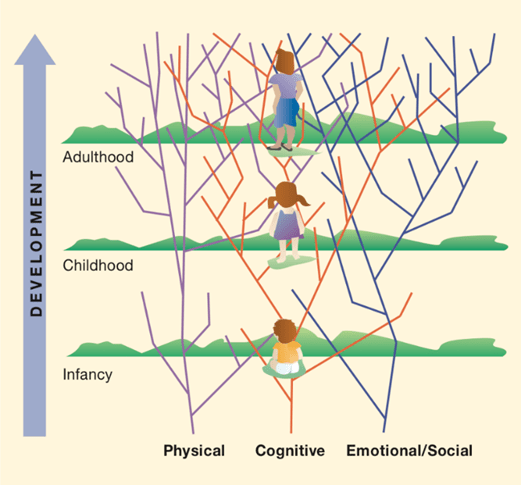
dynamic systems
Gene–environment correlation:
Passive correlation: Parents provide environments to which children respond
Evocative correlation: Children evoke responses influenced by their heredity, which strengthen original behavior pattern
Active correlation: Children engage in niche-picking, actively seeking environments that complement their heredity
Associated with low birth weight, increased risk of miscarriage, sleep disturbance, and irritability during child's first 3yrs.
Emotional stress:
risk of high blood pressure, heart disease, stroke, and diabetes at age 50
Newborn Sensory Capacities
Hearing: Sensitive to voices, biologically prepared for task of acquiring language. –Within days, can tell the difference between a variety of sound patterns
Touch: Helps stimulate early physical growth. Infants are highly sensitive to pain
Taste and smell: Exposure to a flavor, prenatally or in breast milk, can have long-term effects on baby’s preferences. sense of smell helps mothers and babies identify each other
Vision: Least-developed of newborn baby’s senses. Color vision becomes adultlike within about 4 months
Preterm infants vs Small-for-date infants:
•Preterm infants: Born several weeks or more before due date
Weight may be appropriate based on time spent in the uterus
•Small-for-date infants: Below expected weight considering length of pregnancy
May be either full-term or preterm