Circulatory System
Respiratory System
Circulatory System
Respiratory System
Random
100
Where does oxygen poor blood travel to after leaving the heart?
What are the lungs?
100
Capillaries are very wide, true or false.
False
100
What takes deoxygenated blood from the heart to the lungs?
Pulmonary artery
100
List at least 4 structures of the respiratory system.
1. Nasal cavity
2. Trachea
3. pharynx
4. larynx
5. Bronchi
6. Alveoli
7. Lungs
100
What are the four chambers of the heart?
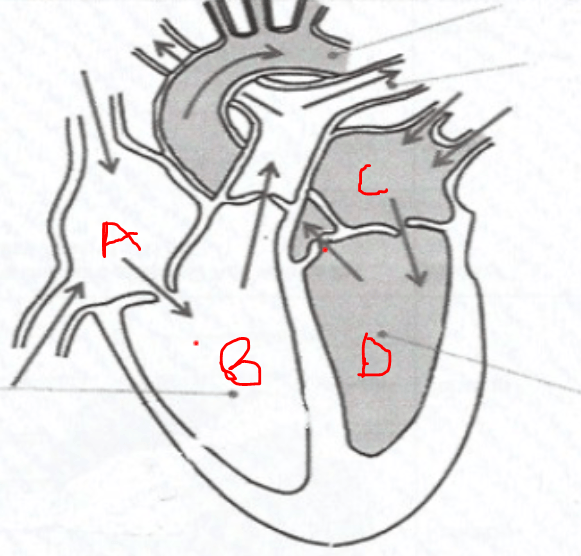
A. right atrium
B. right ventricle
C. left atrium
D. left ventricle
200
What are valves?
Bonus: where are valves found?
Valves prevent the back-flow of blood
What are valves are found in the heart, pulmonary artery and veins.
200
Describe the function of the respiratory system.
The system responsible for the exchange of gases between the external environment and the blood.
200
Describe the function of white blood cells.
To fight off foreign invaders and pathogens.
200
Describe exhalation.
The diaphragm relaxes (moves up) and inter-coastal muscles relax (come in), lung capacity decreases and air moves out of the lungs.
200
When is your test and what will it cover?
TOMORROW
- Circulatory and the Respiratory Systems
(blood cells, vessels, heart, respiratory)
300
Describe the function of platelets and red blood cells.
Platelets - responsible for forming blood clots to stop your body from bleeding out.
Red Blood Cells - carry oxygen around the body.
300
Describe inhalation.
The diaphragm contracts (moves down) and inter-coastal muscles relax (go out), lung capacity increases and air moves into the lungs.
300
List 3 parts of the Cardiovascular System and what is the function of each?
blood, blood vessels, heart
blood - fluid that transports materials
blood vessels -
heart - pumps blood throughout the body
300
What are alveoli and what is their function?
Alveoli are tiny sacs at the end of the bronchioles where gas exchange occurs. It allows oxygen and carbon dioxide to move between the lungs and the bloodstream.
300
The circulatory system and the respiratory system work together. True or False.
True
400
Describe the function of the heart.
It is responsible for pumping blood around the body, supplying oxygen and nutrients and removing carbon dioxide and waste.
400
What are the names of # 1, 5 and 8
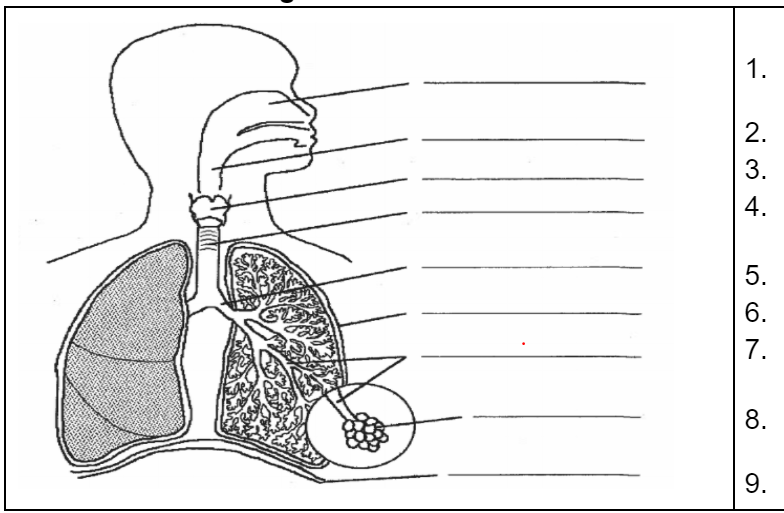
#1 nasal cavity (nose)
# 5bronchi #8 alveoli
400
List 2 differences between veins and capillaries.
1. Veins carry deoxygenated blood
2. Capillaries facilitate gas exchange
3. Veins have valves - capillaries do not
4. Capillaries are one cell thick
400
What is the name of #4?
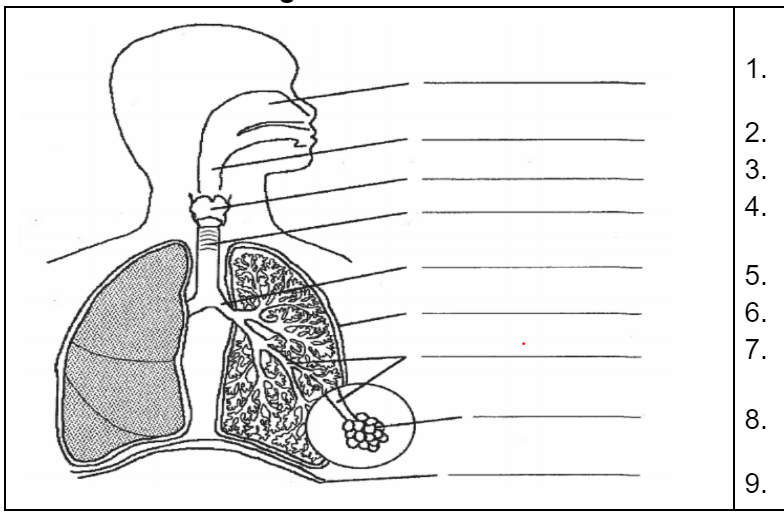
trachea (windpipe)
400
How do the heart and lungs work together to maintain homeostasis?
C-
E- move oxygen and nutrients throughout body, removes wastes such as carbon dioxide
Heart- pumps blood, carries O2 and Co2
Respiratory System - exchanges needed gases for waste in lungs,
500
List one function of the arteries.
Bonus: describe another feature of the arteries
1. Carry oxygenated blood away from the heart.
Under intense pressure
No valves
500
What are the names of # 2, 3, and 9?
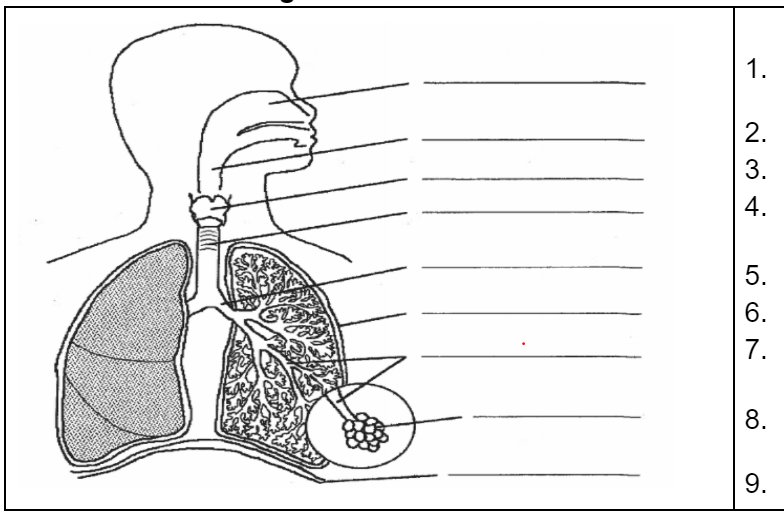
#2 pharynx, #3 larynx, # 9 diaphragm
500
List 3 functions of the Circulatory System.
1. Deliver oxygen and nutrients around the body.
2. Removes wastes from cells.
3. Fight disease and pathogens.
4. Regulate body temperature.
5. Transport hormones around the body.
500
Label all nine parts correctly!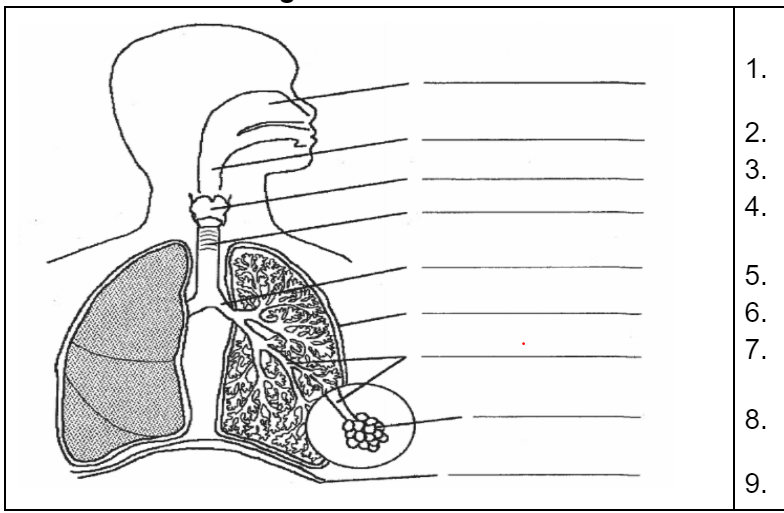
1. nasal cavity, 2 pharynx, 3. larynx
4. trachea, 5. bronchi, 6. lungs, 7. bronchioles
8. alveoli 9. diaphragm
500
What are the names of E, F, and G?
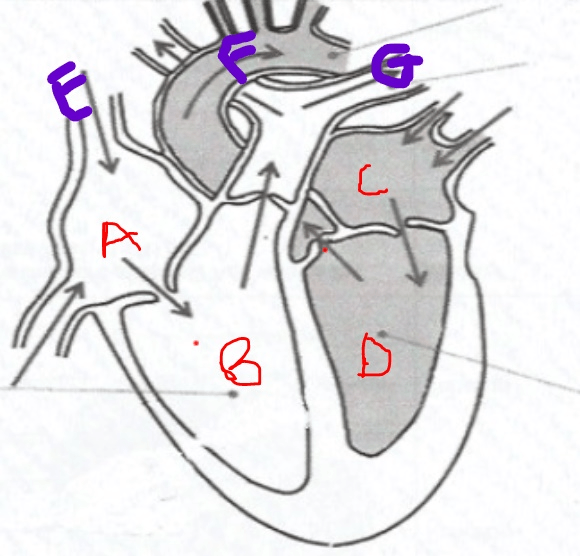
E= vein (superior vena cava)
F = aorta G= artery (pulmonary)