Frostbite
Hypo-thermia
Snow Blindness
Frozen skin to object
Trench foot
100
Which action does not help prevent frostbite?
a) If feeling numb or tingly, immediately warm the area
b) Wearing appropriate clothes in layers
c) Wearing gloves instead of mittens
d) Putting hands under armpits to help warm them
e) Keep hydrated
f) Change out of wet clothing as soon as possible
c) Wearing gloves instead of mittens
--> Mittens keep you warmer!
100
Name 2 causes of hypothermia?
a) Sweating while outdoors in cold weather
c) Cold wet windy conditions
d) Dehydration, medications that cause diuresis
e) Cold water immersion
100
Snow blindness occurs when the eyes are exposed to UV rays, commonly when light is reflected from:
a) Snow
b) Snow, ice
c) Snow, ice, water
d) Snow, ice, water, sand
d) Snow, ice, water, sand
100
A child licked a metal pole in winter, their tongue is now stuck. Should you attempt to remove the body part or do you call 911?
Safely attempt to remove the body part, call 911 if its not easily coming off. How is discussed next.
100
Trenchfoot occurs when a person's lower limbs are exposed to water for over 12 hours, name two occupations at risk of this? And how they can prevent this.
Construction workers
Sailors/Fishermen
200
Frostbite most commonly affects which 4 body parts?
Ears, nose, fingers, toes
200
Which of the below can help prevent hypothermia?
a) Eating high energy foods with a lot of sugar
b) Alcohol can help warm you up
c) Decrease activity level to avoid wasting energy
d) The drink of choice is water
a) Eating high energy foods with a lot of sugar
200
How can you prevent snow blindness?
😎
200
While safely removing the frozen body part, which is incorrect?
a) Pour warm water on the object and body part
b) Treat the torn skin as an open wound
c) Gently tug on the frozen part to help it release
C is wrong- no pulling or tugging!
pour warm (not hot) water on the skin and object, gently help release the person as the skin gets free. Treat torn skin as an open wound.
200
Initial symptoms of trench foot include: (select all)
a) Swollen, cold, waxy feet
b) Reduced sensitivity or a wooden feeling
c) Peeling skin, itching
d) Blisters
a) Swollen, cold, waxy feet
b) Reduced sensitivity or a wooden feeling
(c+d are later on symptoms)
300
Which sign is most consistent with superficial frostbite?
a) Waxy, hard skin with complete loss of feeling
b) Skin that is white, blue, or black
c) Pale skin with stinging pain followed by numbness
d) Severe bleeding blisters
c) Pale skin with stinging pain followed by numbness.
(Others are for deep frostbite)
300
Cold stress matching activity
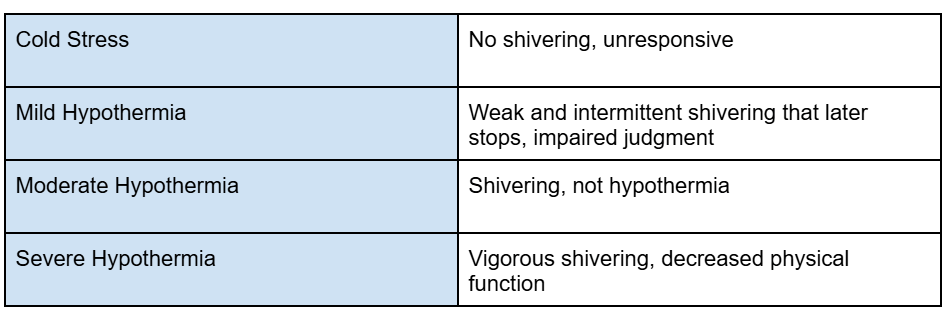
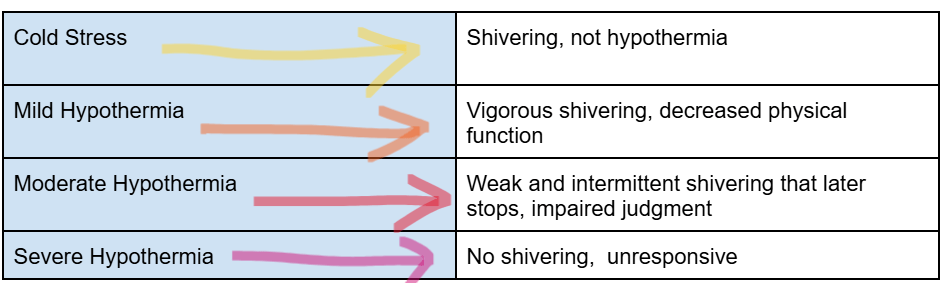
300
Which of the following are symptoms of snow blindness? (Select all that apply)
a) Redness and burning sensation in the eyes
b) Delayed symptoms for several hours
c) Burning sensation
d) Temporary color changes
All of them :)
300
After trenchoot warms up, symptoms include:
a) Blisters, pain, tingling, sensitivity
b) Dry skin, necrosis, nail fungus
c) Delayed capillary refill time
d) Swollen, cold, waxy feet
a) Blisters, pain, tingling, sensitivity
400
A key difference in deep frostbite as opposed to superficial frostbite is:
a) The skin feels warm and sweaty
b) The skin is not waxy
c) Skin and underlying tissue feel hard and solid to the touch
d) There is no change in skin color
c) Skin and underlying tissue feel hard and solid to the touch
400
A hypothermic person is unresponsive, check for signs of breathing for:
a) 5 to 10 seconds
b) 30 seconds
c) 60 Seconds
d) 2 minutes
c) 60 Seconds
400
The care for snow blindness is:
a) Place them in a darker environment, cover the eyes, apply a cool damp cloth for comfort, seek medical attention if there are any vision problems
b) Cover the person's eyes and call 911, reassure them while you wait
c) Rinse the eyes for at least 15 minutes, cover the eyes, and seek medical attention
a) Place them in a darker environment, cover the eyes, apply a cool damp cloth for comfort, seek medical attention if there are any vision problems
400
The correct first aid care for trench foot would be:
a) Dry the feet, gently warm the area, and call 911
b) Contact a medical provider only if the feet have redness, red streaks, blisters or cracks that don't go away after basic foot care
c) Dry the feet, gently warm the area, and see a medical provider
d) Drain any blisters to aid faster healing
b) Contact a medical provider only if the feet have redness, red streaks, blisters or cracks that don't go away after basic foot care
500
In caring for frostbite, which is correct?
a) Rub the area vigorously to restore recirculation
b) Keep thawed areas below the level of the heart
c) Use warm water or body heat to thaw the area
d) Place gauze between affected toes or fingers and tightly wrap with a dressing
c) Use warm water or body heat to thaw the area
(d --> wrap loosely!)
500
Which care step is incorrect for a person with hypothermia?
a) Have the person continue light activity to stay warm
b) Apply heat to the upper trunk
c) Give the person high calorie drinks preferably
d) Immediately call 911 for all levels of hypothermia
a) Have the person continue light activity to stay warm