HOW FOOD WAS MADE
KINDS OF FOOD
WEIRD FOODS OF THE TIME
WHAT’S IN THE RECIPE
COOKING TOOLS OF THE TIME
100
Colonists cooked most of their food over this large fireplace in the house.
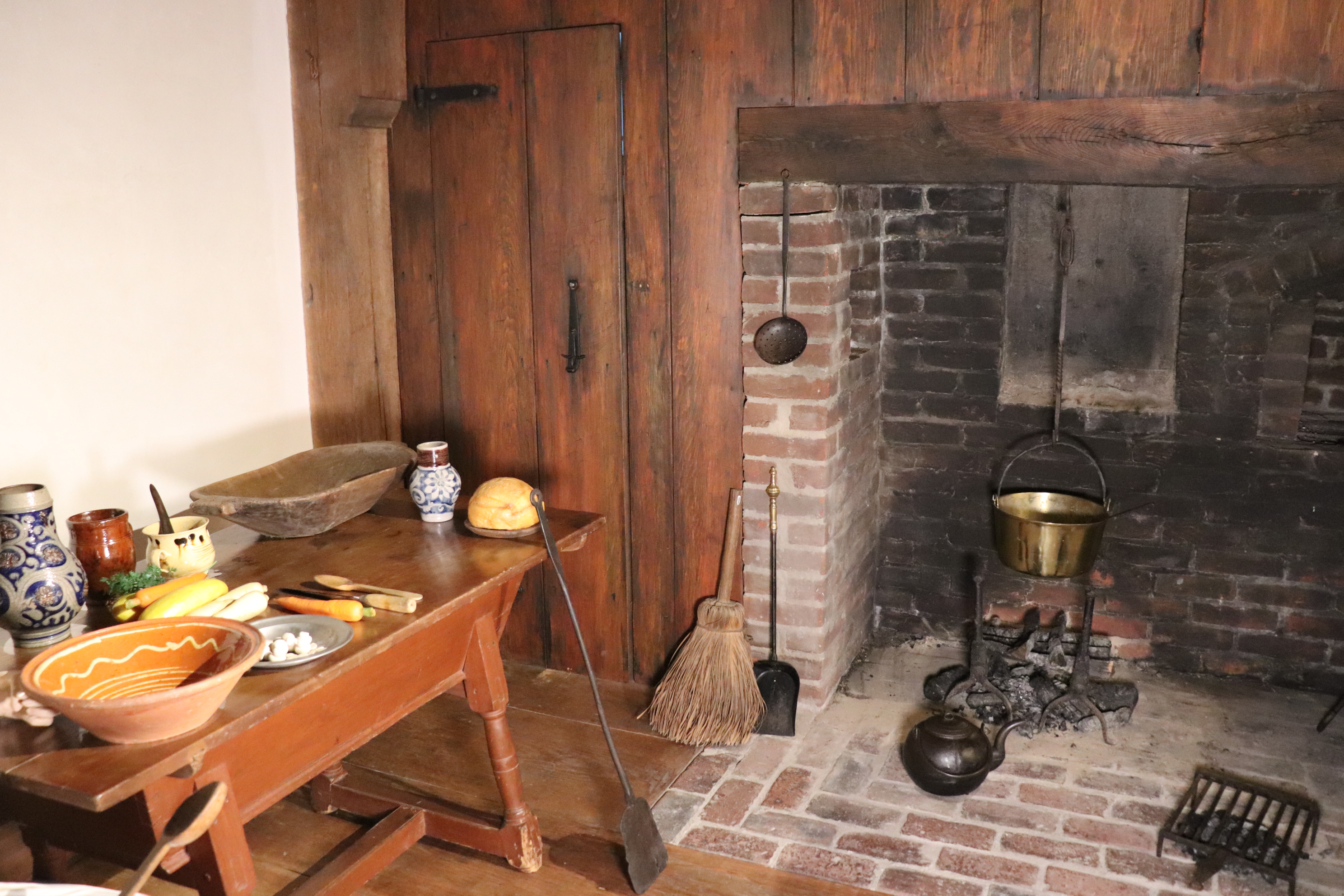
A Hearth
100
This yellow crop was the most important food grown by colonists
Corn
100
This animal’s tongue was sometimes served as a meal.
Cow tongue
100
Stew usually included meat, water, and these plant foods like carrots and onions.
Vegetables
100
Heavy black pots used for cooking over a fire.
Pots/Cauldrons
200
Instead of refrigerators, colonists used salt to keep meat from going bad. This process is called
Salting
200
Colonists hunted this animal in the woods for meat.
Deer/Venison
200
Colonists sometimes ate this animal that today people usually see as a backyard pest.
Squirrel
200
Colonists used this dairy product from cows to cook and bake.
Butter
200
This long metal rod was used to roast meat over the fire.
A spit
300
Colonists often cooked food slowly in iron pots hanging over the fire. This kind of meal was very common.
Stew
300
This flat bread made from cornmeal was very common in colonial kitchens.
Cornbread
300
Colonists sometimes made pies out of this large bird that hoots at night.
Owl
300
Colonists used this spice to make foods taste stronger and better preserved.
Salt
300
Colonists used these clay containers to store food.
jars/pots
400
To keep apples and vegetables from spoiling, colonists sometimes placed them in underground storage rooms.
Root Cellar
400
This fruit was very common and often turned into cider.
Apples
400
This fish was often eaten pickled or salted and smells VERY strong.
Herring/Pickled fish
400
Colonists often sweetened food using honey made by these insects.
Bees
400
This large metal spoon was used to stir soups and stews.
ladle
500
Colonists sometimes hung meat or fish over smoky fires to keep it from spoiling and add flavor.

Smoking Food
500
This seafood was easy to gather along the coast and was often eaten by poor colonists.
Oysters
500
This strange pudding was made from animal blood and grains.
Blood Pudding
500
Colonists often used this sour milk product to bake breads and cakes.
Buttermilk
500
Colonists sometimes used these barrels to store food like salted meat or cabbage.
Barrels