Fruits, Vegetables, and Whole Grains
Healthy Drinks and Snacks
Smart Shopping
Kitchen Smarts
Grab Bag
100
Name at least three red fruits or vegetables.
Examples: Apples, strawberries, radishes, beets etc.
100
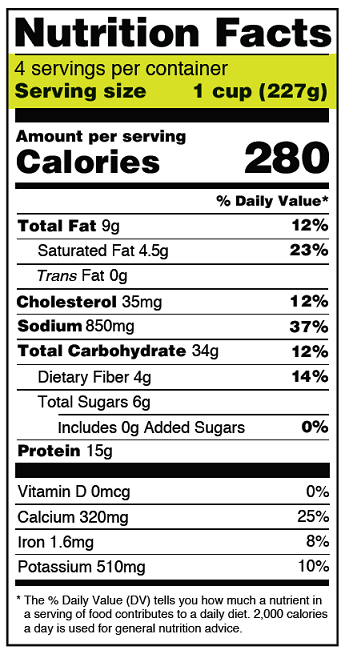 How many servings are in this container?
4.
100
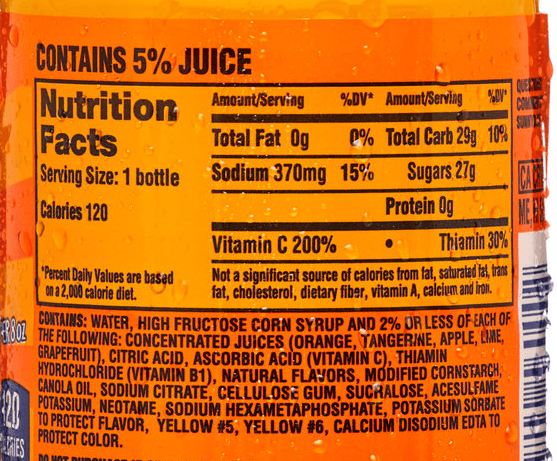 You go into a corner store to buy a drink. You remember what you learned in your Cooking Matters course and decide you only want to buy fruit juice if it’s 100% juice. You find this label that says “made with juice.” Do you buy it?
No.
100
Name two kitchen safety rules.
Examples: Wash your hands, use the claw when cutting, be careful with the stove etc.
100
What are the five food groups?
Vegetables, Fruits, Grains, Protein, and Dairy.
200
If a food is a whole grain, where will a whole grain ingredient be listed on the ingredient list?
First.
200
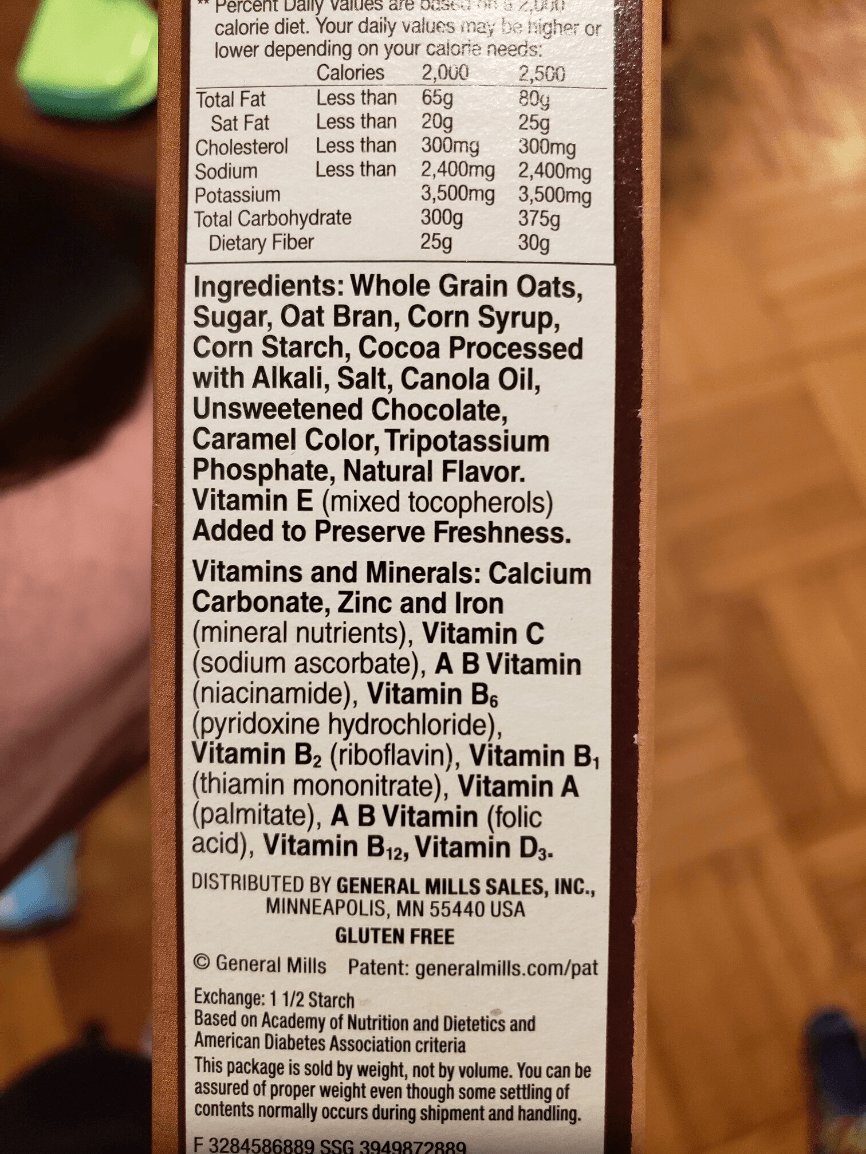 Is this food a whole grain?
Yes.
200
You’re in the cereal aisle. What might you think about as you make your choices?
Examples: Amount of sugar, whether or not the cereal is made with whole grains etc.
200
Name two things you do when preparing the mise en place.
Examples: Get out all the cooking tools, set out all ingredients, begin prepping the ingredients etc.
200
Name a whole grain breakfast food.
Examples: Whole grain cereal, whole wheat toast, oatmeal, etc.
300
According to MyPlate, how much room should fruits and vegetables take up on your plate?
About half the plate.
300
Name two healthy drinks we could make at home.
Examples: Smoothies, fruit sodas, flavored water
300
You head to the store after school looking for a quick, healthy snack. What do you choose?
Any reasonable answer.
300
True or false. It’s OK to start cooking before reading the recipe all the way through.
False. We need to read the recipe from start to finish so we can make sure we have everything we need.
300
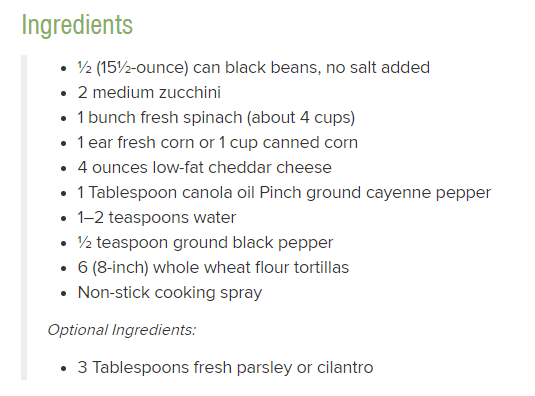 How many food groups are used in this recipe?
4.
400
True or false. Refined grains start off as whole grains. They lose many important nutrients when they go through the refinement process.
True.
400
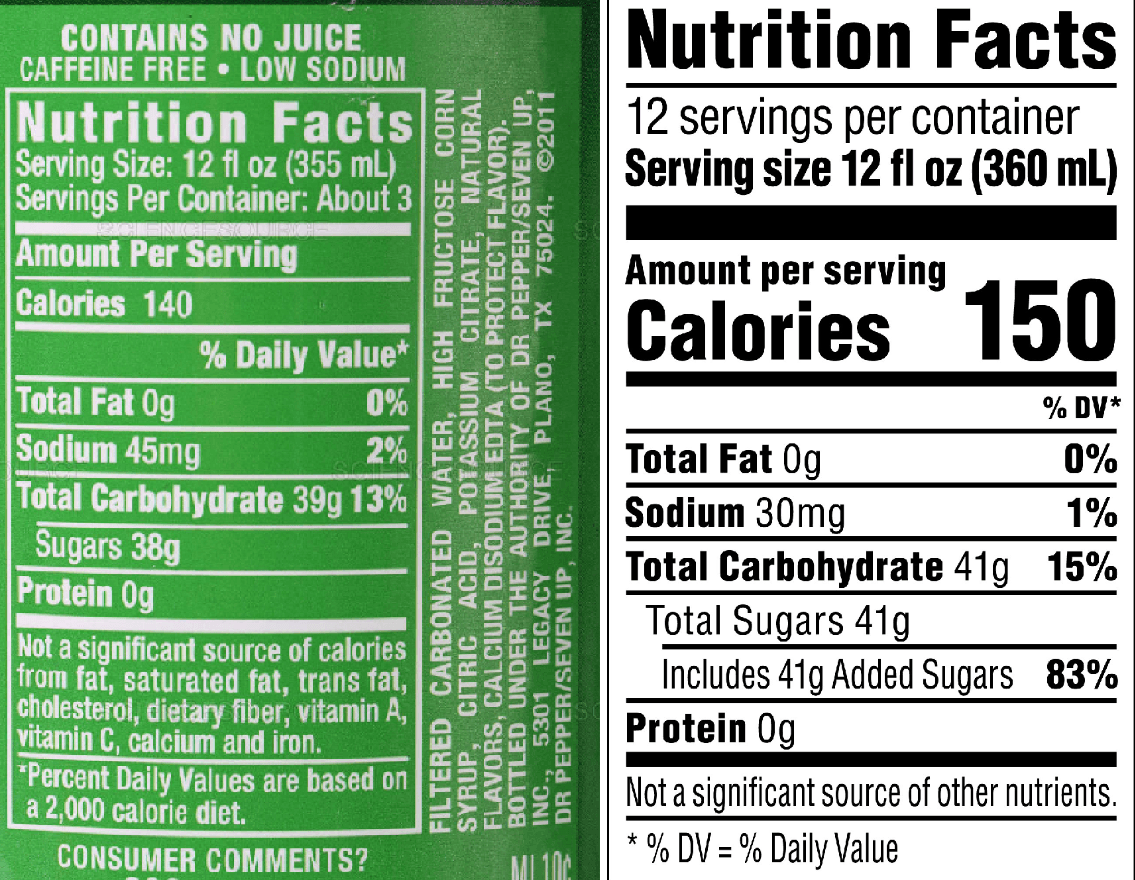 Which of these drinks is lower in sugar?
The one on the left.
400
You’re in the produce aisle, looking for a tasty fruit to bring home. You could buy two pounds of grapes for $4 or a pound of strawberries for $3. Which fruit has the lowest unit price?
The grapes. The grapes would be $2 per pound, while the strawberries are $3 per pound.
400
Name at least two cooking terms you had never heard before you came to this class. Describe what they mean.
Any reasonable answer.
400
Name two things you can do to make smart choices when eating out.
Examples: Ask for vegetables on the side, watch your portions, drink water instead of pop etc.
500
Describe a meal or snack you could make using at least three different colors of fruits or vegetables.
Any reasonable answer.
500
Name two balanced snacks you could make with foods that are usually in your house.
Any reasonable answer that contains two food groups or more.
500
You’re in the mood for pizza tonight so you head to the frozen pizza aisle. You remember what you learned in your Cooking Matters course about making healthy choices. What do you do?
Examples: Choosing a pizza with healthier ingredients like whole grains, lean proteins, and vegetables, add extra veggies, make your own pizza, etc.
500
Give two reasons why you might decide to use different ingredients than the ones called for in the original recipe.
Examples: You want to swap out ingredients for healthier ones or replace an ingredient you don’t care for, you got a good deal on something at the grocery store, etc.
500
Name two healthy breakfasts you can make in five minutes or less.
Any reasonable answers that contain at least three food groups.