CLEAN HANDS
CLEAN KITCHEN
TEMPERATURE
BASICS
BASICS
KNIFE SAFETY
SMART FOOD CHOICES
100
What should you do to your hands before preparing food?
Wash with soap and water.
100
What does cleaning remove?
Food and dirt.
100
What tool measures a food’s internal temperature?
A food thermometer.
100
What should you do if a knife falls?
Step back and let it fall. Do not catch it.
100
Name one plant-based ingredient.
Examples: beans, rice, lentils, carrots, or apples.
200
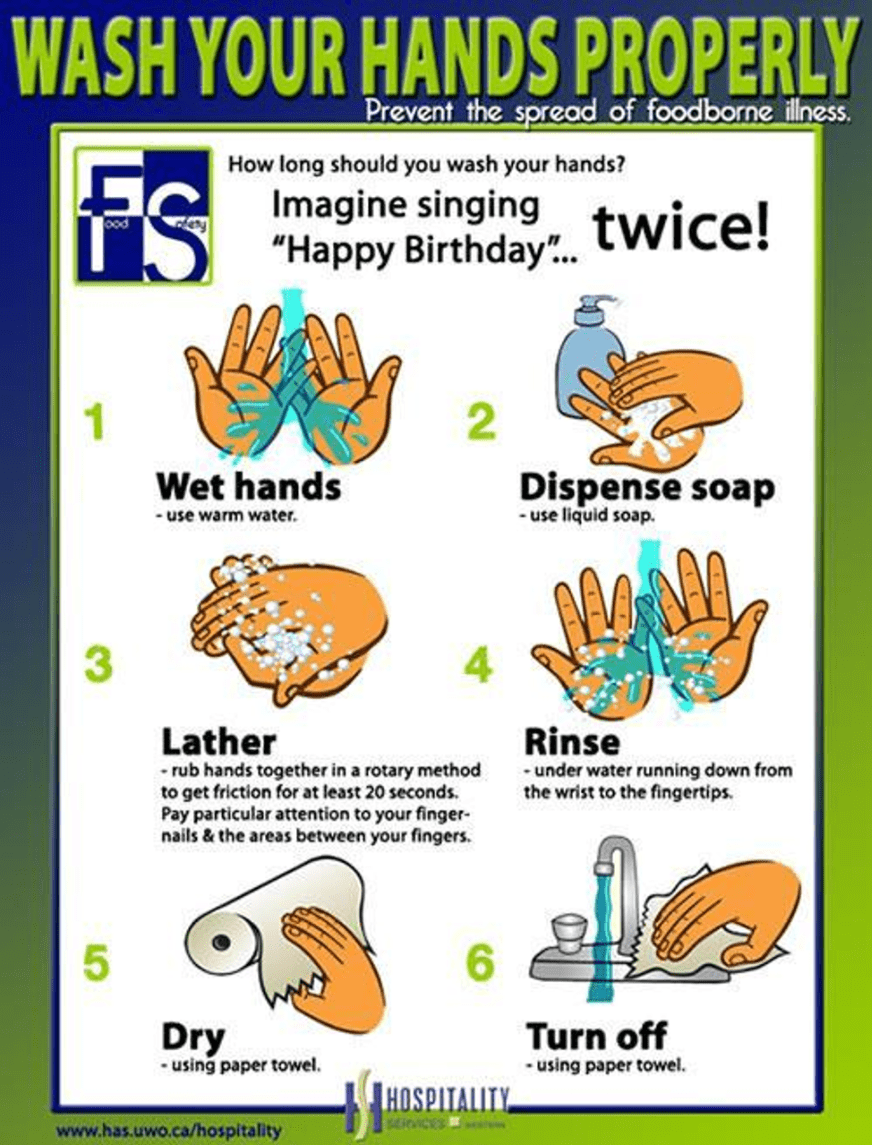
How long should you wash your hands?
At least 20 seconds.
200
Where should cleaning chemicals be kept?
In a labeled area away from food.
200
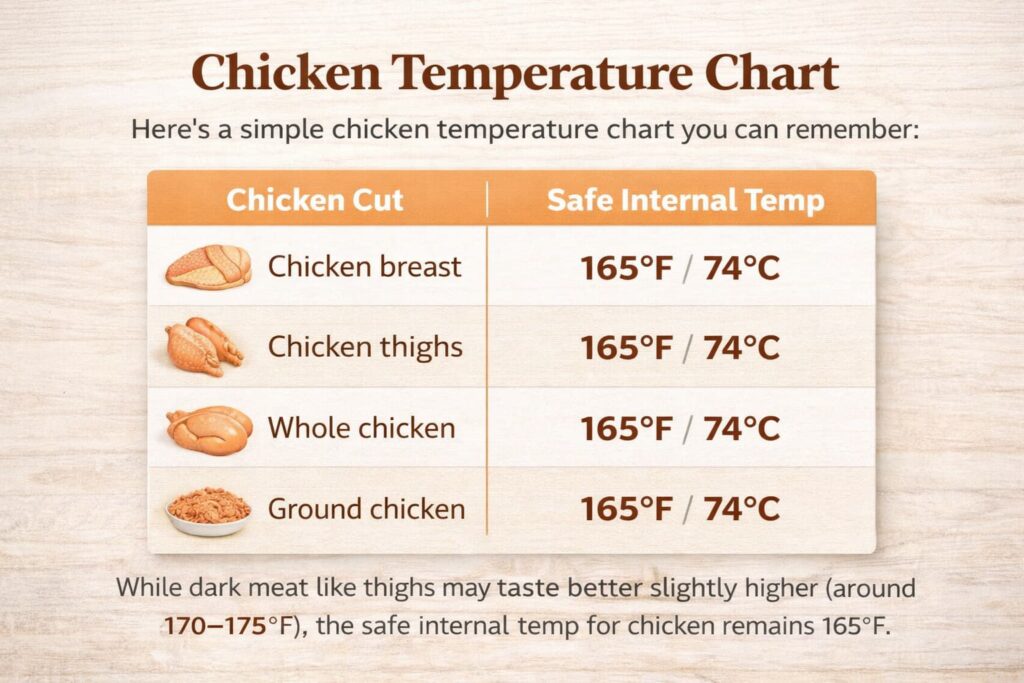
What minimum internal temperature must chicken reach?
165°F.
200
What can go under a cutting board to prevent sliding?
An approved nonslip mat or the teacher-approved stabilizer.
200
What does mise en place mean?
Gather and organize tools and ingredients before cooking.
300
What should you do with long hair before cooking?
Secure it with an appropriate hair restraint.
300
What comes next: wash, rinse, sanitize, then what?
Air-dry
300
In foodservice, what is the general maximum cold-holding temperature for food that needs temperature control?
41°F
300
What does a claw grip protect?
The fingertips of the hand guiding the food.
300
Name one way to reduce food waste
Measure recipe amounts, plan portions, or use safe edible ingredients with teacher approval.
400
Your glove tears. What should you do?
Remove it, wash hands, and put on new gloves.
400
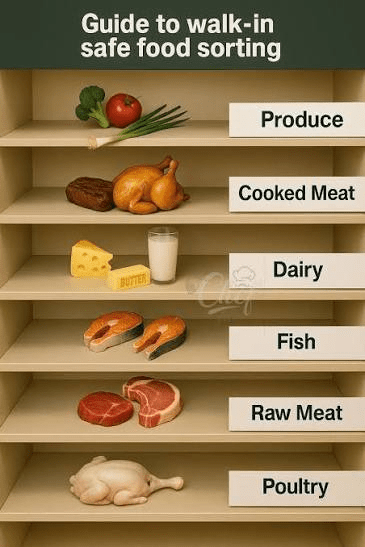
Where should raw chicken go compared with ready-to-eat food in a refrigerator?
Below it, in a covered leakproof container.
400
In foodservice, what is the general minimum hot-holding temperature for food that needs temperature control?
135°F.
400
Why is a properly sharpened knife safer than a dull knife?
It needs less force and is less likely to slip when used correctly.
400
How can you show respect when preparing a dish from another culture?
Learn its origins and use accurate names and descriptions.
500
You handle raw chicken, then need to make salad. What must change?
Remove gloves, wash hands, put on new gloves, and use clean, sanitized tools and a separate clean work area.
500
Tell the chef, verify ingredients, and prevent allergen cross-contact with clean tools and a safe preparation area. Never guess.
500
Chicken looks brown on the outside. Is that enough to know it is safe? Explain.
No. Check inside with a food thermometer; chicken must reach 165°F.
500
A teammate puts a knife under soapy water. What is the problem and safe correction?
Someone may reach in and get cut. Alert the teacher; keep knives visible in the designated knife area and wash separately as directed.
500
AI suggests an unfamiliar cooking temperature. What should you do before using it?
Check with the Chef and verify it using a trusted food-safe ty source