Key terms I
Key terms II
Risk Factors
Assessment
Testing your assessment skills
100
Occurs when there is ischemia or hemorrhage.
Stroke.
p. 1515
100
Type of stroke that occurs from injury to a blood vessel wall and formation of a blood clot. Causes a narrowing.
Thrombotic stroke
p. 1518
100
Most effective way to decrease the burden of stroke is....?????
prevention and teaching especially about risk factors.
p. 1517
100
Common scoring system used to describe level of consciousness (LOC). Includes eye opening, verbal, and motor responses. Scores range from 15 to 3.
Glasgow coma scale (GCS)
100
My eyes open spontaneously, my speech is appropriate, and I follow commands. What is my GCS?
4,5,6= 15
200
Brain attack is often used to describe a stroke. What is another term that can be used?
Cerebrovascular Accident (CVA)
p. 1515
200
Type of stroke that is caused when an embolus occludes a cerebral artery. It is the second most common cause of stroke. Comes from endocardial (inside the heart's layers).
Embolic.
p. 1518-1519
200
A non modifiable factor is age. 2/3 of strokes occur in this population?
Older than 65
p. 1517
200
A 15 item neurologic exam used to evaluate the effect of an acute stroke (impairment of LOC). Scores range from 0 to 42. Higher scores indicate greater severity.
National Institutes of Health Stroke Scale (NIHSS)
p. 1529
200
I only open my eyes to pressure, I have incomprehensible sounds, and I have abnormal flexion. What is my GCS?
2, 2, 3 = 7
300
It is a risk factor for stroke and is a transient episode that does not have lasting effects.
Transient ischemic attack (TIA)
p. 1517-1518
300
Results from bleeding in the brain tissues or into the subarachnoid space or ventricles.
Hemorrhagic stroke
p. 1519
300
This race has twice the incidence of stroke and a higher rate death as compared to any other group.
Blacks
p. 1517
300
What are some examples of subjective data that is to be collected? (This has multiple answers)
If the patient is unable you may need to obtain information from caregivers.
a. description of current illness with attention to inital symptoms (especially onset, duration, and nature if it is intermittent or continuous), b. history of previous symptoms, c. current medications, d. history of risk factors and other illnesses, e. family history of stroke, aneurysm, or CV disease.
p. 1528
300

to assess for motor response.
sternal rub (not recommended in some situations or institutions) and trapezius squeeze.
400
Stroke that results from inadequate blood flow to the brain.
Ischemic stroke
p. 1518
400
Bleeding within the brain due to a ruptured vessel. Prognosis is poor.
Intracerebral hemorrhage
p. 1519
400
A modifiable risk factor that doubles the risk for ischemic strokes.
hypertension
p. 1517
400
What are the main focused assessments when it comes to stroke?
Neurologic: motor and sensory, weakness, paralysis paresis, unequal pupils, hand grasps. akinesia, aphasia (expressive, receptive, and global), perceptual and spatial issues, LOC (drowsiness to deep coma), DTR's, flaccidity or spasticity, amnesia, ataxia, personality change, nuchal rigidity, seizures.
Respiratory: Loss of cough or gag, labored or irregular respirations, tachypnea, , wheezes, airway occlusion, apnea, coughing when eating or drinking.
p. 1528
400
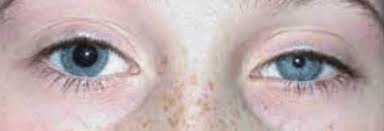
Unequal pupils
Right 8
Left 3
500
Two types of ischemic strokes.
Thrombotic and Embolic.
p. 1518
500
Intracranial bleeding into the cerebrospinal fluid (CSF) filled space between the arachnoid mater and pia mater. The usual cause is an aneurysm.
Subarachnoid hemorrhage
p. 1520
500
This medication can put a woman at risk for a stroke.
birth control
p. 1517
500
B= Balance
E=Eyes
F =Face
A=Arms
S=Speech
T=Time
500
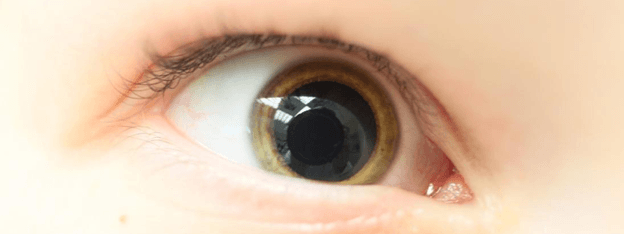
Dilated pupil, size of 9 or 10. Could indicate brain death in a patient.