Nitrogen Cycle
Water Cycle
Matter
Earth's Systems
Food Chain
100
What is nitrogen? Give 1-2 facts about it.
Nitrogen is a gas.
It is vital for building human bodies, animals and plants.
It makes up 78% of Earth's atmosphere.
100
What makes water from the lake turn into vapor and rise?
The sun's energy.
100
Give 3 examples of matter.
Any three objects:
Pencil
Desk
Student
100
Name 4 Earth's systems.
Atmosphere
Geosphere
Hydrosphere
Biosphere
100
What does this diagramm illustrate?
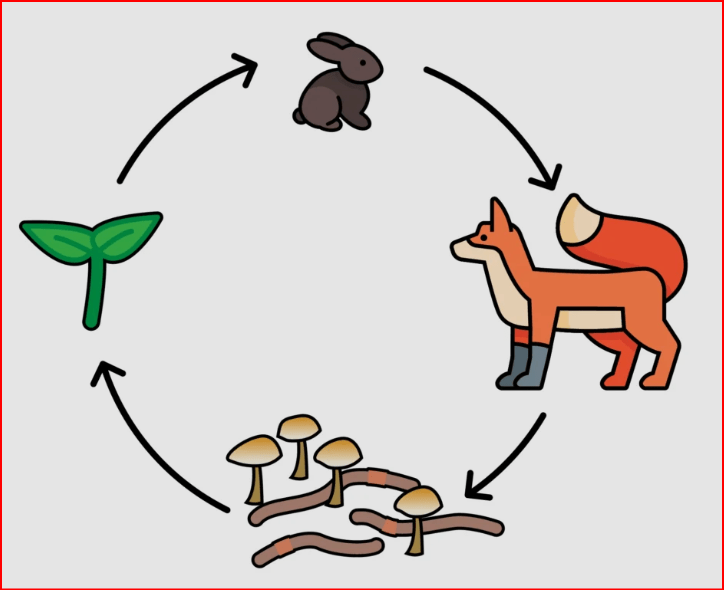
Food chain
200
What do Oxygen and Nitrogen have in common?
Give 1-2 similarities.
Give 1-2 differences.
Similarities (4): N and O are both invisible, colorless, tasteless gasses.
Differences: 1. Humans can use O directly from the air, but N needs to be fixed (usually by bacteria). 2. Oxygen helps burning, but Nitrogen supresses burning.
200
Fill in the blanks:
_________ occurs when a gas changes into a liquid.
Condensation
200
What states of matter do you know?
Solid
Gas
Liquid
200
Name Earth's systems th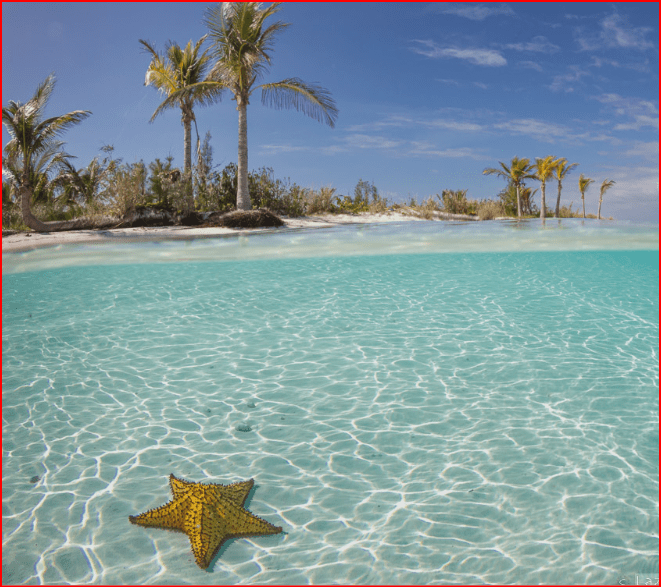 at you can see in this picture:
Biosphere
Hydrosphere
Geosphere
Atmosphere
200
Who is the predator and who is the prey?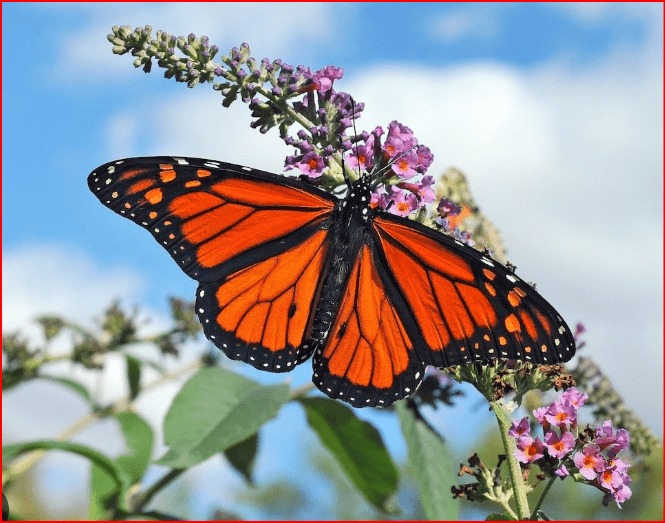
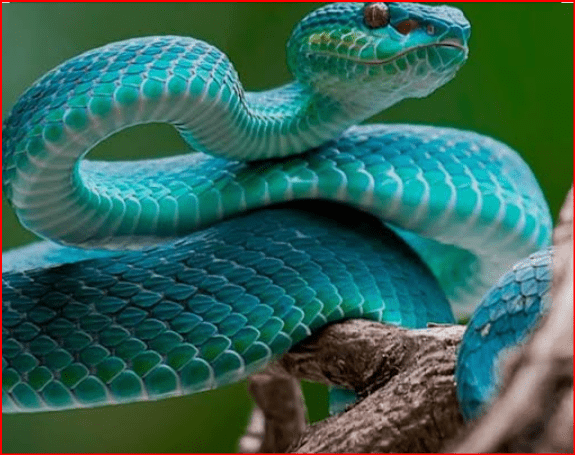
Butterfly-prey
Snake-predator
300
Give 3 examples of how we use Nitrogen in every day life.
In medicines, light bulbs, in chips' bags, in tires, and in cutting metals. We also use it in oil, automotive, and aerospace industries.
300
Give 2-3 examples of precipitation.
Rain
Snow
Hail
Sleet
300
Name 3 states of of water.
Liquid - rain
Solid - ice
Gas - fog
300
Fill in the blanks: This picture illustrates that all Earth's systems are _______________.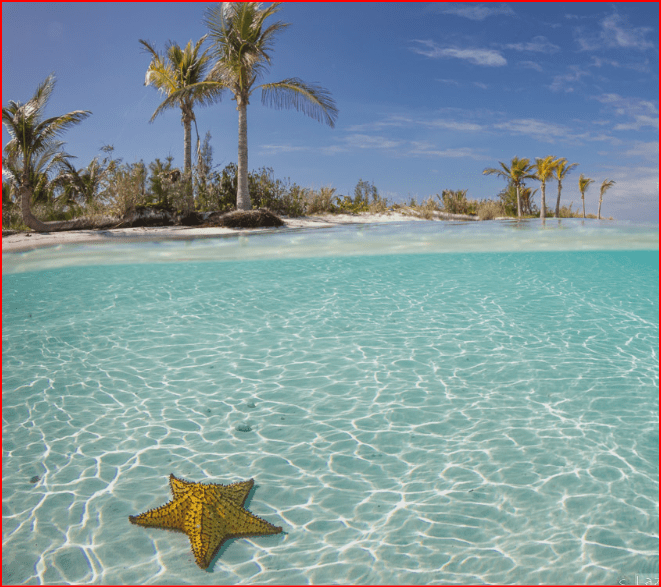
Connected
Interdependent
300
What is a food chain?
A food chain is the order in which organisms, or living things, depend on each other for food.
400
Give 3-4 adjectives (descibing words) for nitrogen gas?
Colorless
Invisible
Transparent
Tasteless
Silent
Vital
400
Fill in the blanks:
When the water vapor leaves the plant's leaves through stomata, the process is called ________.
Transpiration
400
Give 2-3 facts about matter.
Matter can't disappear, but it can change a form or state.
Matter is everywhere.
It has 3 states: solid, liquid, gas
400
Give an example of abiotic factor in hydrosphere, geosphere, and atmosphere.
water, rock, vapor
400
This food chain is missing one type of organisms. Name the missing part of the food chain. Name the roles of each participant in this chain.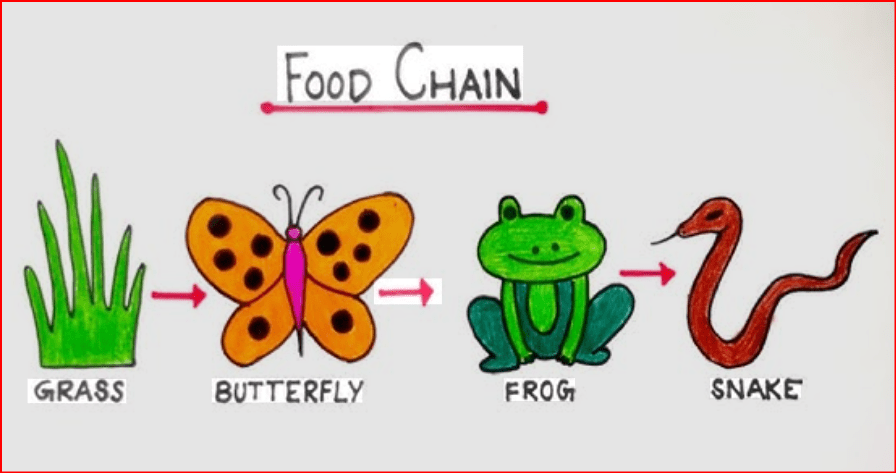
Grass-producer (produce food).
Butterfly, Frog, Snake-consumers (eat producers and lower level consumers, pass the nutrients and energy on).
Decomposers - is the missing part. They break down the dead producers and consumers back into nutrients.
500
Describe the main stages of the Nitrogen Cycle: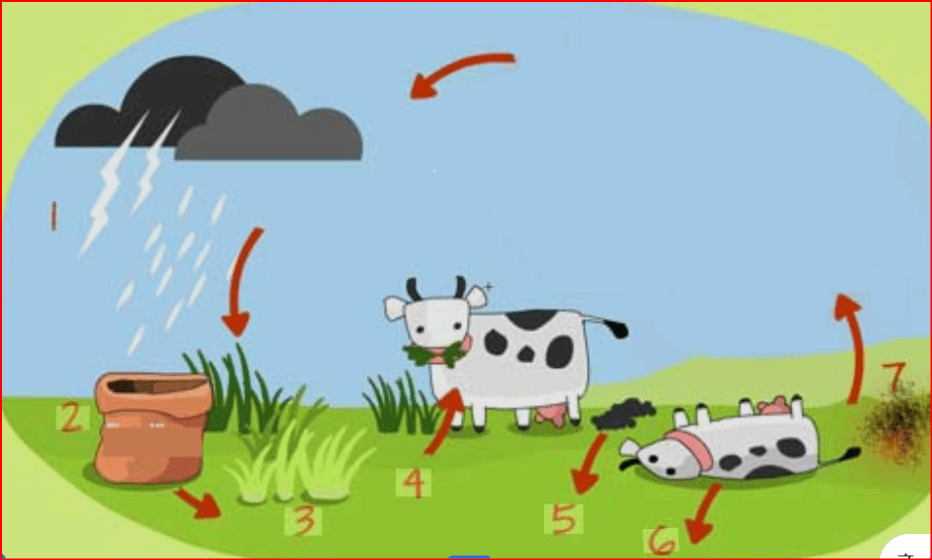
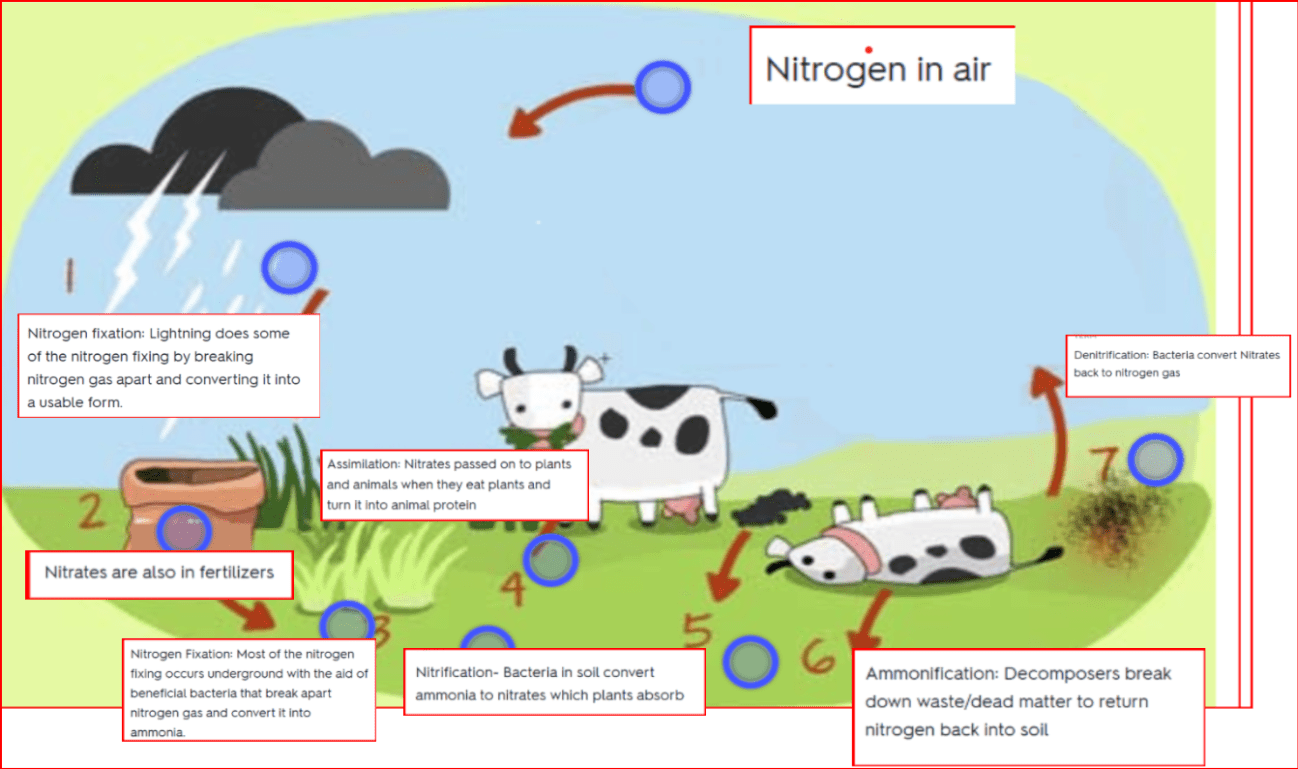
500
Name 4 main parts of the water cycle.
Use the sentence stem:
----, ------, -------, and------ are the four main parts of the water cycle.
Evaporation
Condensation
Presipitation
Infiltration
Transpiration
Collection
500
Give a definition of matter.
Matter is anything that has a mass and takes up a space.
500
Give 3 examples of biotic factors in the biosphere.
Animals
Humans
Plants
500
Tell us about this food chain. Name producer, primary and secondary consumers, decomposers, and their roles.
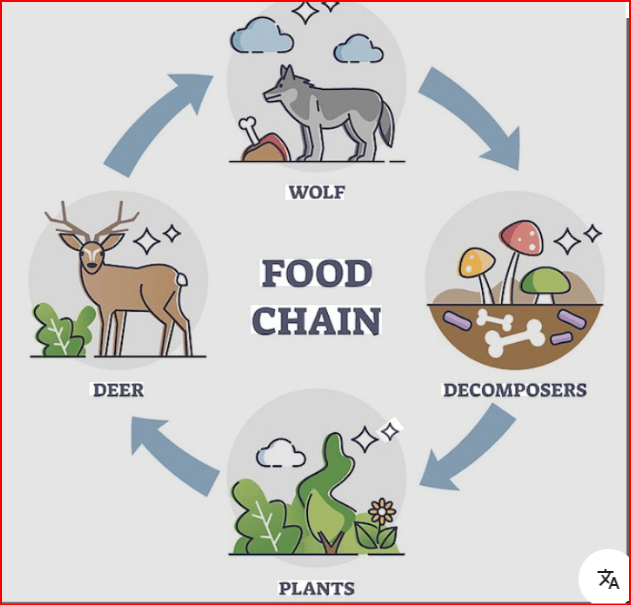
Plants are producers. They make food. Deer is a primary consumer. It eats plants. Wolf is a secondary consumer, it eats the deer and gets the nutrients from the plans. Mashrooms are decomposers. They break dead bodies down into nutrients.