Toxicology Basics
Postmortem Toxicology
Forensic Entomology Basics
Insect Development & PMI Estimation
Advanced Entomology: Succession & Identification
Stages of Decomposition
100
Toxicology is the scientific study of what?
The adverse effects of chemicals on living organisms.
100
What is analyzed during an autopsy to screen for toxins?
Body tissues, organs, and fluids.
100
True or False: The first insects to arrive at a corpse are typically beetles.
False. (It is usually blowflies.)
100
If only blowfly eggs are found, what is the likely PMI?
8–48 hours.
100
Which blowfly life cycle stage is shown in the picture below?
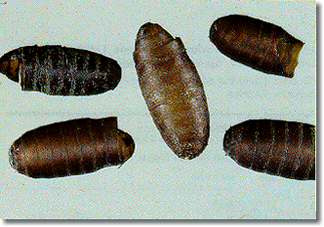
Pupa
100
What is the first stage of decomposition, beginning immediately after death?
Fresh
200
What does forensic toxicology help determine?
Cause, mechanism, and manner of death.
200
After detecting a toxin, what must a toxicologist determine?
The type of toxin present.
200
True or False: Larvae go through three instars before becoming pupae.
True
200
What insects arrive first at a corpse?
Blowflies. Within minutes to hours
200
Which blowfly stage is shown in the picture below?
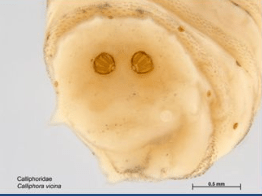
Instar II
200
In which stage does the body swell due to gas buildup from bacterial activity?
Bloat
300
What does a toxicologist do with biological samples?
Detects, identifies, and measures drugs, poisons, and toxins.
300
After identifying the toxin, what is measured next?
The concentration/amount.
300
Which stage comes after larva in the blowfly life cycle?
Pupa
300
What insects dominate during advanced decay?
Dermestid beetles and rove beetles
300
Flesh flies and beetles begin to appear during which stage?
Bloat
300
In which stage do maggot masses actively feed and cause rapid tissue loss?
Active decay
400
What are the four stages a chemical undergoes in the body?
Absorption, distribution, metabolism, elimination.
400
What type of equipment is used to detect small amounts of toxins?
Analytical and instrumental equipment.
400
True or False: Maggot mass temperature can be significantly higher than ambient temperature.
True
400
Presence of pupae (tan/brown casings) suggests a PMI of…
5-10 days
400
Which stage is when blowflies are MOST active in feeding?
Larval (instar) stage, especially instar III
400
What stage is characterized by reduced insect activity and drying of remaining tissue?
Advanced decay
500
What does LD50 represent?
The dose that kills 50% of test organisms.
500
Why are metabolites useful in toxicology?
They show how a drug was processed by the body.
500
Why are maggots useful for estimating PMI?
Their development is predictable under known conditions.
500
Second instar larvae on the body indicate a PMI of…
2-3 Days
500
A body is found with both adult dermestid beetles and pupating blowflies (in the pupa stage of development). Ambient temperatures have been normal. Based on typical insect succession, what can you infer about the stage of decomposition and PMI?
advanced decay; 2-3 weeks
500
What is the final stage where only bones, hair, and dried tissue remain?
Dry remains/skeletal remains