Respiratory Gating
Intrafraction Monitoring
SGRT
Fiducials & Transponders
Imaging
100
This treatment technique involves administering a radiation treatment within a selected portion of the patient’s breathing cycle.
Respiratory Gating
100
Patient motion occuring during a treatment fraction and includes respiratory, cardiac, musculoskeletal, and peristaltic motion.
Intrafraction Motion
100
This technique uses an optical-based video system or laser scanning to monitor the patient's surface during radiation treatments.
Surface-Guided Radiation Therapy (SGRT)
100
These fixed reference points used internally or externally help with localization in setting up and treating patients.
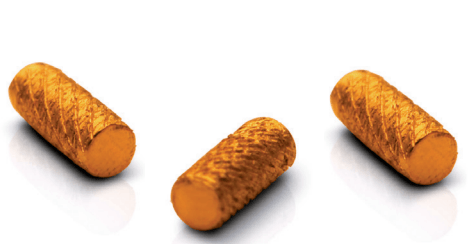
Fudicials
(gold seeds used in the prostate)
100
Uses either radiographs or an electronic portal-imaging device (EPID), is a method used to acquire an image of the radiation treatment field, or port, at the time of treatment delivery.
Portal imaging
200
Tumor size, location, local attachments, and the patient’s breathing patterns can directly affect
Tumor Motion
200
Patient motion that occurs during the treatment course from 1 treatment to the next is known as?
Interfraction variation
(possibly because of daily variability in patient positioning, patient setup error or volumetric changes in the tumor)
200
This type of imaging finds the 3-D
coordinates of an object using two or more photographic
images taken from different positions.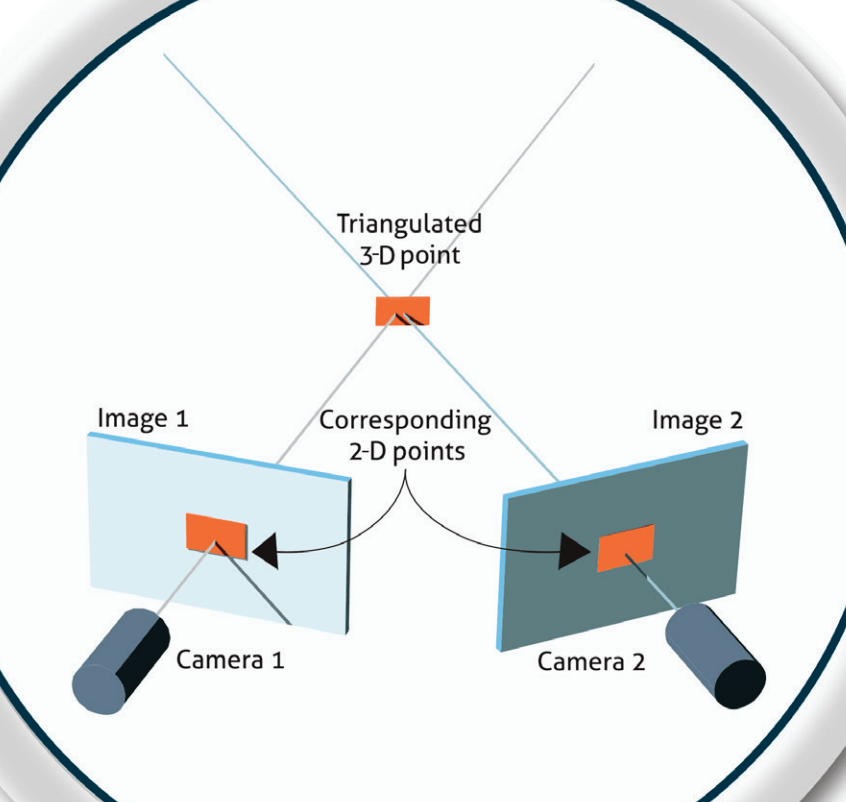
Stereophotogrammetry/Video surface imaging
(The photos are acquired from 2 different angles, and the software identifies common points on each image. Each image provides a line of sight from the camera to the object)
200
Implanted fiducial markers are typically implanted in what organs that can assist in the localization of treatment delivery?
Prostate, Liver, Lung and Pancreas
200
Maybe used in a variety of forms, EPID, KV/KV, CBCT.
IGRT: Image-Guided Radiation Therapy
300
DIBH has been found to improve doses received by the heart when treating what breast?
Left Breast
300
This type of motion involves physiologic processes, such as swallowing, respiration, heartbeat, organ filling, and peristalsis.
Organ motion/Intrafraction variation
300
This method uses externally placed markers that
translate and track the 3-D position of a target in real-time.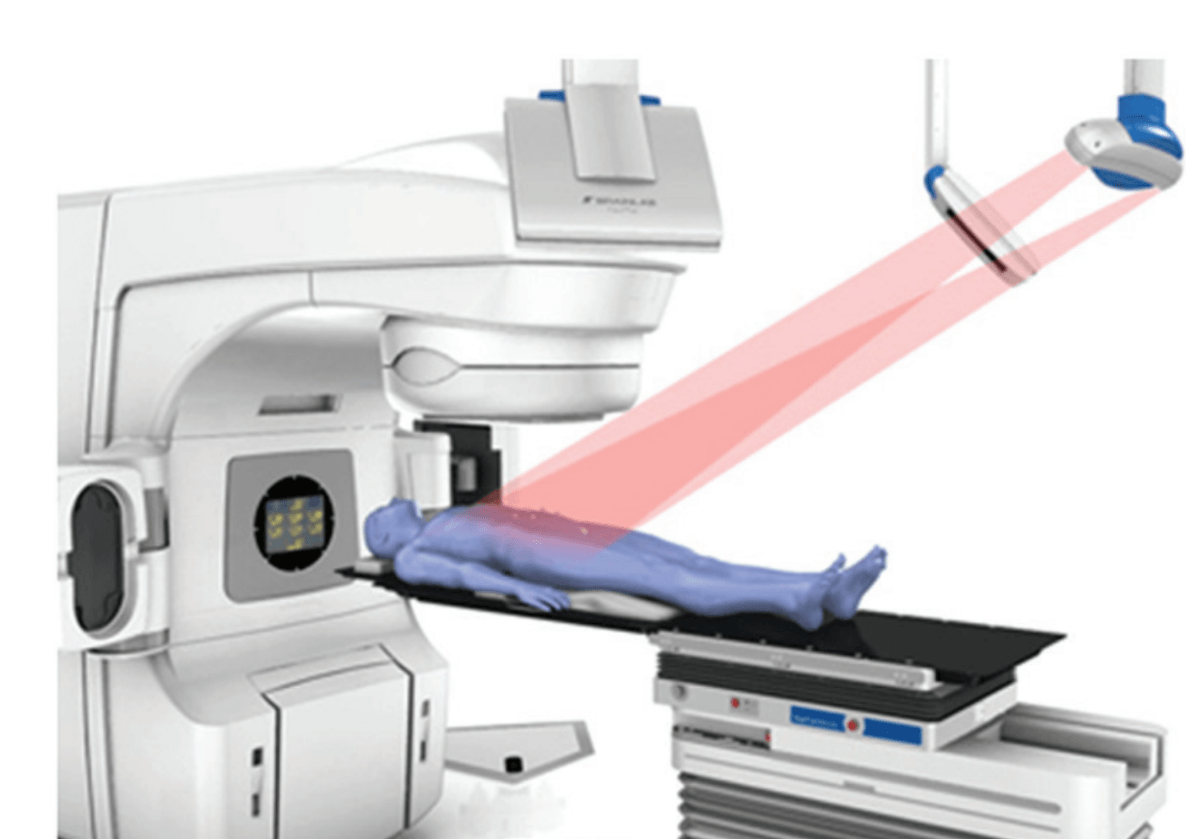
Optical tracking
300
Why are gold seeds or wire fiducial markers the most commonly used markers in radiation therapy?
Easily seen on medical imaging and produce minimal artifacts.
300
This type of imaging can help physicians easily differentiate between fluid and soft tissue
Ultrasonography
400
A type of CT simulation that requires two scans for treatment planning to establish tumor margins for respiratory gating?
Inhalation and Exhalation Breath-hold
400
The most observable type of organ motion is the result of what involuntary motion?
Respiration/Breathing
400
When treating a patient with SGRT, what is an important consideration that must be ensured to acquire a surface image
an unobstructed line of sight
(No sheets on patient's skin)
400
A wire that is used internally or externally in a patient for real-time tracking of tumor motion during radiation therapy without the need for radiographic imaging
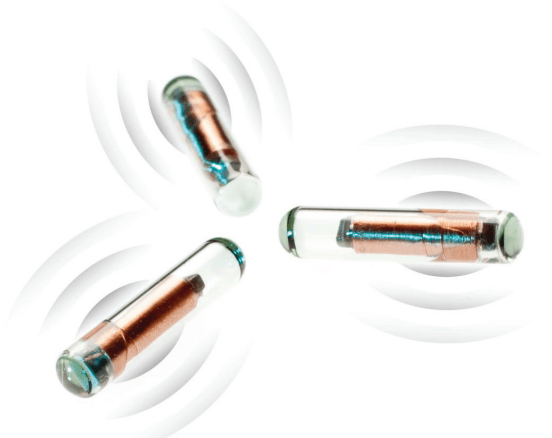
Radio Frequency Transponders
(Beacons are implanted in ROI, a tracking array is placed on the treatment couch below the patient or 4-D array mounted to the treatment ceiling, the transmitter sends a signal to the tracking array to detect the position of beacons, the system monitors the ROI position throughout treatment and notifies the radiation oncologist if motion exceeds a predefined margin)
400
What are the two distinct purposes of IGRT?
Imaging for treatment verification or for offline correction
Documentation of the patient’s position before or after treatment delivery.
500
A phase-based CT acquisition method that tracks tumor motion throughout the breathing cycle.
4-D CT
500
Respiration/breathing MOST commonly affects tumors located in which organ?
Lungs
(also, thorax, abdomen, and pelvis)
500
What is a key benefit of using SGRT for setting up a patient?
ALARA
(Reduces patient's radiation exposure, can confirm the patient’s identity, validate setup parameters and detect patient motion without adding to patient dose)
500
These fiducial markers are generally implanted transperineally, using transrectal ultrasonography into what organ.
Prostate
500
This imaging modality captures multiple 2-D x-ray projections that show the patient from superior to inferior. The multiple projections are then partitioned by the detector, sent to a dedicated computer, and reconstructed into a 3-D image.
Computed Tomography
600
This type of gating uses a plastic box with infrared reflective markers on the patient’s anterior abdomen between the xiphoid process and the umbilicus.
External Monitoring
(ExacTrac)
600
What can be done in treatment planning to address concerns about patient motion, such as breathing?
Increase treatment volumes
(better margin designs for the PTV and organs at risk)
600
The portion of the patient is represented by contours that the software considers for image registration.
The ROI: Regions of Interest
600
What are the two major disadvantages of using fiducial markers?
Swelling and Migration
(can cause swelling that deforms the target and local tissue geometry. Markers can migrate relative to the tissues within which they were implanted)
600
This imaging modality uses a small transducer called a probe that transmits high-frequency sound waves through the body. The probe receives reflected waves, or echoes, from the body’s tissues and then reconstructs those signals into a displayed image.
Ultrasound
700
These types of markers are usually, 2 mm gold spheres or coils, that are implanted in or near the tumor site.
Internal Fudicial Markers
(Common for stereotactic radiation)
700
Motion management techniques should be considered if the treatment team observes more _____ mm of tumor motion.
5 mm
700
This contoured image serves as the patient’s reference image/position for treatment.
External contour, or surrogate
(is a digital representation of the patient’s skin surface)
700
Daily Double
How many markers are needed to be able to use fiducials as a reference for radiation treatment?
At least 3
700
What type of imaging projection is this?
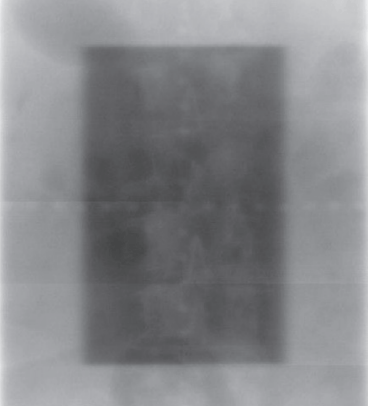
Double-exposure MV Port/EPID
800
A gating treatment technique commonly used for treating Breast Cancer that requires the radiation therapist to coach the patient to produce a consistent breathing pattern for both planning and treatment.
Deep-inspiration breath hold (DIBH)
800
Manages patient motion by employing devices and techniques to reduce the amount of motion or control the target by keeping it in a reproducible stage of the respiratory cycle.
Dampening
(Abdominal compression forcing shallowing breathing)
800
What happens when a patient’s position throughout a treatment fraction moves outside established tolerances?
The beam suspends and interrupts the treatment
800
Fiducial marker localization requires the acquisition of how many radiographic images.
Two or more
(Orthogonal images/MV Ports or CBCT)
800
Varying shades of gray on an image resulting from different densities of tissues such as bone, air, and soft tissue.
Contrast
900
A treatment device that forces shallow breathing for stereotactic treatment of small lung and liver tumors.
Abdominal Compression
900
Any motion-adaptive method that manages patient motion by turning the radiation beam on and off when the target is in the treatment beam’s line of sight.
Gating
(trigger the radiation beam on and off when the treatment volume is out of tolerance)
900
This imaging system projects a pseudorandom optical pattern onto the patient’s body, which each detector camera reads.
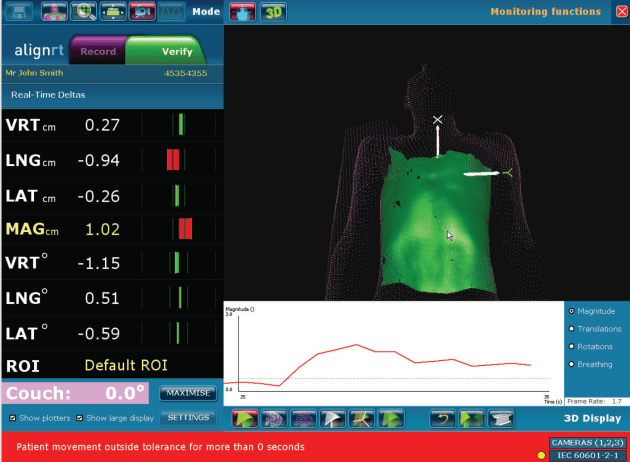
Video Surface Imaging
(OSMS, VisionRT, AlignRT)
900
What are the two functional roles of fiducial markers in daily radiation therapy treatment?
Target localization and Patient Positioning
900
What are the two main advantages of KV imaging vs. MV imaging?
Reduced patient dose
Better visual clarity (sharper detail)
1000
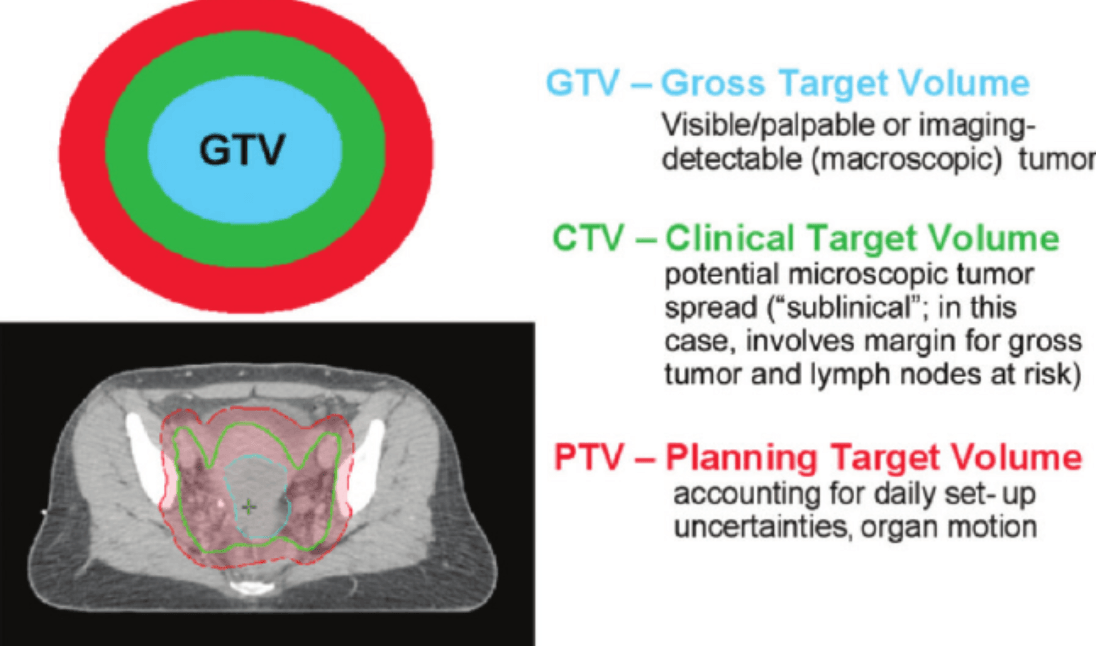
If the Blue represents GTV, What does the red represent?
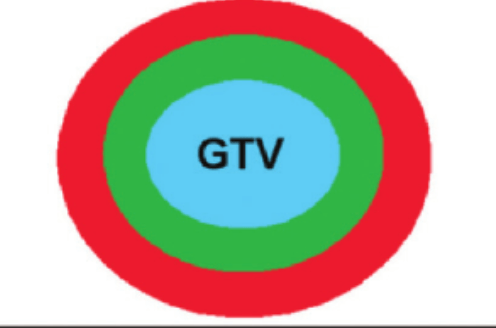
PTV
1000
Manages patient motion in real-time for tumor tracking methods, repositioning or modifying the radiation beam dynamically to accommodate for any tumor motion.
Chasing
(Adaptive treatment acquires real-time imaging adjusting the MLC to moving targets and or the Treatment couch to keep the target in beam position)
1000
A gating system for both imaging and treatment that supports breath-hold and free-breathing protocols.
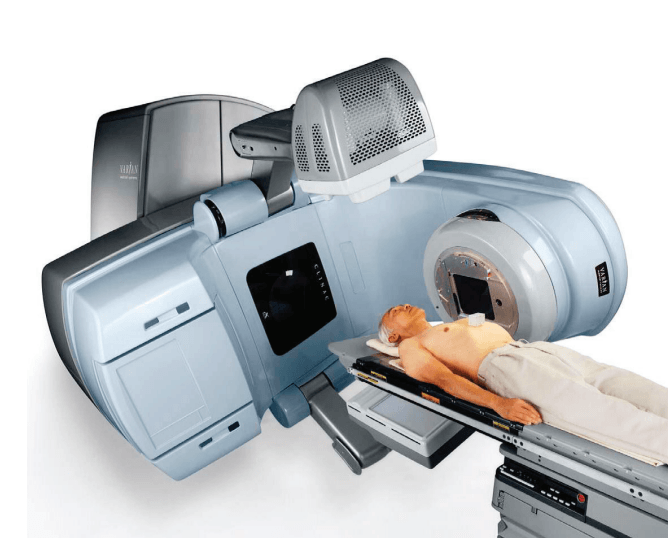
RPM: Real-time Position Management
Using a block featuring passive reflective markers and an infrared tracking camera, the RPM system monitors the patient’s respiratory pattern as a waveform. The radiation therapist identifies gating thresholds when the target reaches the correct portion of the respiratory cycle; at this point, the system turns the treatment beam on and off)
1000
Daily Double
Using fiducial markers can help safely reduce PTV margins from 1.5 cm to?
0.7 cm or less than 2 mm
1000
These two factors create the most problems concerning image quality in CT imaging.
Image noise and Artifacts
(An image affected by noise appears “grainy” and is the result of decreasing the number of photons reaching the detector
Artifacts are distortions in an image that. by motion, metallic objects, contrast media, and equipment malfunctions)