Constitution & Gov't
Branches of Gov't
Monroe Doctrine & foreign Policy
Mexican American War
Civil War & Reconstruction
100
This weakness of the Articles of Confederation is described by the requirement that any alteration must be agreed to in Congress and then confirmed by every state legislature.
Difficulty making changes
100
Article I of the Constitution establishes which branch of government?
Legislative Branch
100
he Monroe Doctrine's main goal was to restrict this group's interference in the Western Hemisphere; name the group.
European Powers
100
What immediate territorial issue helped start the Mexican-American War?
Border disputes over Texas / annexation of Texas
100
What President led the U.S. during the Civil War?
Abraham Lincoln
200
Name the document that replaced the Articles of Confederation in 1789.
The U.S. Constitution
200
What is the primary purpose of the executive branch?
Enforce the laws/Carry out laws
200
Based on a political cartoon showing Uncle Sam straddling the Americas with clubs labeled “Monroe Doctrine,” what inference can you make about U.S. intentions? (choose best inference)
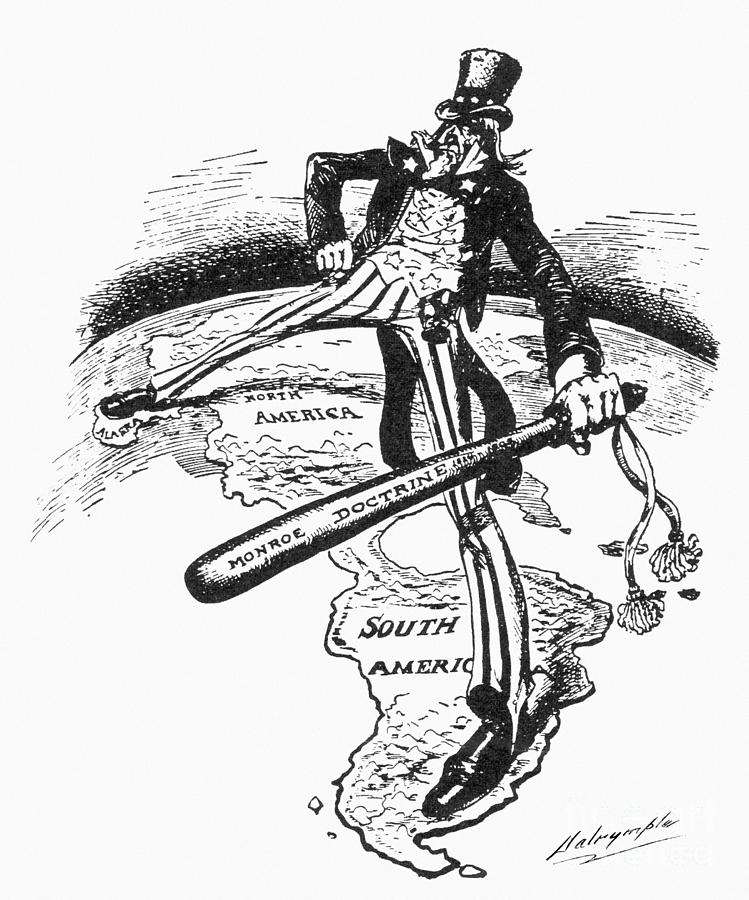
The United States was committed to protecting newly independent countries in the Americas.
200
The battle of the Alamo was fought at what kind of site?
A Mission Church
200
Which document did Abraham Lincoln issue that declared freedom for slaves in Confederate-held territory?
Emancipation Proclomation
300
The first three Articles of the U.S. Constitution establish what broad topic?
The Branches of government & their powers
300
Article II primarily describes which branch and its general powers — provide the branch name and one example power.
Executive Branch: Enforce Laws, commander in chief, conduct foreign policy
300
The Monroe doctrine essentially states that the U.S. would treat any colonization attempt by Europe in the Americas as a ___________________ to its own security.
A Threat
300
Name the Mexican general who led forces in Texas and later became Mexico’s political leader during the war.
Antonio Lopez De Santa Anna
300
In the Gettysburg Address excerpt, Lincoln argues that the nation should have a “new birth of freedom.” What is the main idea of that phrase?
Keeping the nation united and preserving the democratic government of “the people” was the objective.
400
This weakness of the Articles of Confederation made it difficult for the U.S. to establish a strong Economy.
Each state created & used its own currency.
400
According to Article II Section 2, who must give advice and consent for presidential appointments such as ambassadors and judges?
The Senate
400
Explain how the Monroe Doctrine reflected U.S. growing role in hemispheric affairs
It asserted U.S. influence in the hemisphere and discouraged European colonization, marking a more assertive American foreign policy role.
400
What years did the Mexican-American War take place?
1846-1848
400
The 13th, 14th, and 15th Amendments addressed which broad set of issues after the Civil War?
They expanded civil and political rights for formerly enslaved people (rights to freedom, citizenship, and voting).
500
Cite one specific example from the Constitution that shows the separation of powers among branches.
Legislative branch creates laws, executive branch enforces laws, Judicial branch interprets the laws
500
List the three constitutional qualifications for serving as President (as in Article II, Section 1).
Natural Born citizen, 35 years old, resident for at least 14 years
500
In which year did President Monroe announce the Monroe Doctrine?
1823
500
Identify two major outcomes of the Mexican-American War that affected U.S. territory and future conflict.
U.S.–Mexico border delineated/recognition of U.S. annexation of Texas; U.S. acquired vast territories including California (Treaty of Guadalupe Hidalgo); increased military experience for U.S. officers who later served in the Civil War.
500
Match each amendment to its central provision (short answers): 13th, 14th, 15th — and give one-sentence explanation for each.
13th — abolished slavery; 14th — defined citizenship and guaranteed due process/equal protection; 15th — prohibited voting denial based on race, color, or previous condition of servitude.