Discovering New World
Secrets of the Sun
Life of Star
Universe
Planets in Motion
Reference Table
100
The meaning of habitable
El significado de habitable
What is a place suitable for life? (Livable)
¿Qué es un lugar apto para la vida? (Habitable)
100
The main elements of the Sun.
Los elementos principales del Sol.
What is Hydrogen and Helium?
¿Qué son el hidrógeno y el helio?
100
Stars with smaller mass ends up in this stage.
Las estrellas de menor masa terminan en esta etapa.
What is White Dwarf?
¿Qué es una enana blanca?
100
All subatomic particle of atoms
Todas las partículas subatómicas de los átomos
What is proton, neutron, and electron?
¿Qué son el protón, el neutrón y el electrón?
100
One complete trip around a Star
Un viaje completo alrededor de una estrella
What is revolution?
¿Qué es la revolución?
100
The amount of times it takes for Sun-like stars to go from early-stage to Red Giant
El tiempo que tardan las estrellas similares al Sol en pasar de una etapa temprana a la fase de gigante roja
What is billions of years?
¿Qué son miles de millones de años?
200
The name of our galaxy
El nombre de nuestra galaxia
What is the Milky Way?
¿Qué es la Vía Láctea?
200
The name of the process that separates light into its different wavelengths to study a star
El nombre del proceso que separa la luz en sus distintas longitudes de onda para estudiar una estrella
What is spectroscopy?
¿Qué es la espectroscopia?
200
This type of stars die faster.
Este tipo de estrellas mueren más rápido.
What is massive star?
¿Qué es una estrella masiva?
200
The subatomic particle that determines what element it is.
La partícula subatómica que determina de qué elemento se trata.
What is proton?
¿Qué es un protón?
200
The motion of spinning in a circle
El movimiento de girar en círculo
What is rotation?
¿Qué es la rotación?
200
All the elements on the Emission Spectra
Todos los elementos en los espectros de emisiónTodos los elementos en los espectros de emisión
What is Hydrogen. Helium, Carbon, Nitrogen, Oxygen, and Silicon?
¿Qué son el hidrógeno, el helio, el carbono, el nitrógeno, el oxígeno y el silicio?
300
The factor that determines whether the planet might be able to support life.
El factor que determina si el planeta podría ser capaz de albergar vida.
What is water?
¿Qué es el agua?
300
The element that Sun uses as fuel to form energy
El elemento que el Sol utiliza como combustible para generar energía
What is Hydrogen?
¿Qué es el hidrógeno?
300
The stars spend most of its life in this cycle.
Las estrellas pasan la mayor parte de su vida en este ciclo.
What is main sequence?
¿Qué es la secuencia principal?
300
The difference between beryllium-7 and beryllium-9
La diferencia entre el berilio-7 y el berilio-9
What is the number of neutrons?
¿Cuál es el número de neutrones?
300
The force that keeps planets moving around their stars
La fuerza que mantiene a los planetas moviéndose alrededor de sus estrellas
What is gravity?
¿Qué es la gravedad?
300
The amount of times it take for Carbon to become Oxygen
La cantidad de tiempo que tarda el carbono en convertirse en oxígeno
What is 600 years?
¿Qué son 600 años?
400
A planet that orbits another star outside of our solar system
Un planeta que orbita otra estrella fuera de nuestro sistema solar
What is an exoplanet?
¿Qué es un exoplaneta?
400
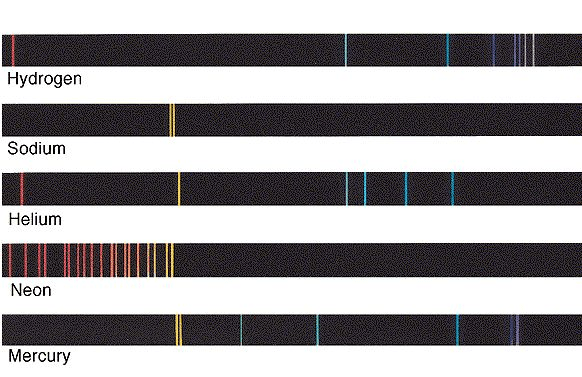
Dark lines in an absorption spectrum are lights that were ___________
Las líneas oscuras en un espectro de absorción corresponden a luz que fue ___________
What is abosorbed?
¿Qué se absorbe?
400
The y-axis of H-R diagram
El eje y del diagrama H-R
What is luminosity?
¿Qué es la luminosidad?
400
The process by which stars produce new elements
El proceso mediante el cual las estrellas producen nuevos elementos
What is Nucleosynthesis?
¿Qué es la nucleosíntesis?
400
The factor that determines whether the planet is circular or elliptical
El factor que determina si el planeta es circular o elíptico
What is orbital eccentricity?
¿Qué es la excentricidad orbital?
400
Jupiter's mean distance from Sun
Distancia media de Júpiter al Sol
What is 778.5 million km?
¿Qué son 778,5 millones de km?
500
Factors scientists have to consider when discoveirng new planets to live.
Factores que los científicos deben tener en cuenta al descubrir nuevos planetas habitables.
What is (water, gravity, orbit, sun, lifespan, oxygen...)?
¿Qué es (agua, gravedad, órbita, Sol, esperanza de vida, oxígeno...)?
500
Process in the Sun's core combines hydrogen nuclei to produce helium and release energy
El proceso en el núcleo del Sol combina núcleos de hidrógeno para producir helio y liberar energía.
What is nuclear fusion?
¿Qué es la fusión nuclear?
500
Betelgeuse, the largest star, will become _________ at the end of its life cycle.
Betelgeuse, la estrella más grande, se convertirá en _________ al final de su ciclo de vida.
What is Black hole?
¿Qué es un agujero negro?
500
The farther a planet is, the _________ it gets. The closer a planet is to its star, the ________ it gets.
Cuanto más lejos está un planeta, más _________ se vuelve. Cuanto más cerca está un planeta de su estrella, más _________ se vuelve.
What is cold and hot?
¿Qué es frío y caliente?
500
The further point in an orbit is called _____________, the closest point in an orbit is called __________.
El punto más alejado en una órbita se denomina _____________, el punto más cercano en una órbita se denomina __________.
What is Aphelion and Perihelion?
¿Qué son el afelio y el perihelio?
500
The temperature of the Star "Procyon B".
La temperatura de la estrella «Procyon B».
What is 7500 to 9999 Kelvin?
¿Qué corresponde a un rango de 7500 a 9999 Kelvin?