Seasons!
Moon phases!
Moon & Eclipses!
Tides!
Wild Card!
100
Explain which hemisphere is experiencing warmer temperatures and explain why!
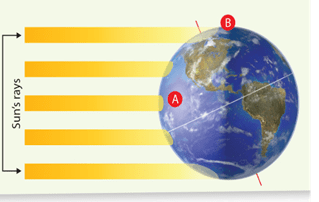
You must use these terms: 23.5 degree tilt, hemisphere, direct sunlight
The northern hemisphere!
The earth is tilted at 23.5 degree and the northern hemisphere is tilted towards the sun, receiving more direct sunlight.
100
Complete the thought below:
waning =_______ light; moon appears to __________
waxing =_______ light; moon appears to __________
waning = lose light; moon appears to shrink
waxing = gain light; moon appears to grow
100
The diagram below presents the phases of the moon as viewed from space. The various positions of the moon are numbered. Which phases are gibbous moons?
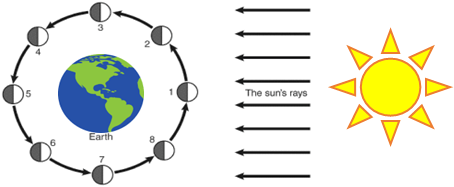
4 and 6 (right before and right after the full moon)
100
How many high and low tides occur daily?
2
100
About how often is a full moon observed from Earth’s surface?
once a month
200
What term is being defined here: ____________ are a specific time of the year that is characterized by recurring or consistent weather conditions.
Seasons
200
What relationship (#beasties) causes our moon to have its many phases?
positions of the Earth, moon, and sun
200
The diagram shows the position of the moon during its orbit around Earth. In which phase is the moon when in the position shown in the diagram AND what type of eclipse could this form?
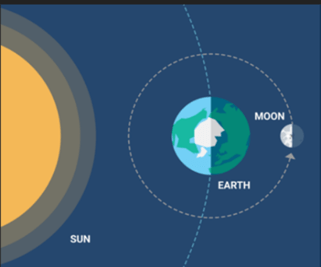
Full moon and lunar eclipse
200
What causes tides?
gravitational pull of moon
200
The diagram shows four consecutive moon phases:
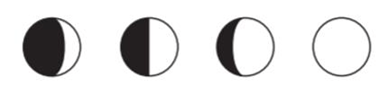
Sketch the next four that follow the full moon!

300
ACT out and then explain what causes us to experience day and night on Earth.
Earth's rotation
300
Which moon phase is shown?
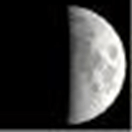
1st quarter
300
Which are crescent phases?
2 and 8 (right before and after the new moon)
300
Two kids pulled their boat up onto the beach in the sand and went on a hike. When they returned, the beach was covered by water and the boat was floating offshore. What is the most likely explanation?
A. The spring tide came early.
B. The water level rose due to the high tide coming onto shore and pulled out the boat.
C. The low tide receded and pulled the boat out to sea.
D. The gravitational pull of the sun and moon decreased the tidal range.
b
300
The diagram below shows the relative positions of Earth, the moon, and the sun. The moon is shown at four possible positions around Earth.
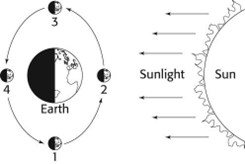
Which position of the moon could result in a lunar eclipse?
4
400
Explain what causes an equinox, the names of the two equinoxes, AND the season we experience at the time of the equinoxes.
When Earth is not tilted towards or away from the sun (this causes an equinox). The names are autumnal equinox and vernal equinox. The seasons are fall and spring.
400
What moon phase is next AND are these phases waxing or waning?
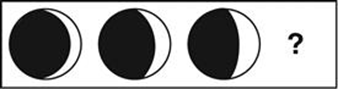
1st quarter and waxing
400
When the moon comes between the Earth and sun, casts a shadow on the Earth and blocks our view of the sun, what is being created?
solar eclipse
400
How are the sun, Earth, and the moon aligned when spring tides occur?
*see image below:
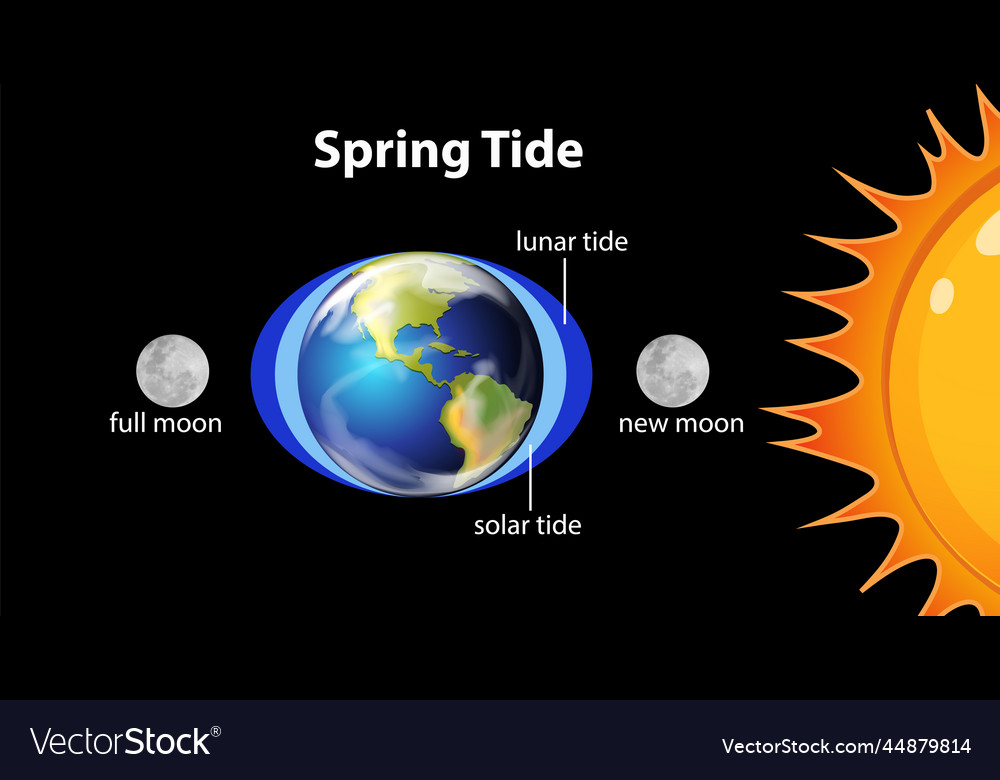
In a straight line
400
Which phase occurs between the full moon and the last quarter?
waning gibbous
500
What creates our seasons AND name all 4 seasons in the image.

A. The tilt of Earth’s axis and Earth’s revolutions around the sun
B. Earth’s changing distance from the sun as Earth revolves in its orbit.
C. The sun changing its heat output during the year
A and then
a = summer
b = fall
c = winter
d = spring
500
Choose the model that best represents the relationship between the earth, moon, and sun!
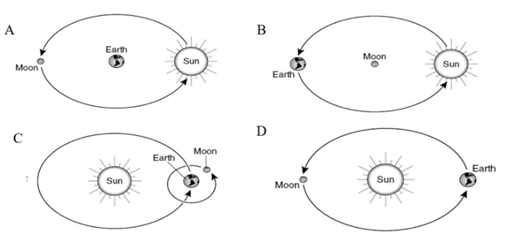
c.
500
Look at the image below and choose if you are viewing a solar or lunar eclipse:
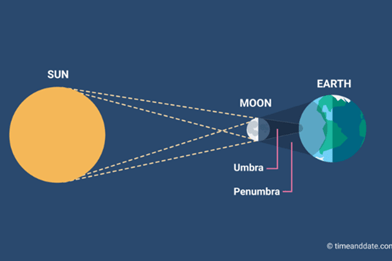
solar
500
If you CANNOT walk on the beach, is it high tide or low tide?
high tide
500
What determines how long the Moon takes to complete one cycle of phases?
A. The period of rotation of the moon around its axis
B. The period of revolution of the moon around Earth
C. The period of rotation of Sun around its axis
D. The period of revolution of Earth around the sun
B. The period of revolution of the moon around Earth