Vocabulary
Levels of Organization
Ecological Relationships
Feeding Relationships
Carrying Capacity
Cycling of Matter
100
The study of the interactions that organisms have with their environment
Ecology
100
A single individual
Organism
100
Any close relationship between two or more species that live together
Symbiosis
100
This is an organism that has to eat food to get energy
Heterotroph
100
Something that prevents a population from increasing
Limiting factors
100
What molecule is considered the backbone of all living things?
carbon
200
The portion of the Earth that supports life
Biosphere
200
Which of the following levels of organization includes all of the other levels?
Community Individual
Ecosystem Population
Ecosystem
200
What type of symbiotic relationship is represented here:
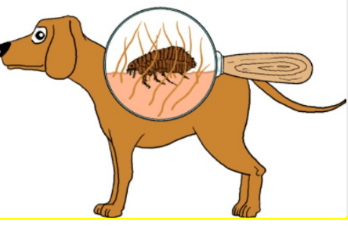
Parasitism
200
The picture to the shows an example of a ___?
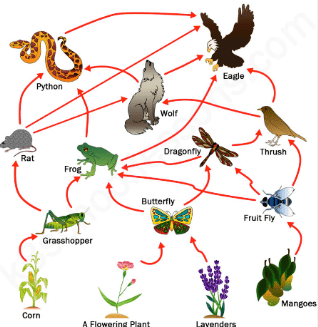
Food web
200
What is the carrying capacity of rabbits in this ecosystem?
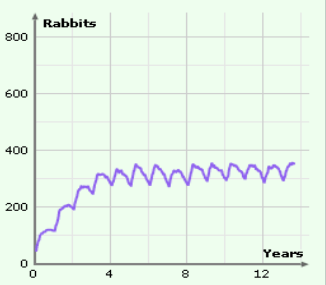
Around 300 because the line fluctuates around that number
200
This process converts the energy of the sun into a form that can used be living things
photosynthesis
300
What is the difference between a biotic factor and an abiotic factor?
Biotic – Living (or once living) factors
Abiotic – Non-living (never alive) factors
300
What level of organization do these giraffes represent?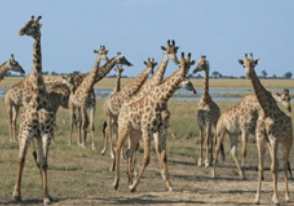
Population
300
List the 3 major types of symbiosis
Commensalism, Parasitism, Mutualism
300
Is this an autotroph or heterotroph. Explain how you know?
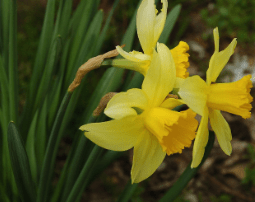
An autotroph because it uses the sun’s energy for photosynthesis
300
Is the limiting factor in the picture considered density-dependent or density independent? Explain why.
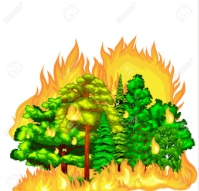
Density independent because it affects the population regardless of size
300
What organism converts nitrogen to a useable form for plants to use?
bacteria
400
List 4 biotic factors in this ecosystem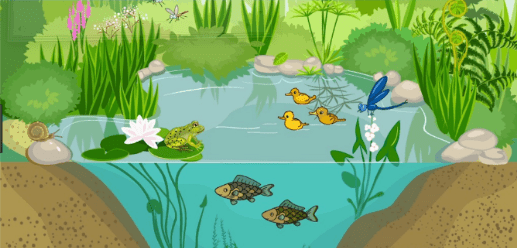
fish, ducks, frogs, dragonfly, snail, grass, plant, etc.
400
List the levels of organization from largest to smallest.
Biosphere, Biome, Ecosystem, Community, Population, (Species), Organism
400
A remora is a fish that gets a free ride from a shark and eats the bits of food that the shark leaves behind. This is an example of _____.
Commensalism
400
Define the following consumers:
Carnivore
Herbivore
Omnivore
Carnivores eat only meat, herbivores eat only producers, omnivores eat both meat and producers
400
This graph shows the population of a predator and its prey. Which line represents the predator and how do you know?
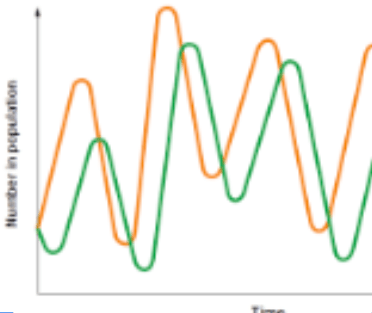
Predator is green; its population follows the availability of its food, higher trophic level so lower numbers in ecosystem
400
A natural or artificial reservoir that stores more carbon than it releases
Carbon sink
500
What are two abiotic factors that a squirrel depends on?
Air, water, temperature, climate, humidity, etc.
500
What level or organization is represented here and EXPLAIN how you know.
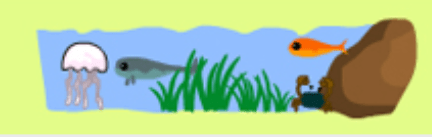
Ecosystem because it contains both biotic and abiotic factors in the environment.
500
What type of relationship is shown in this picture and EXPLAIN WHY.
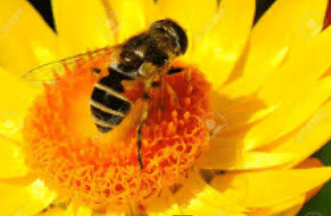
Mutualism because the bee is getting nectar from the flower and the flower is getting help with pollination from the bee
500
What are these organisms called on the trophic pyramid?
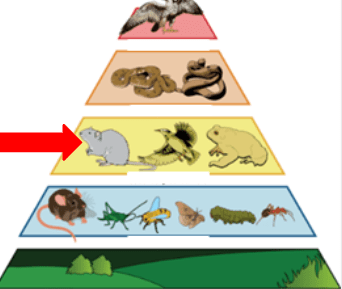
Secondary consumers
500
The pea weevil is a type of insect. The table shows the average time it takes for pea weevil eggs to hatch at different temperatures. In what temp range would the population growth of the pea weevil be the highest?
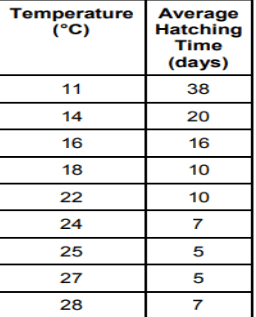
Population growth would be highest between 25-27 degrees
500
Label 1-4 in the picture of the carbon cycle below: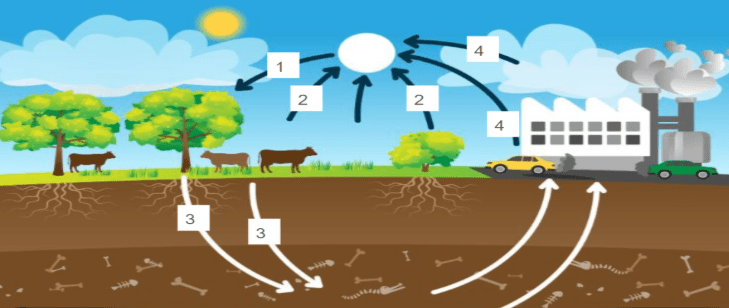
1. photosynthesis, 2. cell respiration, 3. decomposition, 4. combustion