Symbiotic Relationships
Types of Species
Ecology (random)
Food Webs
Nutrient Cycling in Ecosystems
Other/Miscellaneous
100
The type of relationship in which both species benefit
Mutualism
100
A blue crab can be found in open water, on coral reefs, on oyster beds, and in seagrass beds and has a varied diet of crustaceans, small fish and anything else it can find. What kind of species is this?
Generalist
100
What describes a community?
Multiple species living together.
100
Which is the secondary consumer?
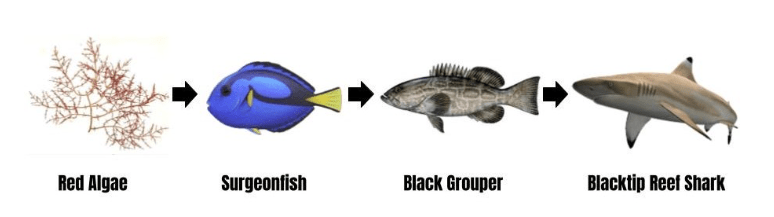
Black Grouper
100
Which of the following processes does NOT replenish nutrients to surface waters?
Animal waste (excretion) Upwelling
Runoff Harvesting
Harvesting (this removes nutrients)
100
What does this graph show?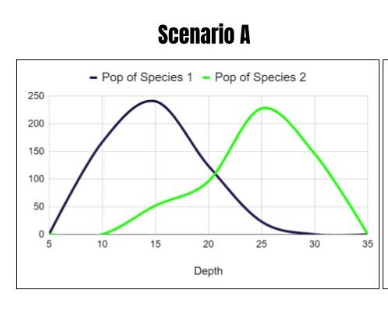
Resource Partitioning
200
What is parasitism?
One species benefits by harming another species.
200
Lionfish are considered invasive because hundreds of fishermen and divers die each year from their lethal sting. TRUE OR FALSE
FALSE! They are invasive because of no natural predators, they eat native prey, and they are hard to eradicate (remove)
200
What could cause an increase in the population of urchins?
answers will vary (removing predators, increasing algae, etc)
200
What do herbivores eat?
Plants/algae
200
What process delivers nutrients from seep waters to the surface?
Upwelling
200
What does this graph show?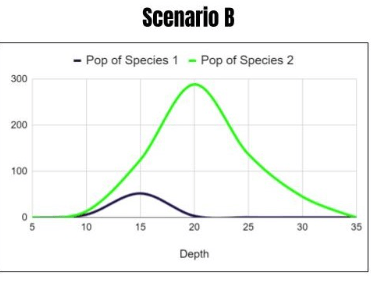
Competive Exclusion
300
Relationship between members of the same species
INTRASPECIFIC
300
A type of species that, if removed, would drastically change the food web of an ecosystem.
KEYSTONE SPECIES
300
What percentage of energy is passed onto the next trophic level?
10%
300
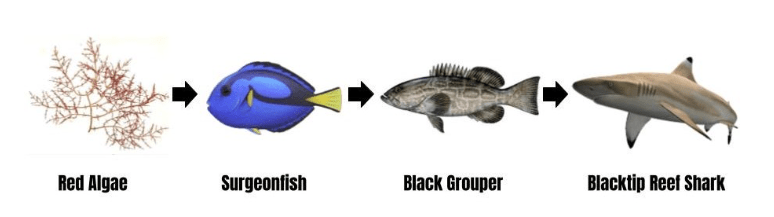 Which is the apex predator?
Shark
300
The mineral that is found in coral skeletons
Calcium
300
Which two nutrients are needed to make DNA?
Nitrogen and Phosphorus
400
Relationship between members of different species
INTERSPECIFIC
400
Kelp and coral are examples of which type of species?
FOUNDATION
400
Which one is the tertiary consumer?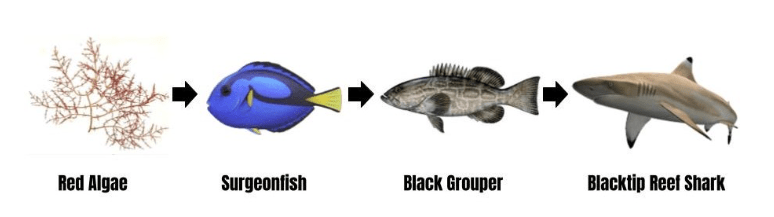
SHARK
400
Which describes the process in which toxins increase in concentration as you move higher up a food chain?
Biomagnification
400
Where is most carbon stored long-term in the marine ecosystems?
Seafloor/Sediments
400
What is carrying capacity?
How many members of a population an ecosystem can hold.
500
Type of relationship in which one species benefits and the other is unaffected.
COMMENSALISM
500
A turtle growing a stronger shell in response to a shark having stronger teeth and jaws and then the shark having to grown even stronger teeth and jaws is an example of what?
COEVOLUTION
500
Name something that would feed at the lowest trophic level.
Any primary consumer or grazer/herbivore.
500
Why is glucose broken down during respiration?
To release chemical energy
500
What process removes carbon dioxide from the ocean and puts it into producers?
Photosynthesis
500
What does a producer need to carry out photosynthesis? (name 3 things)
Water, carbon dioxide, light, chlorophyll