Limiting Factors
Population Size
Food Webs
Relationships
Human Impacts
100
List three abiotic limiting factors
Examples include: Rain, Water, Shelter, Viruses (Disease)
100
The population has reached ________________ in section F of the graph. 
Carrying Capacity
100
What organisms does the Island fox eat?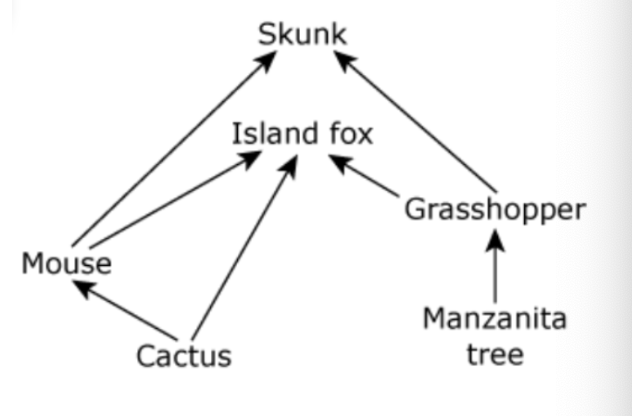
Mouse, Cactus, and Grasshopper
100
Wild horses, domestic sheep, and pronghorn antelope all eat the same types of grass so they are an example of what type of relationship?
Competition
100
What is it called when ecosystems are broken apart by roads, cities, fences or other human infrastructure?
Habitat Fragmentation
200
List three biotic limiting factors
Food/Prey availability, Predation/Predators, Symbiotic Relationships, or Competition for resources.
200
What will happen to the carrying capacity of an ecosystem if a dry winter decreases the amount of grass that grows in the spring.
Decrease
200
Which organisms are producers?
Cactus, Manzanita Tree
200
Many corals host microscopic algae called inside their tissues. The algae use sunlight to provide the coral with food and vibrant colors through photosynthesis, while the coral provides shelter. This is an example of what symbiotic relationship?
Mutualism
(Both Benefit)
200
A new housing development is being planned. It would destroy an area that birds use for nesting. What will happen to the bird population?
The bird population will decrease (because they don't have a place to lay eggs and hatch them).
300
Limiting factors affect population sizes by impacting _________ rate and ________ rate.
Birth rate and death rate
300
Wild dogs eat kudu and gazelle.
The carrying capacity for wild dogs in Africa has ____________________ because habitat destruction ____________________ the amount of food available to the gazelle and kudu.
decreased, decreased
300
What trophic level are the grasshopper and mouse?
Primary Consumer
300
Cattle egrets follow cows, horses, or other large herbivores. As the mammals walk through the grass, they stir up hidden insects that the egrets eat. The birds get a meal, and the livestock are unaffected.
This is an example of what relationship?
Commensalism
(One benefits, the other is unaffected).
300
A new plant is introduced to an island. It outcompetes other plants and grows very tall, blocking sunlight for native plants. What is this called?
Invasive Species
400
Scientists studying the dusky hopping mice found that the mice were more likely to be found in areas with above-average rainfall. Why is this?
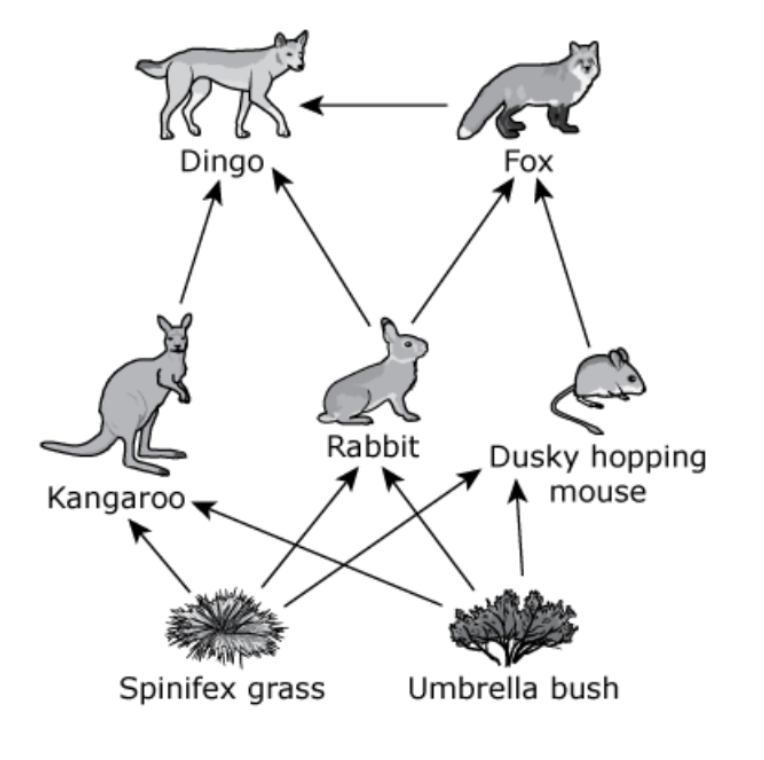
Above average rainfall would increase the amount of food.
Rain is a limiting factor for producers and plants. More rain means more plants, which are food for dusky hopping mice.
400
A law bans the hunting of bobcats. Bobcats eat pronghorn antelope.
What will happen to the pronghorn antelope population?
The pronghorn antelope population will increase.
400
What trophic level is the skunk?
Secondary Consumer
400
Fleas bite animals like dogs and cats to get nutrients from their blood.
The fleas cause cats to get skin diseases , but they may transmit other serious infections, such as tapeworm and bacterial infections.
Fleas are an example of....
Parasitism/Parasites
(One benefits, one harmed)
400
How does removing a keystone species impact biodiversity?
Decrease biodiversity
500
How is food is an important limiting factor? Give 2 reasons.
Nutrition is important for survival and energy, healthy animals can avoid predators, healthy organisms can reproduce more/have a higher birth rate.
500
How does a behavior like migration increase the carrying capacity for a certain organism?
Access to more food, able to follow beneficial weather/seasons, avoid predators, access to more resources.
500
An eagle eats the island fox and skunk. What trophic level(s) would it be?
Secondary and tertiary consumer.
500
What relationships is shown in the population graph?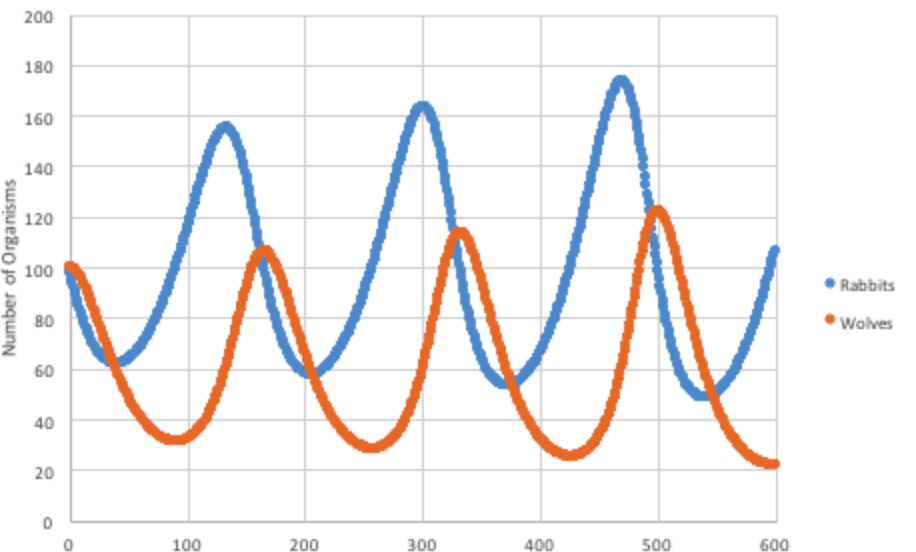
Predator-Prey population cycling
500
Cheetah populations are decreasing. Several factors have contributed to this decline. How does habitat destruction threaten the cheetah’s survival?
Increase in competition for food, decreased shelter or territory, OR increased interactions with predators because less territory.