Biotic
Abiotic
Levels of organization
Relationships
Level of organization 2
Variations
100
Which of the following examples is biotic?
A. rocks
B. decomposing leaves
C. sand
D. water
B. decomposing leaves
100
Which of the following examples is abiotic?
A. whale
B. krill
C. iceburg
D. phytoplankton
C. iceburg
100
What level of organization in an ecosystem would include all of the following:
Grasses, rocks, deer, trees, rabbit, temperature, partly cloudy
A. ecosystem
B. population
C. community
D. organism
A. ecosystem
100
Remoras attach themselves to a shark’s body. They then travel with the shark and feed on the leftover food scraps from the shark’s meals. The relationship neither harms nor benefits the shark.
predation
mutualism
parasitism
commensalism
commensalism
100
Which of the following is a population?
A. Sun, grasses, tree, water
B. mushrooms
C. grasses, tree, mushrooms
D. water, soil
B. mushrooms
100
The differences among a species, like different bird beaks, are called
genes.
variations.
traits.
theories.
variations.
200
Mushrooms, trees, and grass are example of
A. plants
B. abiotic factors
C. animals
D. biotic factors
D. biotic factors
200
Which of the following are abiotic?
A. water, rocks, air
B. plants, water, rocks
C. fish, plants, coral
D. water, rocks, algae
A. water, rocks, air
200
A community can include
A. rock and mice
B. springs and rivers
C. rainfall
D. giraffe
D. giraffe
200
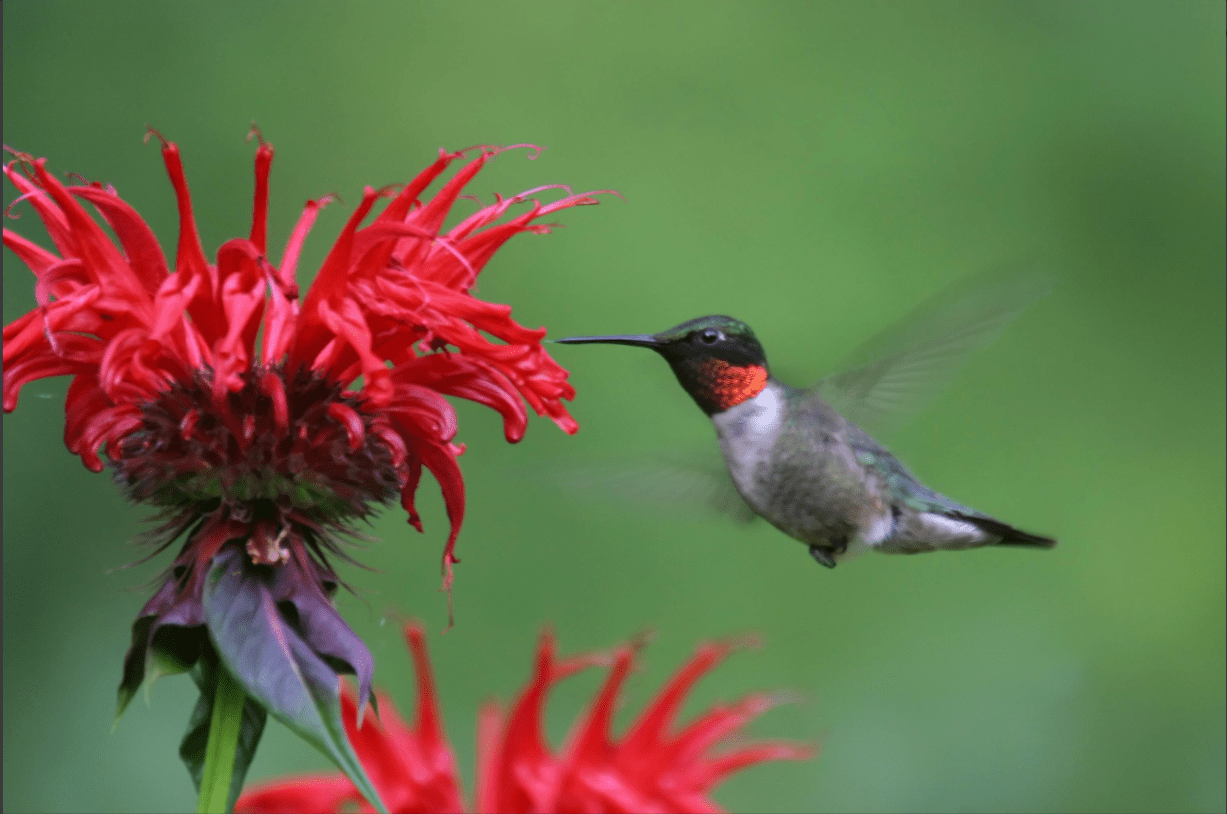
What type of symbiosis? Hummingbirds feed on nectar from flowers. The flowers are pollinated by hummingbirds as they move from flower to flower.
A. commensalism
B. mutualism
C. parasitism
D. predation
B. mutualism
200
Cactus, mice, rats, rattlesnakes, roadrunners, and trees are examples of
A. a community
B. a population
C. an ecosystem
D. an organism
A. a community
200
The more genetic variation a population has, the more likely it is for some individuals to:
A. evolve
B. migrate
C. survive and reproduce
D. mutate
C. survive and reproduce
300
What is a biotic factor?
Anything that is living or was once living
300
Why is water considered an abiotic factor in ecosystems?
A. It is a living organism
B. It is necessary for photosynthesis.
C. It is a non-living component that affects living organisms.
D. It is a source of food for animals.
C. It is a non-living component that affects living organisms.
300
Within an ecosystem, there are levels of organization. Which levels are missing from the diagram below?
Organism -> ? -> ? -> Ecosystem
A. Biome, Community
B. Community, Cell
C. Cell, Population
D. Population, Community
D. Population, Community
300
A tapeworm and a cat have this type of relationship.
A. parasitism
B. mutualism
C. commensalism
D. competition
A. parasitism
300
Which example best describes the smallest level of organization within an ecosystem?
A. Tree frogs in a rainforest
B. A tree frog in a rainforest
C. Tree frogs, ferns, mosquitos, and lizards in a rainforest
D. Tree frogs, ferns, rain, sunlight, and clouds in a rainforest
B. A tree frog in a rainforest
300
A mountain lion blending into it's environment (camouflage).
A. Trait that hurts survival
B. Trait that helps survival
B. Traits that helps survival
400
Which of the following is biotic interaction with biotic?
A. Deer drinking water
B. Plant using soil to anchor itself
C. Bees spreading pollen
D. A snake sunbathing on a rock
C. Bees spreading pollen
400
Which of the following is an example of an interaction between a biotic and abiotic factor?
A. Wind blows sand into a sand dune.
B. Lions consume other animals for energy.
C. Rain increases the rate of water flow in a river.
D. Climate in a given region affects the growth of trees.
D. Climate in a given region affects the growth of trees.
400
Which ecosystem level is the most complex?
A. Ecosystem
B. Community
C. Organism
D. Population
A. Ecosystem
400
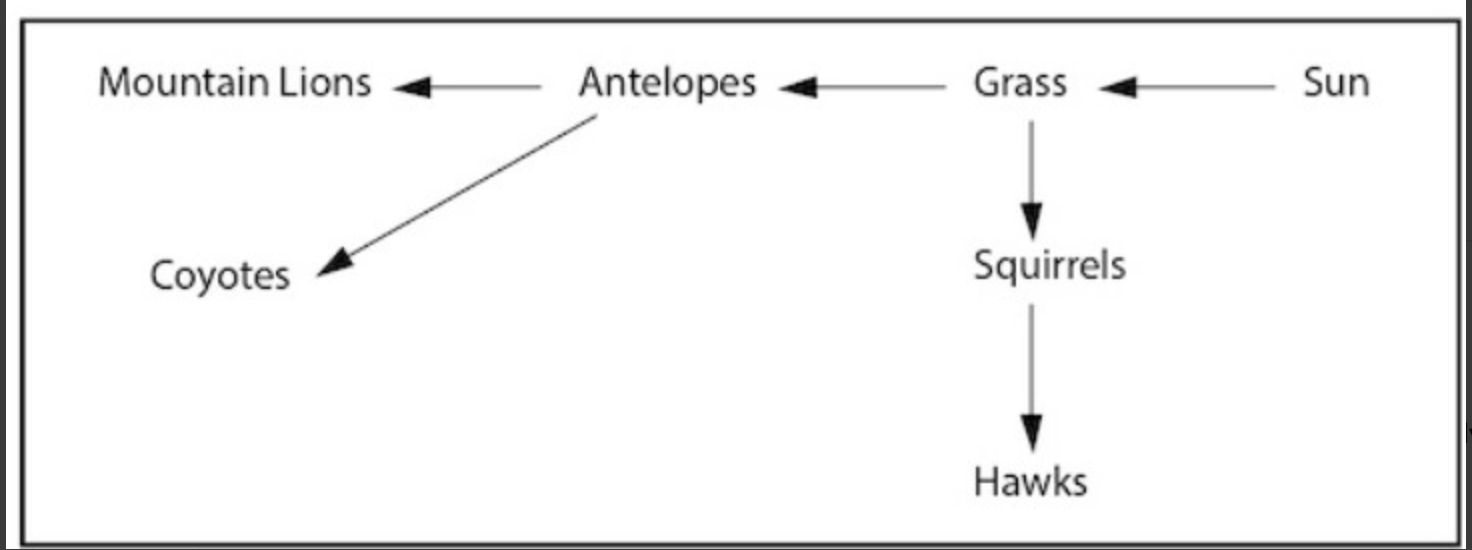
Examine the diagram provided. Based on the diagram, which organisms compete for food resources?
A. Hawk and Squirrels
B. Mountain lions and coyotes; Antelope and squirrels
C. Grass and Hawk
D. Coyotes and Antelope
D.
B. Mountain lions and coyotes compete for food resources because they both eat antelopes. Antelopes and squirrels compete as well because they both eat grass.
400
What are the ecological levels of organization from smallest to the largest?
A. organism, population, community, ecosystem,
B. population, ecosystem, organism, population
C. ecosystem, organism, population, community
D. community, community, population, ecosystem,
A. organism, population, community, ecosystem,
400
Variations can be inherited or caused by the environment.
False
True
True
500
Biotic factors do not depend on abiotic factors in an ecosystem
True
False
False
500
Which of the following is a consequence of limited abiotic resources in an ecosystem?
A. Increased biodiversity
B. Decreased competition
C. Population decline.
D. Unlimited growth.
C. Population decline.
500
What 2 types of factors make up an ecosystem?
A. plant and animal factors
B. soil and rain factors
C. biotic and abiotic factors
D. the land and water factors
C. both biotic and abiotic factors
500
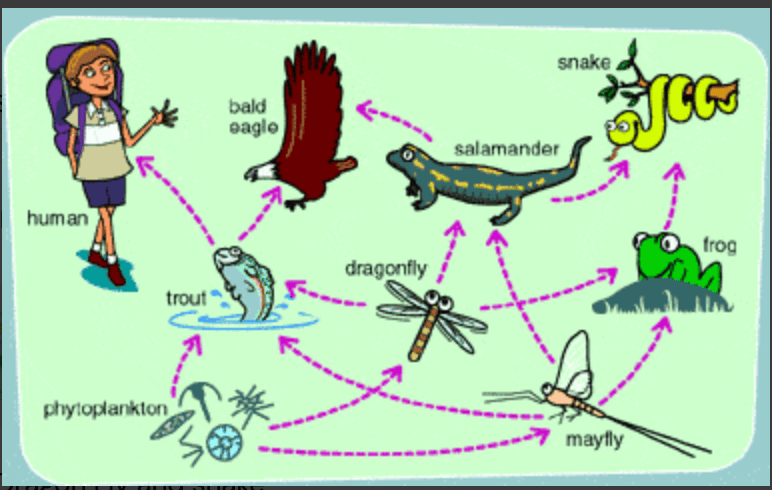
Use the diagram to answer the question.
The Mayfly is a food source for which 3 organisms?
A. Frog, Dragon Fly and snake
B. Frog, trout and dragon fly
C. Frog, salamander and trout
D. Frog and phytoplankton
C. Frog, salamander and trout
500
A population, organism, and community contain
A. abiotic factors
B. abiotic and biotic factors
C. biotic factors
D. non-living things
C. biotic factors
500
What would happen to the BROWN AND WHITE MOTH POPULATIONS IF THEY LIVED ON A TREE WITH white bark, such as a birch tree
A. BROWN MOTH BECOMES EASY TARGETS TO PREDATORS
B. WHITE MOTH BECOMES EASY TARGETS TO PREDATORS
A. BROWN MOTH BECOMES EASY TARGETS TO PREDATORS
600
Which biotic factors do organisms compete for in an ecosystem?
They compete for food, mate and pollinators.
600
How does soil composition affect organisms in an ecosystem?
A. It provides light for photosynthesis.
B. It determines the types of plants that can grow.
C. It affects the availability of water.
D. It provides a habitat for aquatic animals.
B. It determines the types of plants that can grow.
600
Which of the following examples best represents the community level of organization?
A. one deer
B. a herd of deer
C. deer, trees, grass, rabbits, soil, water
D. deer, rabbits, birds, mice
D. deer, rabbits, birds, mice
600
A frog eats a fly. The frog and fly are demonstrating ________.
A. mutualism
B. competition
C. predator/prey
D. parasitism
View Answer explanation
C. predator/prey
600
A community describes
A. a single living organism
B. organisms of the same species
C. non-living things like rocks
D. all organisms of different species in an area
D. all organisms of different species in an area
600
Organisms have characteristics that help them survive in their environment. These characteristics are called __________.
predator
traits
habitat
food chain
traits