Energy
Electric Charge
Electric Current
Ohm's Law
Electric Circuit
Magnets & Electro-magnetism
100
Definition of energy.
What is the ability to do work or cause change.
100
Finish the following sentence with the word “repel” or “attract” … Like charges _________.
What is REPEL.
100
The movement of _______ ________ creates an electric current.
What is electric charge.
100
Draw the Ohm’s Law triangle.

100
This is the symbol for what?
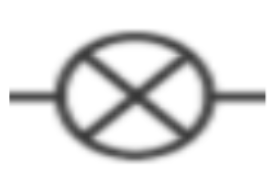
What is a Light Bulb.
100
These bar magnets are repelling one another. The red circle is best described as being.
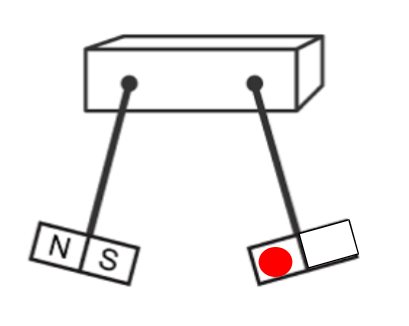
What is the South Pole.
200
The two basic kinds of energy.
What are potential and kinetic energy.
200
What is the definition of the term “static electricity”?
What is the buildup of electric charges on an object.
200
_____________ is the tendency of a material to oppose the flow of electrons.
What is Resistance.
200
What does the V stand for?
What does the R stand for?
What does the I stand for?
What are Voltage, Resistance, Current.
200
Is this a closed or an open circuit?

What is open.
200
What is this a picture of?
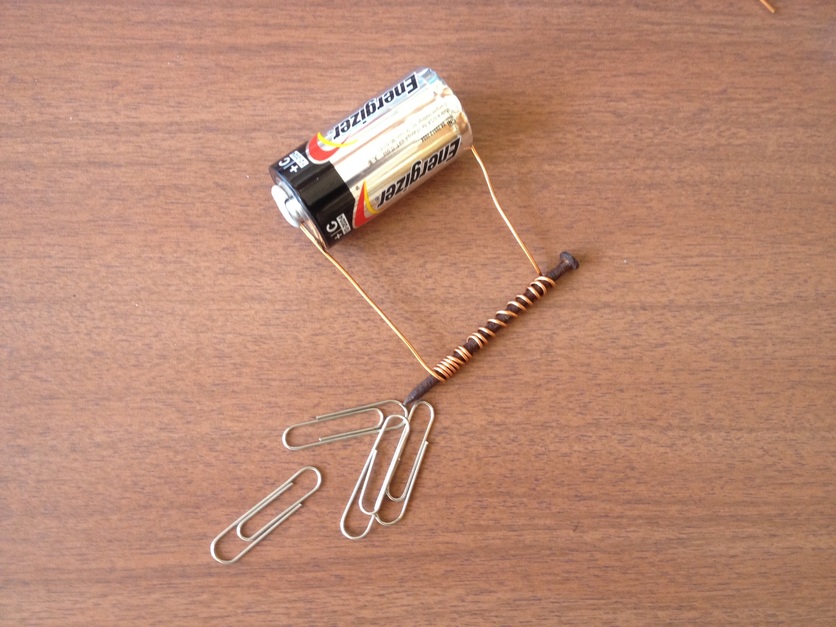
What is an electromagnet.
300
A generator converts _________ energy to __________ energy.
What are mechanical/kinetic energy to electrical energy.
300
Mr. Gaines rubs a PVC pipe with fabric… explain WHY an aluminum can starts to move toward the pipe when he puts the puts the pipe near it.
By rubbing the pipe with the fur fabric, Mr. Gaines created a buildup of negative charges on the pipe. When the pipe comes near the can, the can moves towards the pipe because they are opposite charges (opposite charges attract).
300
Explain the difference between a conductor and an insulator. Give one example of each.
Conductor - a material that allows electricity to easily move through it (metals - copper/silver, wires)
Insulator - a material that allows little electricity to move through it (glass, paper, rubber, plastic)
300
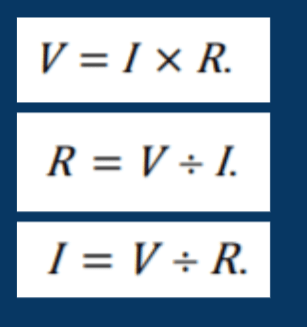
Finish the following equations…
V =
R =
I =
300
Label the circuit diagrams below as Parallel or Series.
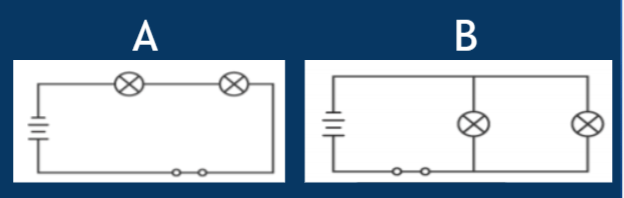
What is...
A = Series
B = Parallel
300
True or False: Current traveling through an electrical wire creates a magnetic field.
What is true.
400
State the Law of Conservation of Energy.
What is energy is neither created nor destroyed... it can only change form.
400
Two spheres, A and B, are held together as shown below. They are then released and move away from each other. What are the electrical charges of spheres A and B?
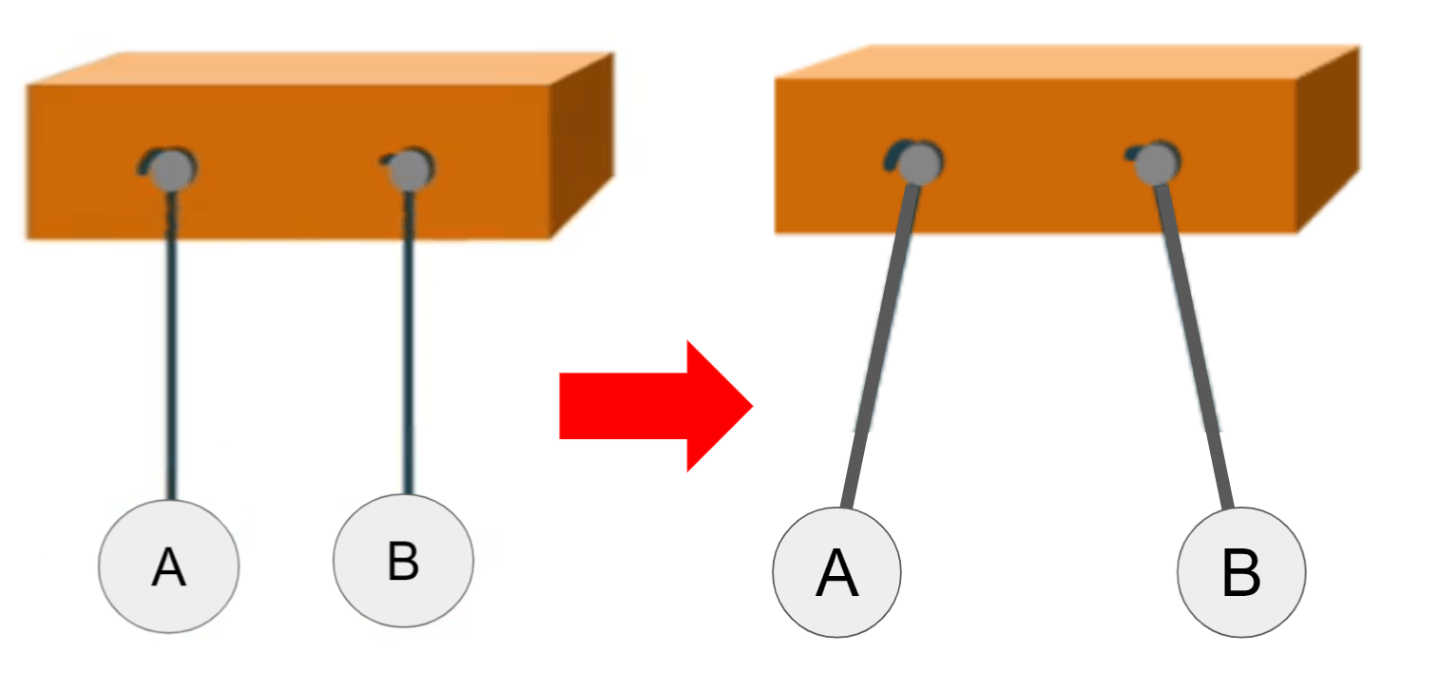
What is A and B are both + OR A and B are both -
400
Voltage: What effect does increasing the potential difference have on current?
What is... the greater the potential difference, the stronger the current.
400
What are the units for voltage, resistance, and current?
What are Voltage = Volts (V), Resistance = Ohms (Ω), Current = Amperes (A)
400
Give one advantage of a series circuit.
What is..
- Simple to design and build
- Each added source of current adds more current to the circuit
400
Explain where Earth's geographic North and South Poles are and where Earth's magnetic north and south poles are.
Geographic North Pole = Magnetic South Pole
Geographic South Pole = Magnetic North Pole.
500
Give an example of potential and kinetic energy.
Answers will vary.
Example - Kinetic... what is a moving roller coaster, Potential... what is a roller coaster at the top of the hill, unmoving.
500
Draw the electric field lines between a negatively charged particle and a positively charged particle.
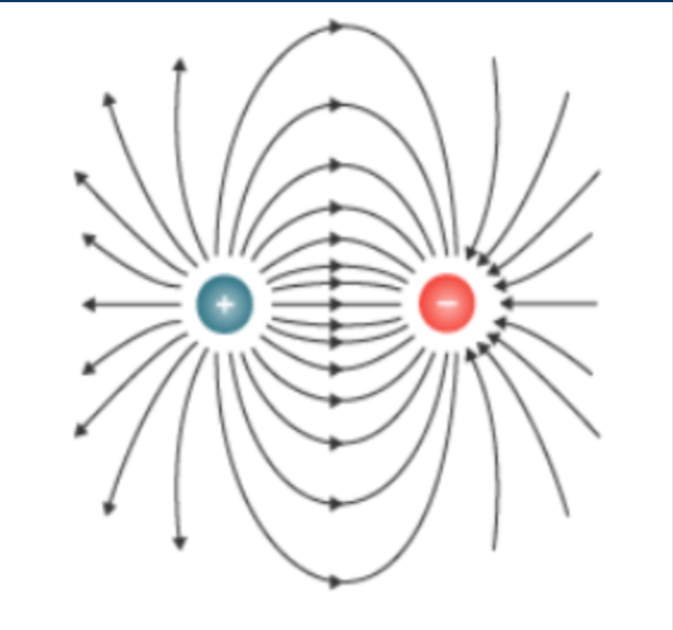
500
How is current electricity different than static electricity?
What is current electricity flows through wires and electrons flow in a definite path.
500
Finish the following sentences…
When voltage increases, current __________.
When resistance increases, current __________.
What is increases, decreases.
500
When one light goes out in this classroom, the other lights stay lit. Are the lights in the room in a parallel circuit or a series circuit? Explain how you know.
What is in a Parallel Circuit - multiple pathways to each light bulb...when one goes out, the others still have electric current flowing through.
500
Explain one way you can make an electromagnet stronger.
What is...
- Increasing the current
- Adding iron to the middle
- Increasing the # of coils
- Tightening the coils