Common Elements
Using the Periodic Table
Finding Sub particles (P, N, & E)
Finding Sub particles in Ions
Electron Representations
100
What is the element Na?
Sodium
100
What is the atomic number for Francium?
87
100
How many protons are in Lead?
Atomic number = protons
82
100
How many electrons are in S-2?
16 + 2 = 18 total!
100
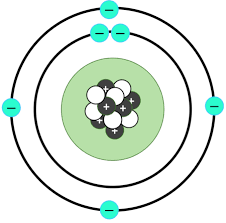 What element is this?
Carbon (Atomic #6 = 6 Protons = 6 electrons)
200
What element is N?
Nitrogen
200
What is Cobalt's atomic mass?
59 (Remember to round!)
200
How many electrons are in a neutral Argon?
Protons = Electrons
18
200
How many protons are in Fe+2?
Always 26!
Electrons change charge, Protons change identity!
200
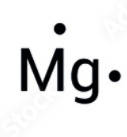 What type of representation is this?
Lewis Dot Model
300
What is the element Pb?
Lead
300
What is the Atomic Symbol for Tin?
Sn
Second letter MUST be lower case!
300
How many neutrons are in Xenon?
131 - 54 = 77 neutrons
300
How many neutrons are in Sn-3?
119 - 50 = 69 neutrons
Neutrons have no charge so they don't change with charge, only mass!
300
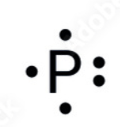 What do Lewis Dot Diagrams show us about an element?
How many VALENCE electrons it has. Electrons located on the outermost ring.
400
What element is C?
Carbon
400
What is the atomic number for Barium?
56
400
How many protons are in Chromium?
24
400
How many electrons are in Ca+2?
20 - 2 = 18 total electrons
400
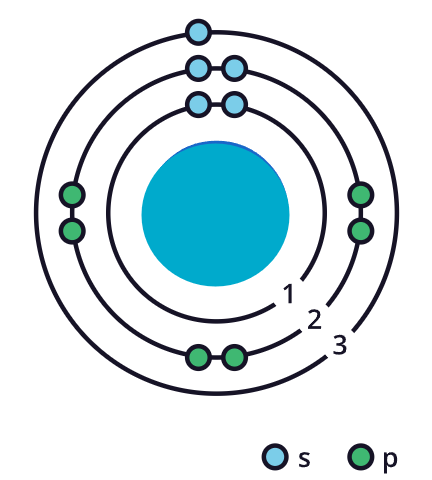
What element is represented here?
Sodium (Na)
500
What is the element Hg?
Mercury
500
What is the atomic mass for Chlorine?
35
500
How many neutrons are in Tungsten?
184 - 74 = 110 neutrons
500
How many protons are in N-1?
Always 7!
Electrons change charge, Protons change identity!
500
**DOUBLE JEOPARDY!!**
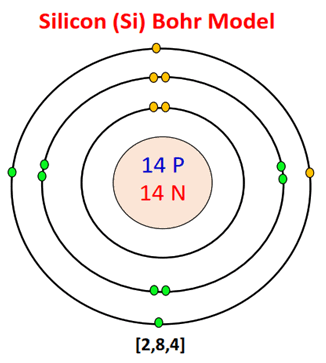
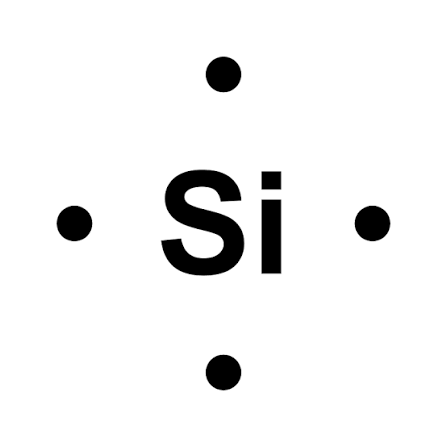
What would the Bohr model AND Lewis Dot look like for Silicon?