Et Tu, CO2?
Catching Waves
Lung Story Short
Say What?
Down the Wrong Pipe
100
For a healthy patient, the normal range for end-tidal carbon dioxide (EtCO2) falls between these two numbers.
What is 35–45 mmHg?
100
If your capnography monitor suddenly shows a "flat line" or zero reading during airway management, it indicates apnea or this specific type of misplaced intubation.
What is esophageal intubation?
100
Found at the end of the alveolar ducts, these tiny sacs are the primary sites of gas exchange between the air and the blood.
What are alveoli?
100
While an "open" version involves extended arms and relaxed muscles, this type of stance involves arms crossed tightly over the chest and suggests defensiveness or a lack of cooperation.
What is a closed stance?
100
While trauma, vomit, and foreign bodies are dangerous, this muscular organ is actually the most common cause of airway obstruction.
What is the tongue?
200
If a patient is hyperventilating, they are blowing off too much carbon dioxide, causing their EtCO2 levels to drop below this specific number.
What is 35 mmHg?
200
Often seen in patients with asthma or COPD, a waveform with a sloped, jagged appearance is classically described as looking like this ocean predator’s fin.
What is a shark fin?
200
During inspiration, the intercostal muscles and this primary muscle of respiration contract to change the size of the intrathoracic cavity.
What is the diaphragm?
200
This specific "zone" of interpersonal space ranges from 1.5 to 4 feet and is where the majority of a patient interview usually takes place.
What is personal distance (or personal space)?
200
If you insert an endotracheal tube and receive a "flat line" or zero reading on the capnograph, you have likely placed the tube in this structure instead of the trachea.
What is the esophagus?
300
During cardiac arrest, observing a sudden, sustained spike in the EtCO2 level is a reliable indicator of this positive event.
What is ROSC (Return of Spontaneous Circulation)?
300
If you see the waveforms getting progressively smaller and shorter over time, the patient is blowing off too much CO2, indicating this ventilatory status.
What is hyperventilation?
300
This membranous connective tissue comes in two layers: the visceral layer that covers the lungs and the parietal layer that lines the chest wall.
What is the pleura?
300
When communicating with this specific age group (13 to 18 years old), it is important to respect their strong desire for modesty and avoid speaking to them as if they are children.
What are adolescents?
300
Because the trachea divides at the carina, aspirated foreign bodies are most likely to end up in this specific bronchus because it is straighter and wider.
What is the right mainstem bronchus?
400
On a normal capnogram, Phase III represents the exhalation of CO2 from the alveoli and is commonly referred to by this "flat" geographic name.
What is the alveolar plateau?
400
If Phase IV of the waveform fails to return to zero, resulting in an elevated baseline, it indicates the patient is doing this with their carbon dioxide.
What is rebreathing?
400
The pharynx is divided into three sections: the nasopharynx, the oropharynx, and this lowest portion, also known as the laryngopharynx.
What is the hypopharynx?
400
To avoid putting a patient on the defensive during an interview, a paramedic should avoid asking questions that begin with this three-letter word, which can imply blame.
What is "Why"?
400
If the capnography waveform shows a specific variation or sudden decrease (not to zero), it often indicates a leak in the breathing circuit or a failure of this balloon-like component of the endotracheal tube.
What is the cuff (or ET tube cuff)?
500
While we measure CO2 as a gas, 70% of it is actually transported through the bloodstream in this chemical form.
What is bicarbonate
500
Named after a specific neuromuscular blocker, this "cleft" or notch in the alveolar plateau indicates that paralytics are wearing off and the patient is fighting the ventilator.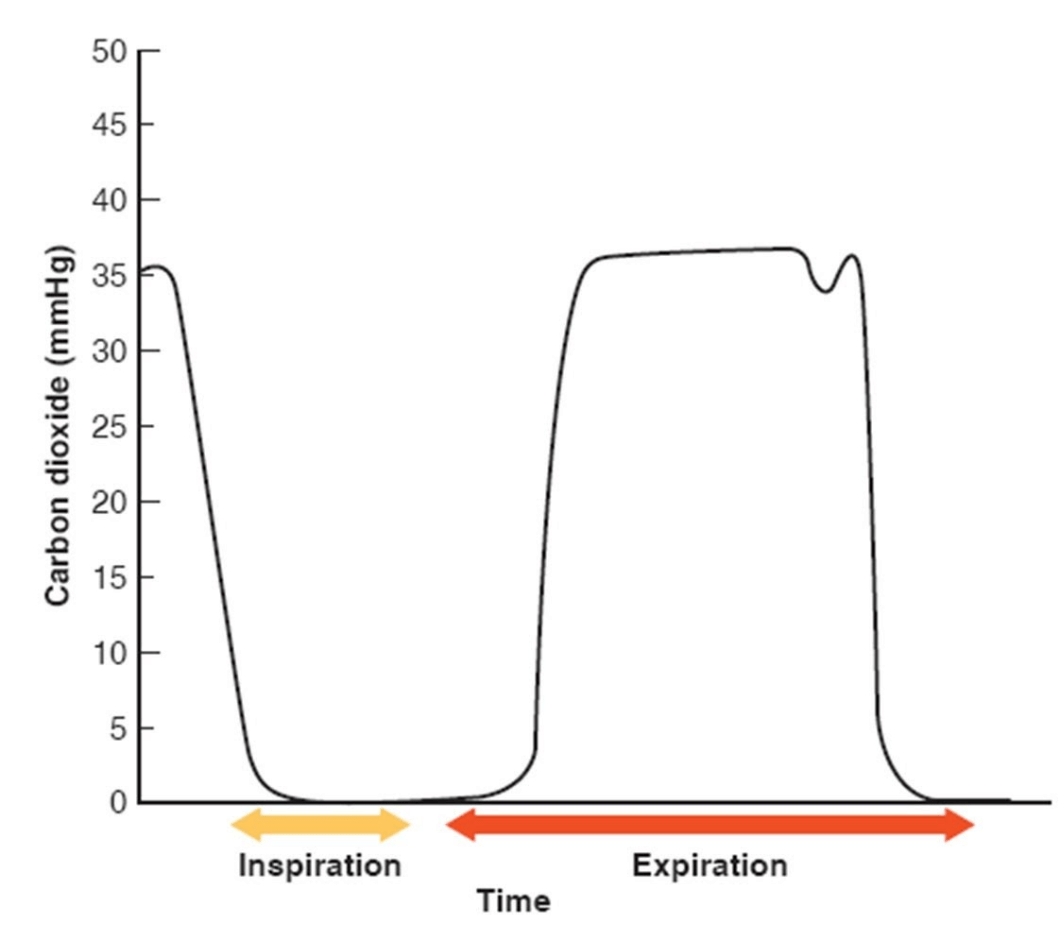
What is a curare cleft (or curare notch)?
500
To keep the lungs open, alveoli are coated with this substance which reduces surface tension and prevents atelectasis (alveolar collapse).
What is surfactant?
500
When communicating with a patient exhibiting confusing behavior, it is important to distinguish dementia, which is typically chronic, from this acute, shorter-term condition related to cognitive function.
What is delirium?
500
This specific "notch" in the alveolar plateau appears when a patient on a ventilator attempts to take a breath because their neuromuscular blocking agents are wearing off.
What is a curare cleft (or curare notch)?