A
B
C
D
100
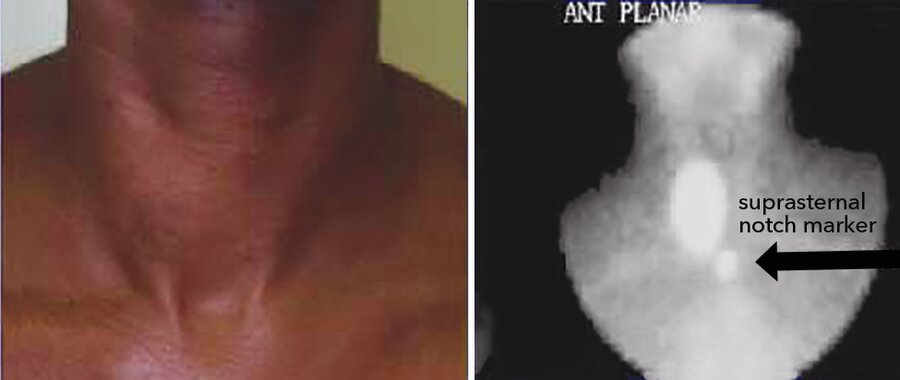
A 55-year-old woman is evaluated for hyperthyroidism.
The neck and corresponding thyroid scan are shown.
Exogenous intake of thyroid hormone
Graves disease
Multinodular goiter
Toxic adenoma
100
A 30-year-old transgender man is evaluated for ongoing management of gender-affirming hormone therapy. He began masculinizing therapy with weekly intramuscular testosterone cypionate 8 weeks ago. He is in good health and takes no other medications. He remains particularly concerned about when menses will cease, as this occurrence is very bothersome to him.
Physical examination findings, including vital signs, are normal.
Laboratory studies:
Testosterone, total (measured midway between injections)
600 ng/dL (21 nmol/L) (target level, 400-700 ng/dL [13.9-24.3 nmol/L])
What is the most appropriate next step in management?
Reassurance
Decrease testosterone cypionate dose
Increase testosterone cypionate dose
Switch intramuscular testosterone cypionate to transdermal testosterone
100
An 85-year-old woman is evaluated at a follow-up visit for a right femur fracture that occurred 6 weeks ago and was treated with open reduction and internal fixation. The fracture occurred because of a ground-level fall. Medical history is significant for stage G4 chronic kidney disease, secondary hyperparathyroidism, and hypertension. Medications are amlodipine, lisinopril, and a vitamin D3 supplement.
On physical examination, vital signs are normal. A healing surgical scar is noted on the right lateral hip. She reports no hip pain with passive range of motion. She bears weight without pain.
Laboratory studies:
Calcium 9.2 mg/dL (2.3 mmol/L)
Creatinine 1.6 mg/dL (141 μmol/L)
Creatinine clearance 28 mL/min (normal range, 88-128 mL/min)
Phosphorus 4.3 mg/dL (1.39 mmol/L)
Parathyroid hormone 75 pg/mL (75 ng/L)
25-Hydroxyvitamin D 32 ng/mL (80 nmol/L)
What is the most appropriate treatment?
Denosumab
Abaloparatide
Alendronate
Zoledronate
100
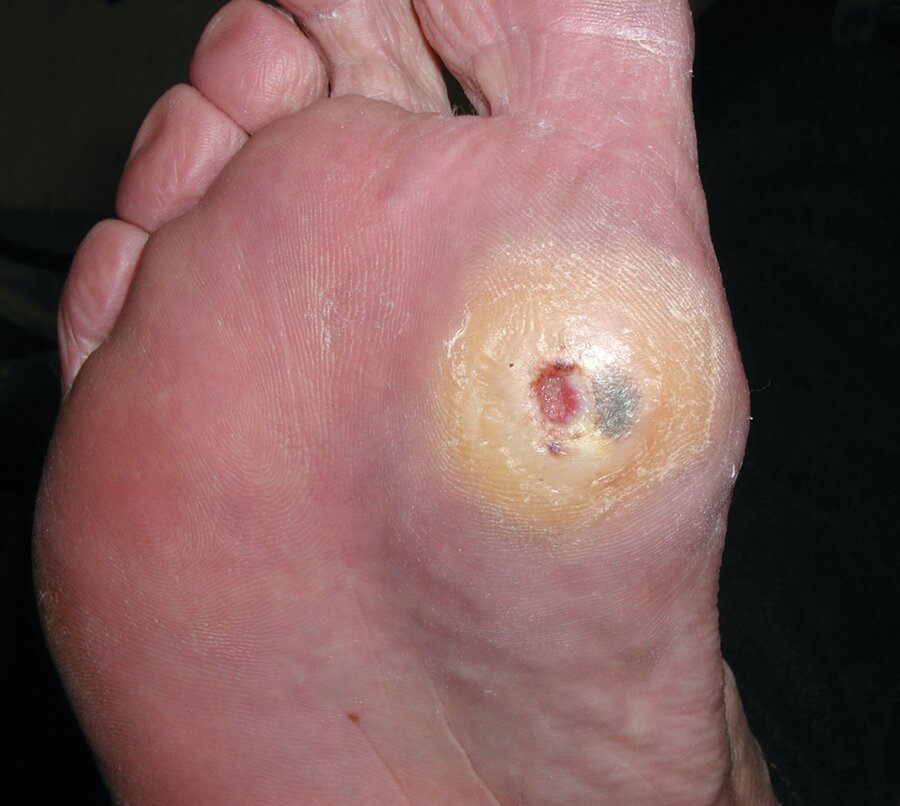
A 40-year-old man is evaluated for a painless foot ulcer (shown). He has diabetes mellitus.
What is the most likely diagnosis?
Neuropathic ulcer
Arterial ulcer
Pressure ulcer
Venous ulcer
200
A 27-year-old man is evaluated for a pituitary tumor, which was discovered during an ongoing evaluation for a 6-month history of fatigue and decreased libido. He has no other medical conditions and takes no medications.
Physical examination findings, including vital signs, are normal.
Laboratory studies:
8 am cortisol 18 µg/dL (496.8 nmol/L)
Follicle-stimulating hormone 3 mU/mL
Luteinizing hormone 2 mU/mL
Prolactin 14 ng/mL
Testosterone 140 ng/dL
2 weeks ago
130 ng/dL (4.5 nmol/L)
Thyroid-stimulating hormone 1.5 µU/mL
Insulin-like growth factor-1 and late-night salivary cortisol levels are normal.
MRI shows a 1.5-cm pituitary macroadenoma without compression of the optic chiasm.
What is the most appropriate next step in management?
Measure free thyroxine level
Measure growth hormone level
Repeat MRI in 1 year
Start cabergoline
200
A 22-year-old man is evaluated in the hospital for newly diagnosed diabetes mellitus after being admitted 2 days ago for severe hyperglycemia associated with diabetic ketoacidosis. Over the course of the past month, he experienced an unintentional 5-kg (11.0 lb) weight loss and new-onset polyuria and polydipsia. During the 2 days before admission, he developed nausea, vomiting, and malaise. Treatment with intravenous fluids, insulin, and potassium was initiated. Today, the patient has improved.
On physical examination, vital signs are normal. BMI is 23. The remainder of the examination is unremarkable.
What is the most appropriate confirmatory diagnostic test?
Glutamic acid decarboxylase antibody
Fasting C-peptide
Fasting plasma glucose
Hemoglobin A1c
200
A 51-year-old woman is evaluated after a 2.5-cm right adrenal mass with a density of 6 Hounsfield units was found incidentally on an abdominal CT scan. She has experienced intermittent sweating and hot flushes for the past 3 months. Medical history is relevant for hypertension treated with hydrochlorothiazide and doxazosin.
Blood pressure is 142/90 mm Hg. No supraclavicular fat pads or abdominal striae are seen.
Laboratory studies:
Overnight low-dose (1-mg) dexamethasone suppression test (LDST):
8 am cortisol, total - 8 µg/dL
Free metanephrine 15 pg/mL
Free normetanephrine 17 pg/mL
Plasma aldosterone concentration/plasma renin activity ratio -13 (normal range, ≤20)
What is the most likely diagnosis?
Mild autonomous cortisol secretion (previously termed subclinical Cushing syndrome)
Non–hormone–secreting adrenal adenoma
Pheochromocytoma
Primary aldosteronism
200
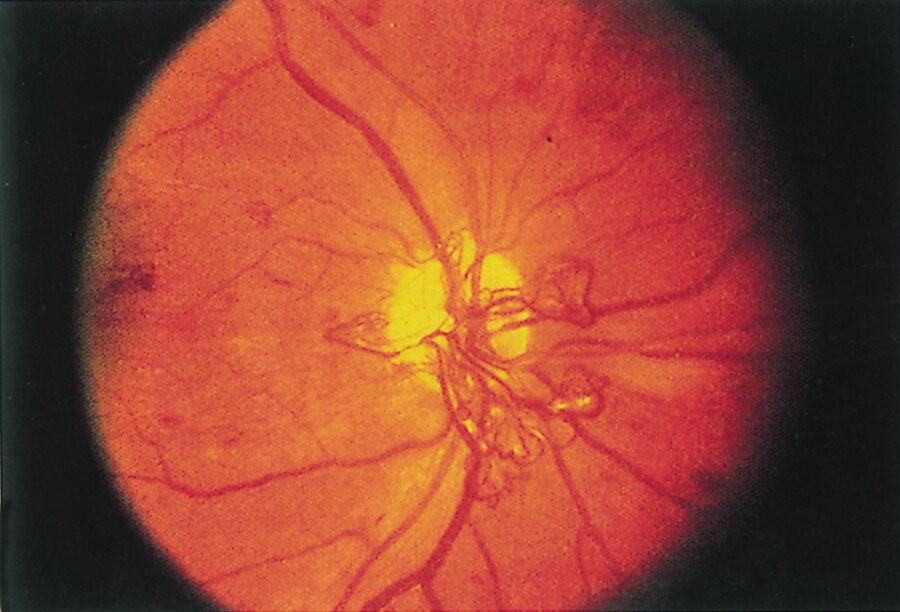
A 59-year-old man undergoes a comprehensive ophthalmologic examination after a recent diagnosis of type 2 diabetes mellitus.
Funduscopic findings are shown.
What is the most likely diagnosis?
Proliferative diabetic retinopathy
Age-related macular degeneration
Glaucoma
Nonproliferative diabetic retinopathy
300
A 27-year-old woman is evaluated during a follow-up visit for prediabetes. She exercises at least 150 minutes/week and follows recommended dietary interventions but has only lost 2 kg (4.4 lb) in the past 6 months. She has no other medical conditions and takes no medications.
On physical examination, vital signs are normal. BMI is 36. Examination of the posterior neck reveals velvety brown thickening of the skin.
Laboratory studies:
Hemoglobin A1c 6.2%
She is concerned about her risk for progressing to type 2 diabetes mellitus and is interested in additional interventions.
What is the most appropriate treatment?
Metformin
Acarbose
Orlistat
Pioglitazone
300
A 39-year-old man is evaluated because he is concerned about growth hormone deficiency because of feelings of fatigue and reduced muscle mass over the past few months. He has no history of head trauma, pituitary radiation therapy, or surgery. He has no other medical problems and takes no medications.
Physical examination findings, including vital signs, are normal. Muscle mass and strength are normal.
Laboratory studies:
Testosterone 550 ng/dL
Thyroid-stimulating hormone 1.8 µU/mL
What is the most appropriate screening test to perform next?
No further testing
Glucagon stimulation test
Growth hormone measurement
Insulin-like growth factor-1 measurement
300
A 72-year-old man is evaluated for ongoing management of subclinical hypothyroidism. He feels well. He has had no recent illnesses, hospitalizations, or exposures to iodinated contrast. Medical history is remarkable for coronary artery disease treated with percutaneous stent placement at age 65 years, hyperlipidemia, and hypertension. Medications are aspirin, atorvastatin, and lisinopril.
Physical examination findings, including vital signs, are normal.
Laboratory studies:
Thyroid-stimulating hormone 12.1 μU/mL
Free thyroxine 1.1 ng/dL
What is the most appropriate next step in management?
Start levothyroxine
Measure thyroid peroxidase antibodies
Repeat thyroid function testing in 3 to 6 months
Start liothyronine
300
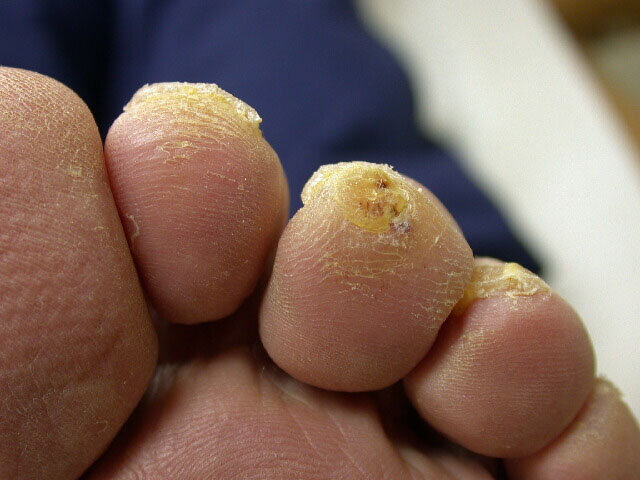
A 53-year-old man recently diagnosed with type 2 diabetes mellitus undergoes a comprehensive foot examination.
Physical examination findings are shown.
What is the most likely diagnosis?
Pre-ulcer with callus formation
Cellulitis
Onychomycosis
Venous insufficiency
400
A 64-year-old man is evaluated for a routine physical examination. He is asymptomatic. He walks about 10 minutes per day. Medical history is unremarkable, and he takes no medications.
On physical examination, vital signs are normal. BMI is 27. Waist circumference is 104 cm (41 in).
Laboratory studies:
Hemoglobin a1c: 6.3
Triglycerides 210 mg/dL
What is the most appropriate management?
Increase daily physical activity
Reduce calorie intake to less than 800 kcal/d
Start metformin
Start orlistat
400
A 67-year-old man is evaluated for a 6-month history of myalgia and fatigue. Medical history is relevant for Roux-en-Y gastric bypass surgery for obesity 2 years ago. He was prescribed a once-daily multivitamin and monthly vitamin B12 injections but stopped both 6 months ago because of constipation.
Physical examination findings, including vital signs, are normal.
Laboratory studies:
Hemoglobin 14 g/dL (140 g/L)
Albumin 3.8 g/L (38 g/L)
Calcium 8.8 mg/dL (2.2 mmol/L)
Creatinine 0.9 mg/dL (79.6 μmol/L)
Parathyroid hormone 89 pg/mL (89 ng/L)
What is the most appropriate diagnostic test to perform next?
Serum 25-hydroxyvitamin D measurement
Bone mineral density measurement
Parathyroid sestamibi scan
24-Hour urine calcium measurement
400
A 68-year-old man is evaluated for abnormal thyroid function test results. Over the past 2 months, he has had decreased appetite, a 9.1-kg (20.0 lb) weight loss, loss of interest, and fatigue. Medical history is significant for chronic persistent atrial fibrillation, diagnosed 3 years ago, and hypertension. Medications are apixaban, metoprolol, amiodarone, and lisinopril.
On physical examination, pulse rate is 101/min and irregular; remaining vital signs are normal. BMI is 19. No exophthalmos is noted. The thyroid gland is palpable, nontender, and has no nodules. The patient exhibits bilateral hand tremors. Mood is depressed.
Laboratory studies:
Thyroid-stimulating hormone 0.01 μU/mL
Free thyroxine 3.9 ng/dL
Total triiodothyronine 225 ng/dL
Thyrotropin receptor antibody - Negative
What is the most appropriate next step in management?
Thyroid Doppler ultrasonography
Methimazole
Prednisone
Thyroid peroxidase antibody measurement
Thyroid scintigraphy with radioactive iodine uptake
400
A 20-year-old woman is evaluated for amenorrhea. She underwent menarche at age 12 years and had regular monthly menses until 12 months ago, when menses became irregular. Menses ceased completely 6 months ago. She also reports hot flashes and vaginal dryness. She has a history of overweight but has lost 27.2 kg (60.0 lb) in the past year through running and diet changes. She is not sexually active. She takes no medications.
On physical examination, vital signs are normal. BMI is 17. Physical examination is otherwise unremarkable.
Laboratory studies:
Estradiol 0.5 pg/mL
Follicle-stimulating hormone 4 mU/mL
Prolactin 10 ng/mL
Testosterone, total 18 ng/dL
Thyroid-stimulating hormone 1.2 μU/mL
β-Human chorionic gonadotropin Negative
What is the most likely diagnosis?
Functional hypothalamic amenorrhea
Polycystic ovary syndrome
Primary ovarian insufficiency
Turner syndrome