Names of enzymes
Enzyme theory
Factors affecting enzyme action
Uses of enzymes
Anagrams
100
Breaks starch down into maltose
Amylase
100
Type of biological molecule that forms enzymes
Proteins
100
Factor that increases the enzyme rate by increasing the kinetic energy of the substrate
Temperature
100
Found in biological washing powders but not non-biological washing powders
Enzymes
100
atvice stie
Active
200
A protease found in the stomach
Pepsin
200
Model used to explain the specificity of enzyme action
Lock and key
200
Use the graph to determine the optimum temperature of Taq DNA polymerase
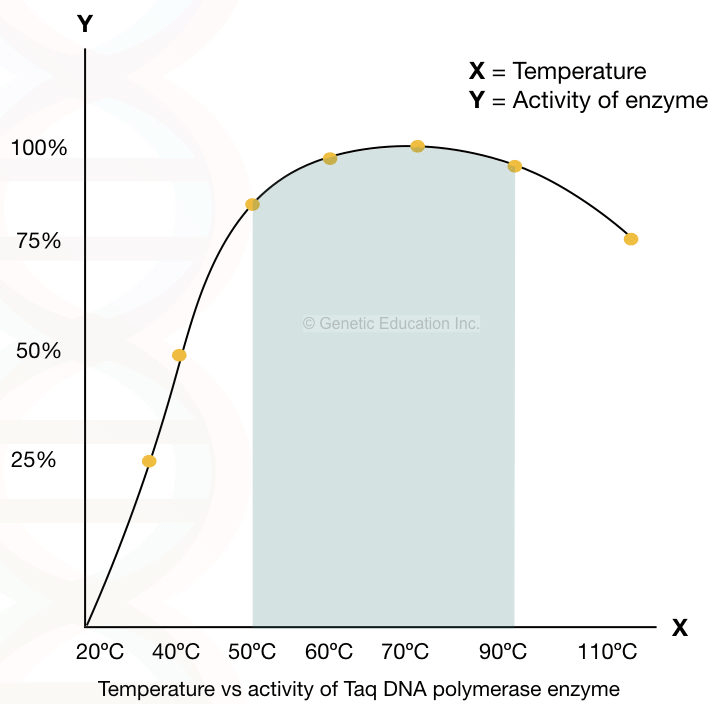
Allow any answer in the range of 70°C to 76°C
200
Used to treat milk for those with lactose intolerance
Lactase
200
strbsaute
substrate
300
Breaks down fats and oils into fatty acids and glycerol
lipase
300
Denaturation changes the _____ of the active site
Shape
300
Which enzyme is most likely to be released into the small intestines?
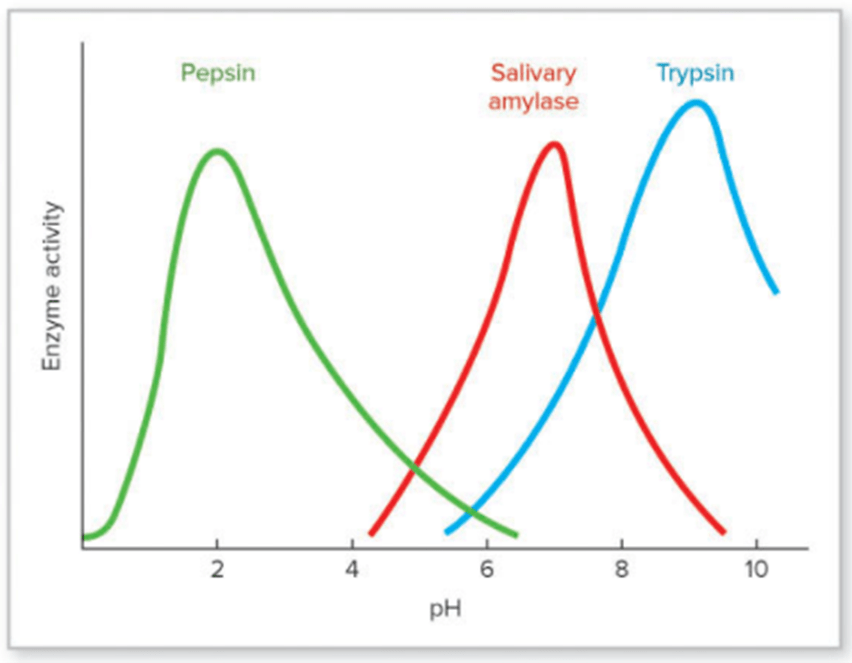
Trypsin
300
Enzymes used in the production of fruit juices, resulting in a greater volume of juice that is clear
Pectinase
300
timuomp
optimum
400
Breaks down hydogen peroxide into water and oxygen
catalase
400
Enzymes work through lowering the _____ ______
Activation energy
400
Suggest a factor that can affect enzyme activity but is reversible
pH
Accept heavy metal ions
400
Why is glucose isomerase used to convert glucose into fructose?
Fructose is sweeter (so less needs to be added to foods)
400
dtaeurn
denature
500
Used to break down the sugars in milk into galactose and glucose
Lactase
500
Temporary structure formed during an enzyme controlled reaction
Enzyme substrate complex
500
Substances that lower enzyme activity, often by blocking the active site
Inhibitors
500
Describes enzymes that are stuck to agar beads so the do not get washed away with the products of the reaction
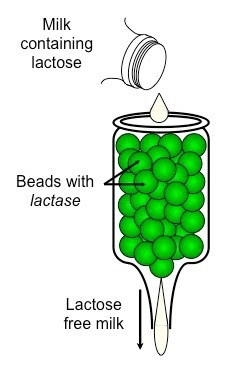
Immobilised
500
cifsepci
specific