General
Graphs and Diagrams
Random
Factors Affecting Enzymes
Enzymatic Reactions
100
True or False: Enzymes are used up during their reaction.
False: Enzymes do not get used up. They are free to react again and again. This is why they are only need in the body in small amounts.
100
What region contains the optimum temperature for this enzyme?
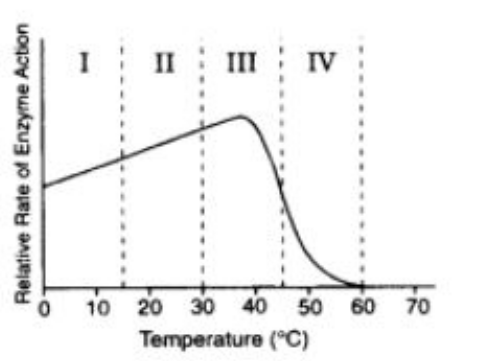
III (3)
100
Which number represents the substrate?
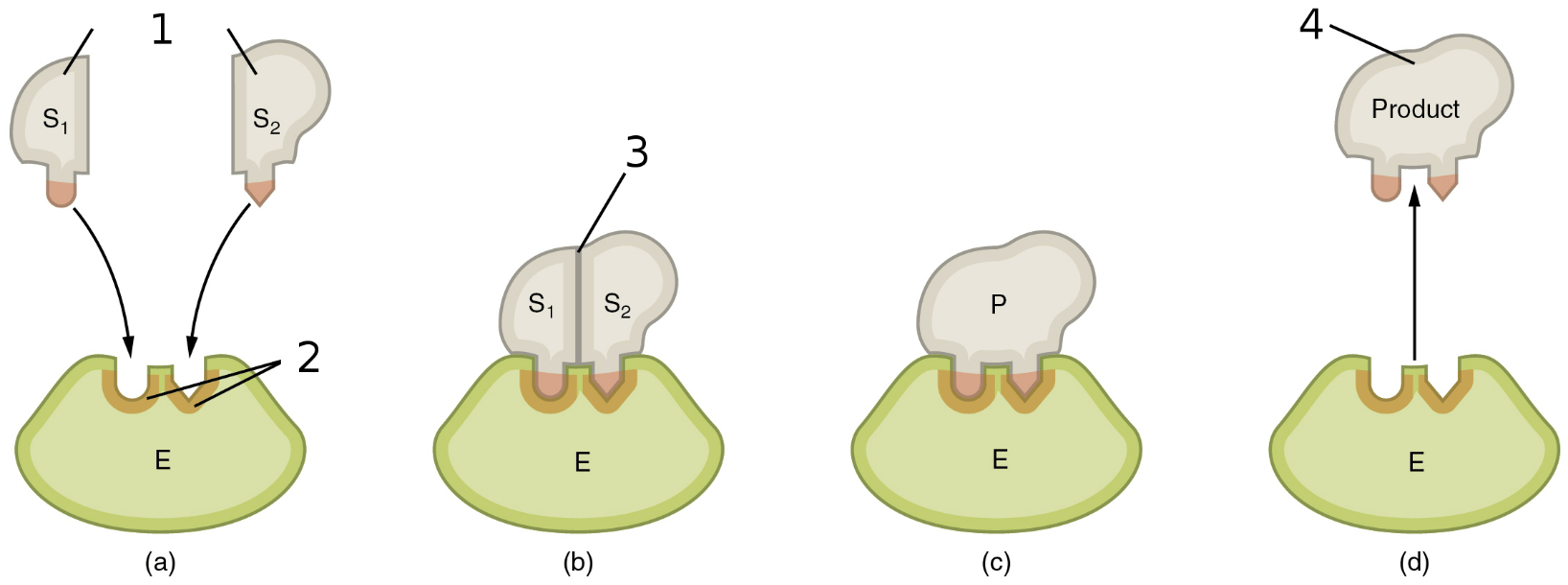
1
100
How do cold temperatures affect the rate of reactions for enzymes?
Decreases / slows down
100
What is the thing the Enzyme acts upon?
Substrate
200
How do enzymes affect the speed of reactions in the cells?
Increase speed
200
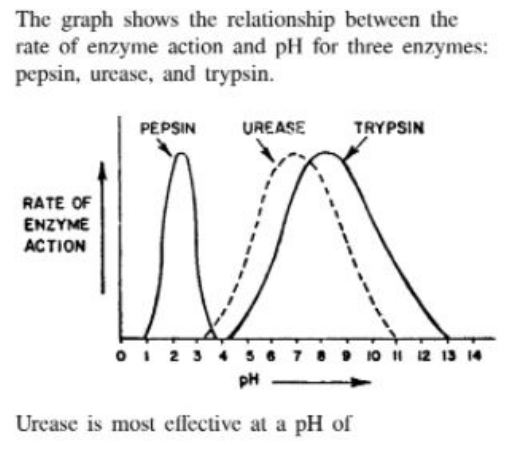
At what pH is Urease most effective?
7
200
What is our Biology Room Number
B213
200
How does increasing substrate concentration affect the rate of an enzymatic reaction?
The reaction rate increases until the enzymes are all used up.
200
What is the “new” substance created during the reaction?
Product(s)
300
What type of macromolecule are enzymes?
Proteins
300
Which number represents the active site?
2
300
Which number represents the enzyme-substrate complex?
3
300
What are two factors that can change the shape of an enzyme, causing it to stop working?
Temperature and pH
300
Where does the substrate attach to the enzyme?
Active site
400
This graph is showing that enzymes _____________.
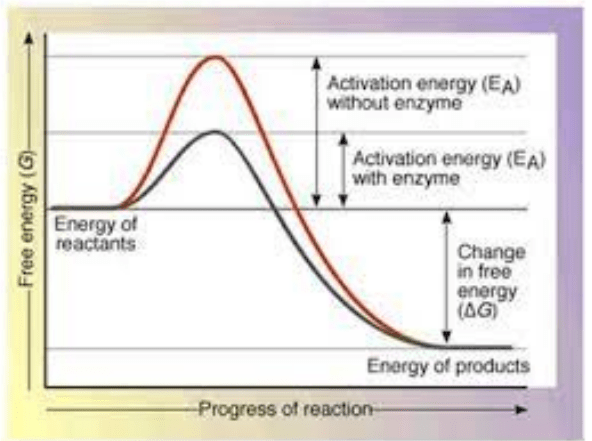
Lower the activation energy required to start the reaction
400
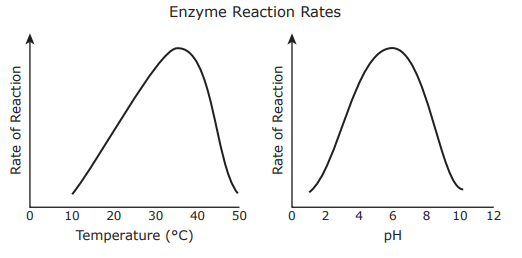 The optimal temperature and pH of this enzyme is _______.
Temp = 37C
pH = 6
400
What subject are you going to learn next school year?
Chemistry
400
How does a non-competitive inhibitor change the function of an enzyme?
It binds to the enzyme (somewhere other that the active site), which changes the shape of the active site, causing the substrate to no longer fit.
400
Enzymes lower activation energy & speed up reactions. Another word for something that does this is a ____________.
Catalyst
500
Explain what is meant by "Enzymes are substrate SPECIFIC". Which model would this fall under?
They only react with certain substrates that fit into the active site.
Lock and Key!
500
Students had this reaction at a temperature of 70C (TOO HOT) and did not see any enzyme activity. Why?
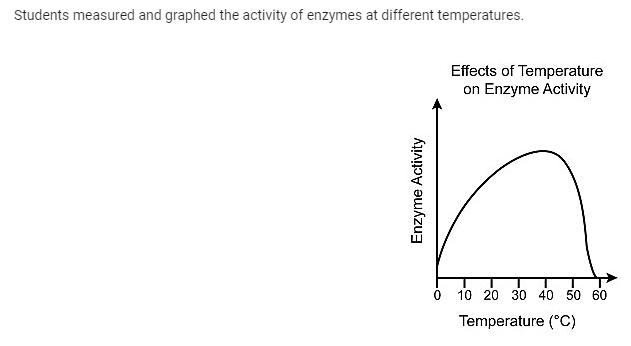
The temperature was too high and denatured the enzyme causing it not to function
500
What is the optimum temperature of the human body?
98.6 F
37 C
500
Using your knowledge of enzymes, how does an activator help the reaction occur between an enzyme and a substrate?
The activator attaches to the enzyme to help change the active site shape so the substrate can bind to the active site.
500
When the substrate binds to the enzyme, something called "induced fit" happens. What is induced fit?
The enzyme temporarily changes its shape at the active site. This change in shape is what causes the reaction to happen more easily.