Names of Enzymes
Enzyme Theory
Factors affecting enzyme action
Enzyme Theory 2
Anagrams
100
Breaks down maltose into glucose
Maltase
100
Type of biological molecule that forms enzymes
Protein
100
Factor that increases the enzyme rate by increasing the kinetic energy of the substrate
Temperature
100
Enzymes are biological __________ that speed up reactions without being changed, used up, or reused.
Catalyst
100
styactla
catalyst
200
Breaks down fats and oils into fatty acids and glycerol
Lipase
200
What model explains that only a specific substrate fits into an enzyme’s active site?
Lock and Key
200
Use the graph to determine the optimum temperature of Taq DNA polymerase
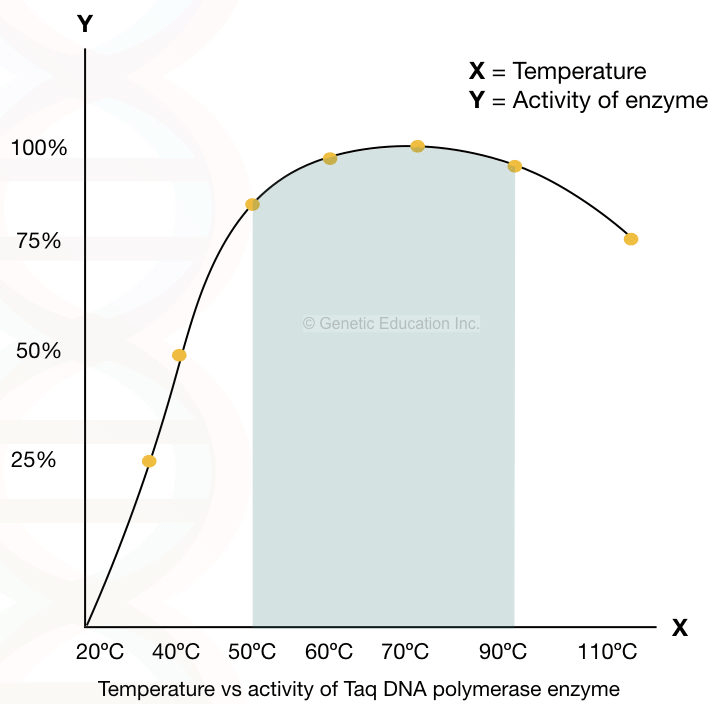
Allow any answer in the range of 73°C to 79°C
200
More frequent successful collisions increase the rate of __________.
reaction
200
trebustas
substrate
300
Breaks down hydogen peroxide into water and oxygen
Catalase
300
The active site of an enzyme has a __________ shape to its substrate.
complementary
300
Denaturation changes the ________ of active site.
Shape
300
Enzymes are involved in all __________ reactions in living organisms.
metabolic
300
timuomp
optimum
400
Breaks down starch to maltose
Amylase
400
Enzymes work through lowering the _____ ______
Activation Energy
400
Which enzyme is most likely to be released into the stomach?
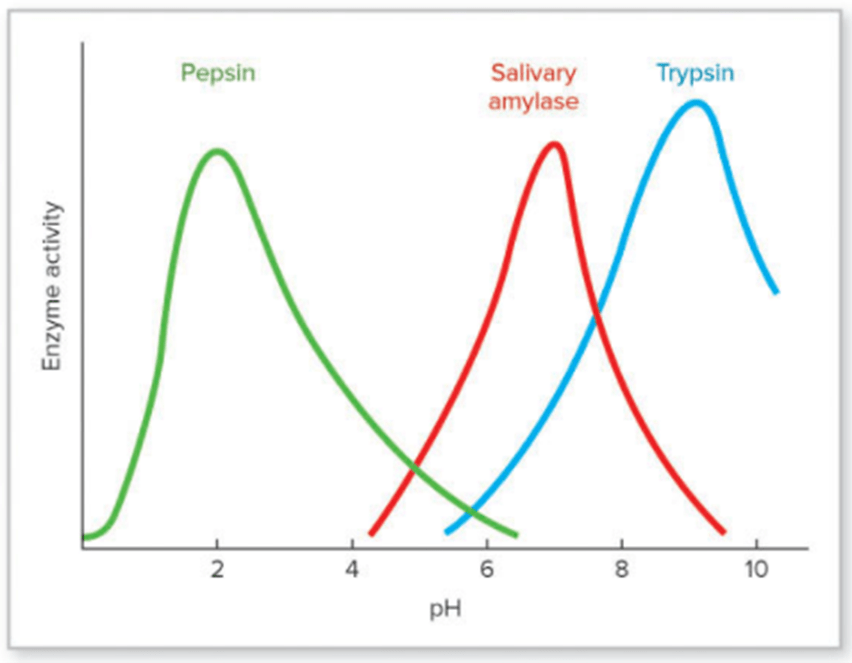
Pepsin
400
Why is lactase added to lactose-free milk?
To break down lactose into glucose and galactose.
400
rautnoedanit
denaturation
500
Which group of enzymes break down proteins into smaller polypeptides or amino acids?
Proteases
500
Temporary structure formed during an enzyme controlled reaction
Enzyme-substrate complex
500
Substances that lower enzyme activity, often by blocking the active site
Inhibitors
500
Reactions that build larger molecules from smaller molecules & Reactions that break down large molecules into smaller molecules
Anabolic reactions & Catabolic reactions
500
cisfyticiep
specificity