Definitions
Diagrams!
Basic Knowledge
Regents Questions
Challenge :)
100
The organic compounds that scientists use to cut, copy, and move segments of DNA are
Enzymes!
100
Which axis would have the independent variable?
The horizontal (x) axis
100
Why does denaturing lower an enzyme's effectiveness?
The active site changes shape, so the substrate can't fit in as well.
100
Although a certain molecule is involved in a
specific reaction, its structure and chemical
composition are exactly the same after the
reaction as before the reaction. This molecule is
most likely classified as
An Enyzme!
100
The process of transferring energy during respiration occurs in a series of steps. This prevents too much heat from being released at one time. Maintaining an appropriate temperature is beneficial to an organism because
Enyzmes need a certain range of temperatures to catalyze VITAL reactions!
300
What’s it called when the enzymes concentration stops rising?
Saturation Point
300

(From top left to bottom right)
Reactants, Activation Site, Products, Enzyme
300
The end products resulting from the action of amylase would most likely be
Amino Acid
300
The reaction below occurs in many organisms.
urea + water -- urease --> carbon dioxide + ammonia
This reaction would still occur, but at a much slower rate, in the absence of
Urease! (Organic Catalyst!)
300
Catalase is an enzyme produced by organisms that breaks down hydrogen peroxide, releasing oxygen and water. The relative enzyme activity, when tested at different temperatures, is shown in the graph below.
The Effect of Temperature on Catalase Activity
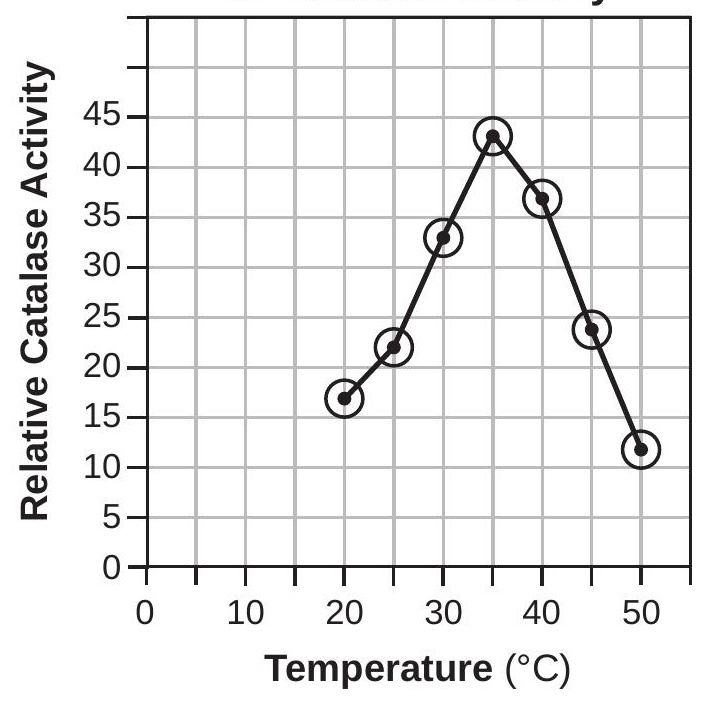 Which statement below best explains the decrease in activity of catalase after 35∘C35∘C shown in the graph?
When shape of an active site (enzyme) changes as a result of bonds within the enzyme breaking!
(Bonus points if you can remember the name!)
500
What's the difference between a digestion and a synthesis reaction?
Digestion breaks down a molecule into smaller pieces while synthesis forms a new molecule out of the reactants!
500

These two lines represent the amount of energy required for a chemical reaction to occur. One line represents the reaction with a catalyst, and the other represents the reaction without.
Which line used a catalyst?
The red line (it took less energy)
500
The enzymes in cells of the plant embryo are produced directly by the
Ribosomes!
500
The enzyme beta-galactosidase is involved in a
certain body reaction. What will most likely
A chemical that destroys proteins was added to a
happen if beta-galactosidase is not available?
The Rate of Reaction will change
500
Pepsin is a protein-digesting enzyme. It is produced inside cells that line the stomach and then secreted into the stomach cavity, where it begins to work.
When first produced, the pepsin exists in an inactive form called pepsinogen. Pepsinogen cannot work because it has an extra segment that keeps it from interacting with the proteins it would normally digest.
When it is secreted into the stomach cavity, the acid there causes the pepsinogen molecule to lose this extra segment, which changes it into the active pepsin that can begin to digest food proteins.
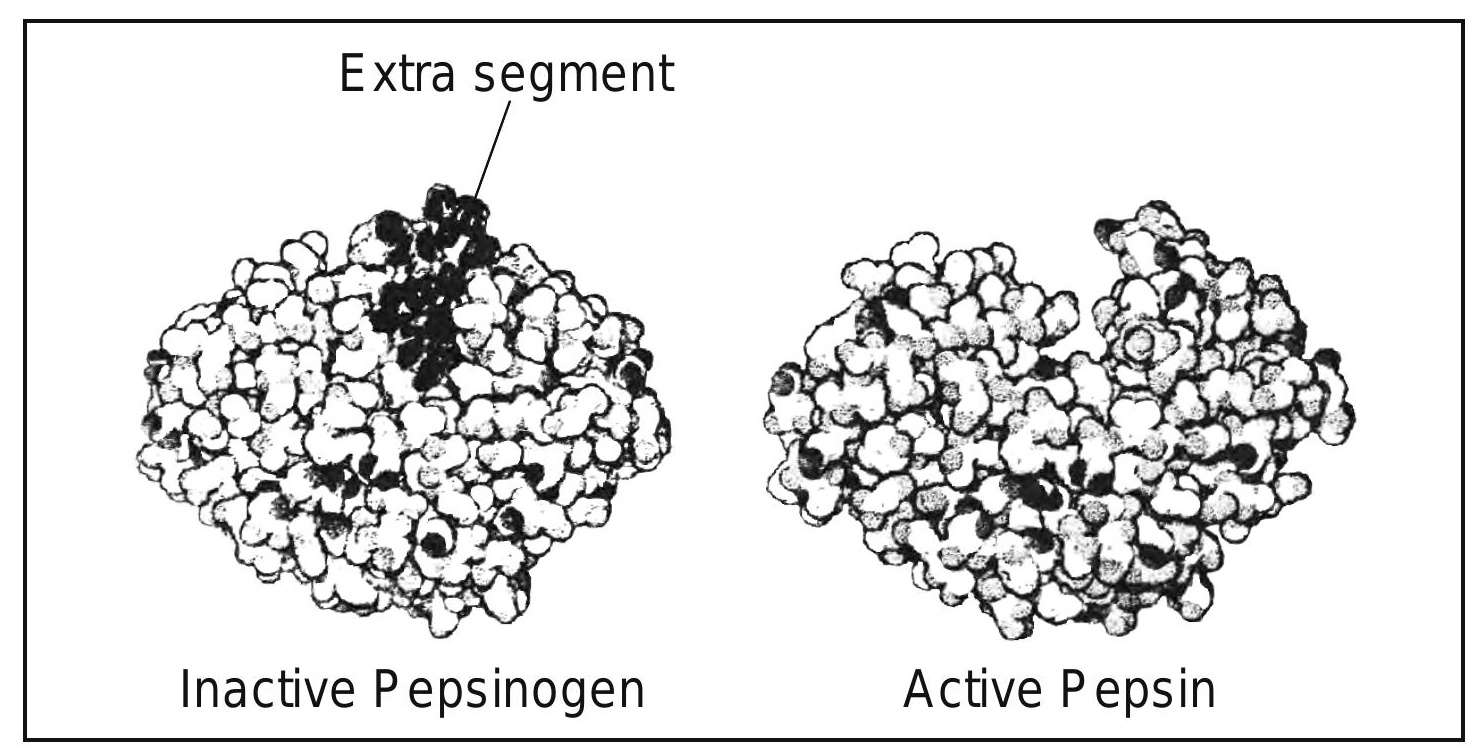 Which statement most accurately summarizes the function of pepsin?
It controls the rate at which chemical reactions occur (It's an enyzme, don't let all the words scare you!)