UNIT 1
UNIT 2
UNIT 3
UNIT 4
Hodgepodge
UNIT 6
100
What are areas that are shared and not owned are likely to be depleted as individuals pursue their own self interest
- Commons
100
what 4 things is soil made of?
minerals/rocks; air; water; organic matter
100
Which of the 5 levels of organization include Abiotic factors?
What is Ecosystem
100
How much energy is passed on to one trophic level?
10%
100
What’s the 1st law of thermodynamics?
- Energy cannot be created or destroyed, it only changes form
100
WHAT IS AN ENDEMIC SPECIES?
species only found in one area
200
What does "extrinsic value" mean? Give an example.
extrinsic- putting a money amount on nature; e.g. trees that provide lumber, animals that provide, rivers that provide drinking water
200
What is a short-term and a long-term process in the carbon cycle?
Answers may vary.
Short - photosynthesis
Long - erosion, formation of fossil fuels
200
four primary mechanisms of evolution
Gene flow, Genetic drift, Mutation, Natural selection
200
What are 3 possible outcomes of competitive exclusion
1. One species is better suited to the niche, and the other will either be pushed out or become extinct
2. The niche will be divided
3. The two species will further diverge
200
Three types of freshwater wetlands
Marsh, Swamp, and Bog
200
4 categories of ecosystem services. BONUS: give an example of each.
What are provisioning, regulating, cultural and support.
300
What are the 4 types of sampling methods?
Quadrats, Mark-Recapture, Transect, Aerial observations
300
WHAT ARE THE FIVE PROCESSES OF THE NITROGEN CYCLE
Nitrogen fixation, ammonification, nitrification, denitrification, and assimilation
300
characteristics that make an organism better suited to its environment
what is an adaptation?
300
The "role" of a species - e.g. What an animal feeds on, where it feeds, when it feeds, where it finds shelter, how it responds to abiotic factors, where it nests
Niche
300
Which biome is treeless with very low winter temperatures and permafrost?
tundra
300
3 categories of biodiversity
Genetic, Species, Ecosystems
400
What is the difference between abiotic and biotic? Give an example of each
-abiotic-nonliving parts of the environment; sunlight, water, temperature, soil, air
-biotic-living parts of the environment; plants, animals, bacteria, fungi, humans
400
What are the three general climate regions
Tropical, temperate, polar
400
In natural selection, this term describes an organism with traits that make it more likely to survive and reproduce
What is fitness?
400
What is symbiosis?
a close and long-term interaction between two or more biological species
400
What is the name for the first organisms to populate an area in the early stages of succession?
Pioneer species
400
WHAT ARE BIODIVERSITY HOTSPOTS?
areas with high numbers of endemic species but also threatened by human activity
500
Which sampling method is not random? When would you use it?
Transect - to sample an environmental gradient.
500
Intensity of the sun varies with what?
Latitude
500
What is carrying capacity?
the maximum number of individuals an environment can sustainably support.
500
Name and describe the 3 different kinds of symbiosis
Mutualism: both organism’s benefit
Commensalism: one species benefits and one organism is unaffected
Parasitism: one benefits while the other is harmed
500
What is logistic growth? Draw the curve
Growth that slows down as resources run out. 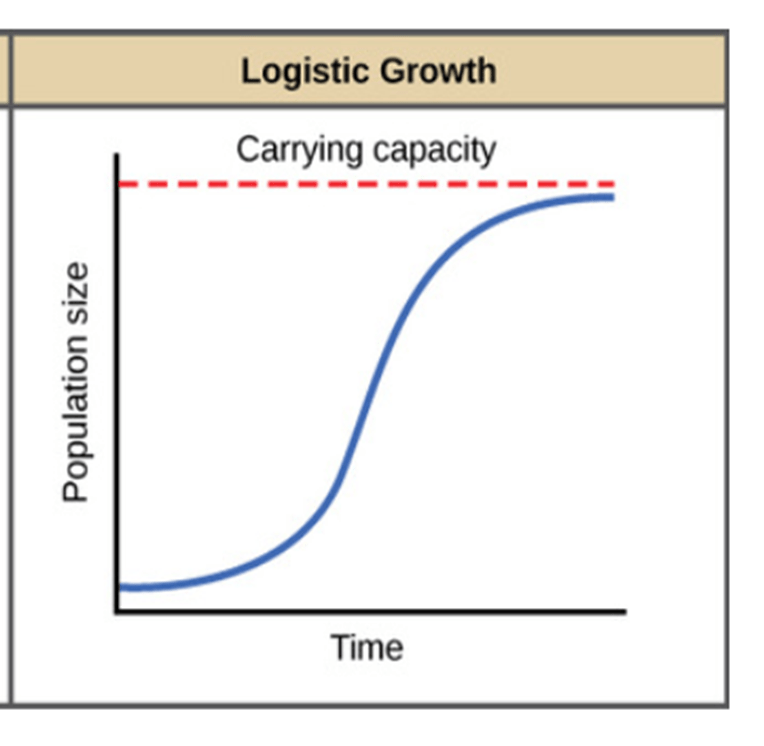
500
What is "evenness"
A biodiversity index that measures how similar the numbers (or percentages) of different species are in a region.