1.1 Environmental Value Systems
1.2 Systems and Models
1.3 Energy and Equilibria
1.4 Sustainability
100
This EVA puts ecology and nature as central to humanity and emphasizing a less materialistic approach to life with greater self-sufficiency of societies
ecocentric
100
Movements of energy or matter into or out of a system and between stores in a system.
Flows
100
This law describes the loss of energy from a system into heat energy due to inefficient transfer.
the second law of thermodynamics
100
The total supply of both renewable and non-renewable natural resources on Earth.
Natural Capital
200
This EVS argues that ecosystems must be managed to adequately provide for human needs
anthropocentric
200
Rain falling from a cloud or water moving down a river without changing its chemical state or physical phase are examples of this type of flow.
Transfer
200
This type of feedback loop amplifies changes away from equilibrium often resulting in a tipping point.
Positive feedback loop
200
These are the free benefits that humans enjoy from a healthy ecosystem.
Ecosystem services
300
This EVS argues that technological developments can provide solutions to environmental problems
technocentric
300
An isolated aquarium sealed inside a glass jar allows light and heat to enter and leave, but prevents any physical matter from crossing its boundaries. This describes this specific type of system.
Closed System
300
This type of feedback loop is typical for many predator prey interactions.
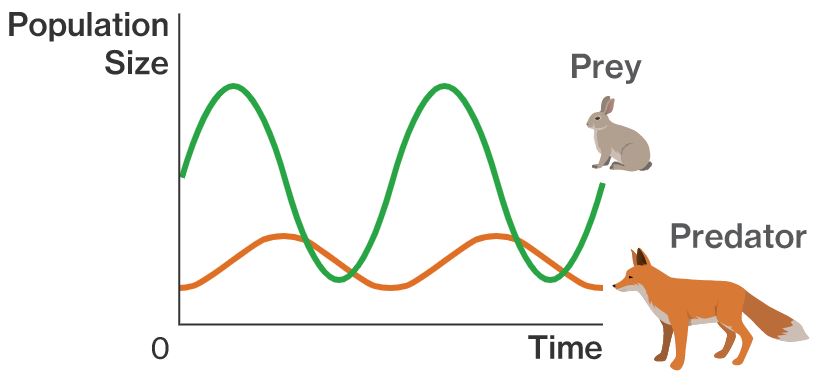
Negative feedback loop
300
The non-monetary yield obtained from natural capital.
Natural Income
400
The way an individual or group of people perceive and evaluate environmental issues, influenced by cultural, religious, economic and socio-political contexts
environmental value system
400
A hypothetical concept in which neither energy nor matter is exchanged across the boundary.
Isolated System
400
This measure of ecosystem complexity can increase the resilience of an ecological system when changes occur.
Biodiversity
400
This term describes the use and management of resources that allows full replacement of the resources exploited and full recovery of the ecosystems affected by their extraction and use.
Sustainability
500
A way of viewing the world based on influences of culture, family, nationality, politics, media, etc.
Perspective
500
These are the outcomes from a system that are greater than the sum of the individual parts of the system.
Emergent properties
500
This law describes the persistence of energy and matter in the universe.
First law of thermodynamics
500
This economic system prioritizes limited resource extraction and the careful design of products for longevity, repair, and reuse of parts.
Circular economy