Ocean Floor
Ocean Currents
States of Matter/Tech Terms
Water Cycle/Oceans
Miscellaneous
100
What are the 2 regions of the ocean floor?
Continental Margin and Deep Ocean Basin
100
where do surface currents originate?
at LOW latitudes or near the equator
100
Water in the solid state is called...
ICE
100
What ocean is located at number 4?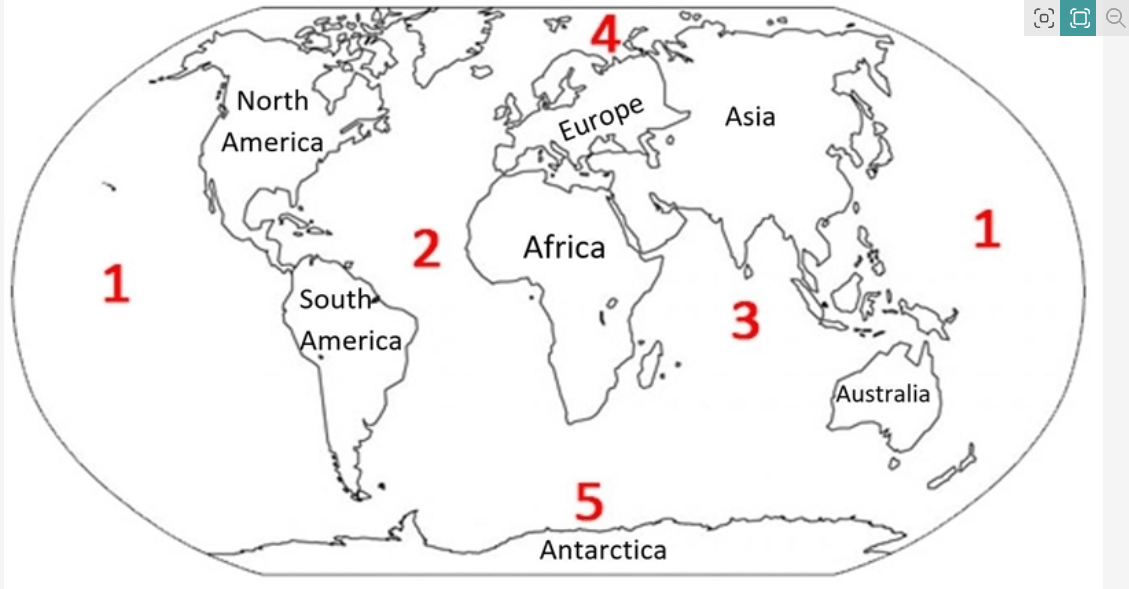
Arctic
100
What percent of freshwater is groundwater?
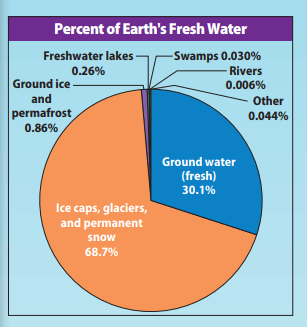
30.1%
200
What feature is at letter D?
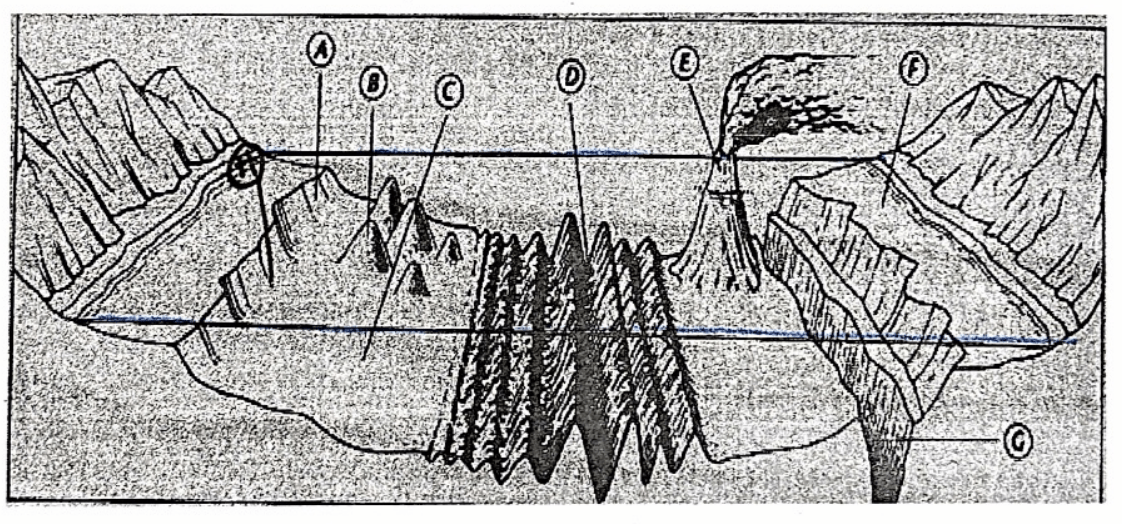
The Mid-Ocean Ridge
200
What is the name of the surface current that brings warm/humid air to Western Europe which allows them to have a mild climate?
The Gulf Stream
200
What happens to molecules of water when they are heated?
They speed up, move apart, and become less dense.
200
What is the energy source that drives the water cycle?
THE SUN
200
How do deep ocean currents affect temperatures on land?
They cool the land near costal areas that would otherwise be warmer.... for example the California current.
300
What Ocean floor feature is at letter G?
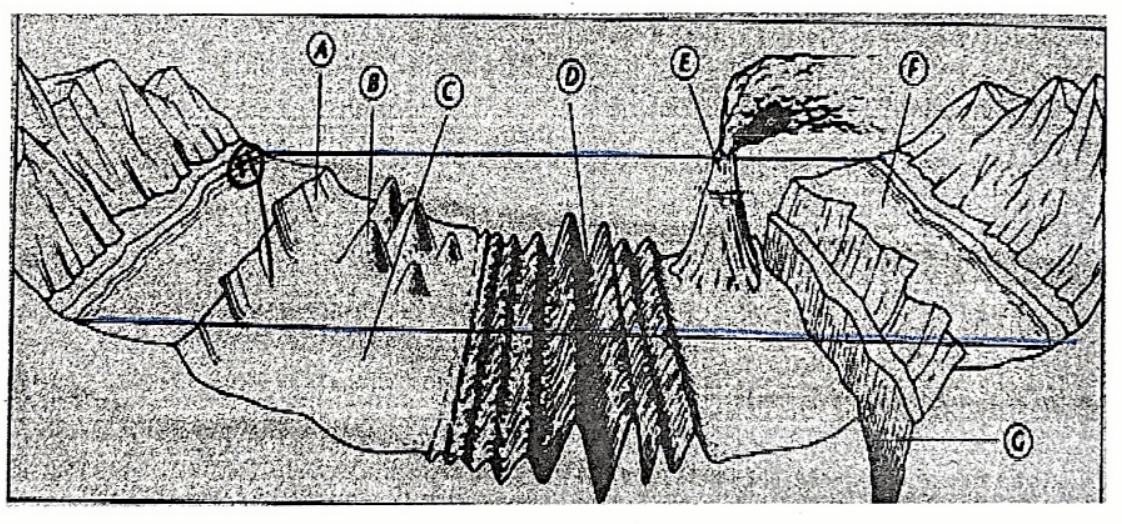
ocean trench
300
What causes surface currents to turn left in the southern hemisphere and right in the northern hemisphere?
the Coriolis Effect
300
the amount of empty spaces between sediments (rocks, sand, pebbles)
porosity
300
What ocean is located at number 3?
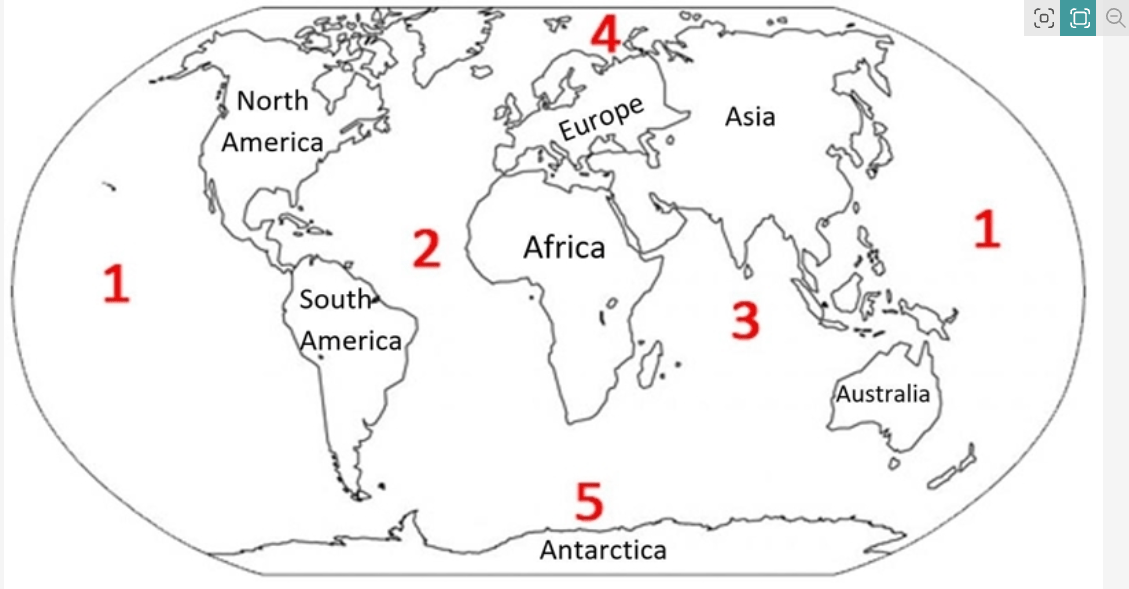
Indian
300
What are the 2 factors that create Deep ocean currents?
Changes in temperature and changes in density.
400
What ocean floor feature is at letter F?
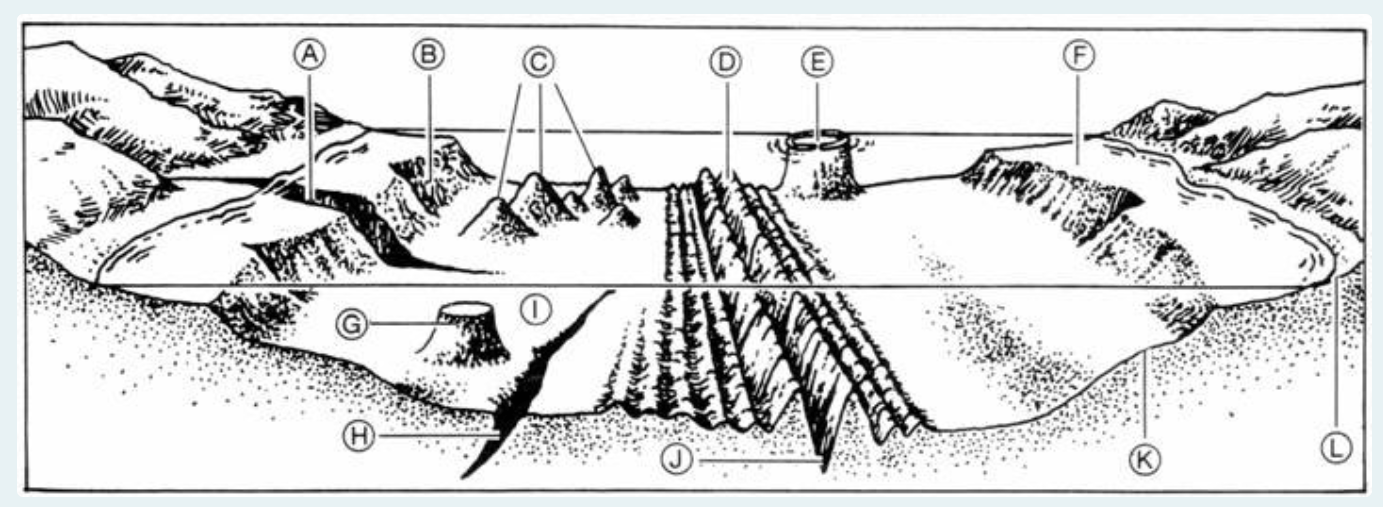
Continental Shelf
400
The Peru current seems to flow in a northward direction, but it changes to a Northwestern direction. What causes this to happen?
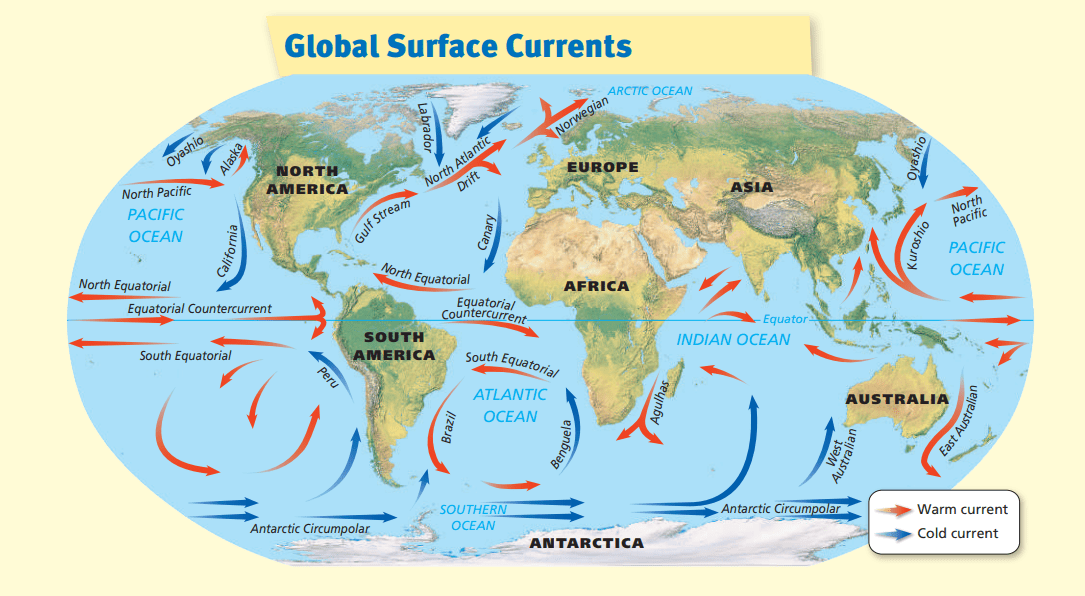
continental deflection
400
a large, flat, almost level area of the deep-ocean basin
abyssal plain
400
What part of the water cycle is shown at number 6?
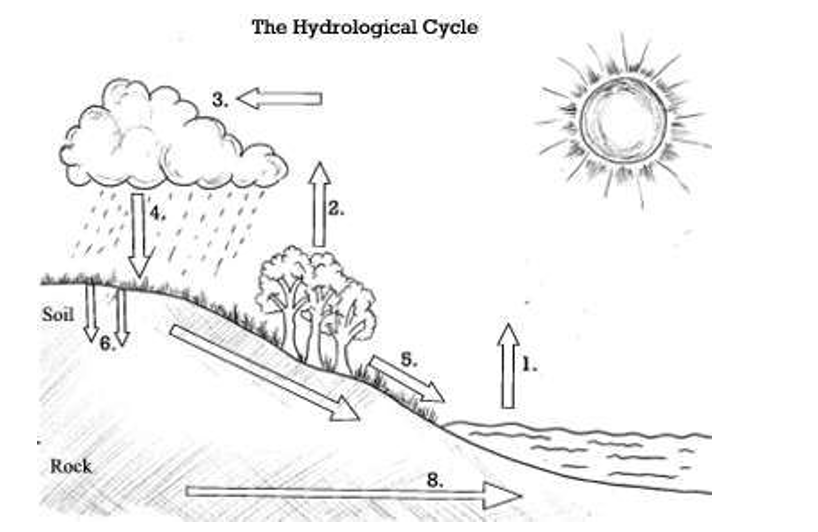
Infiltration
400
What process is shown at letter B?
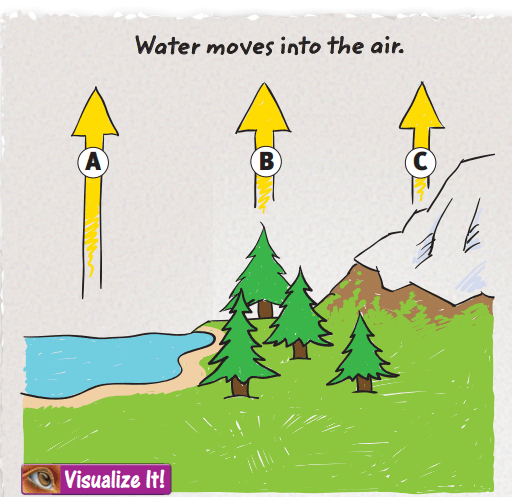
Transpiration
500
What feature is at letter E and letter G? WHY are they different?
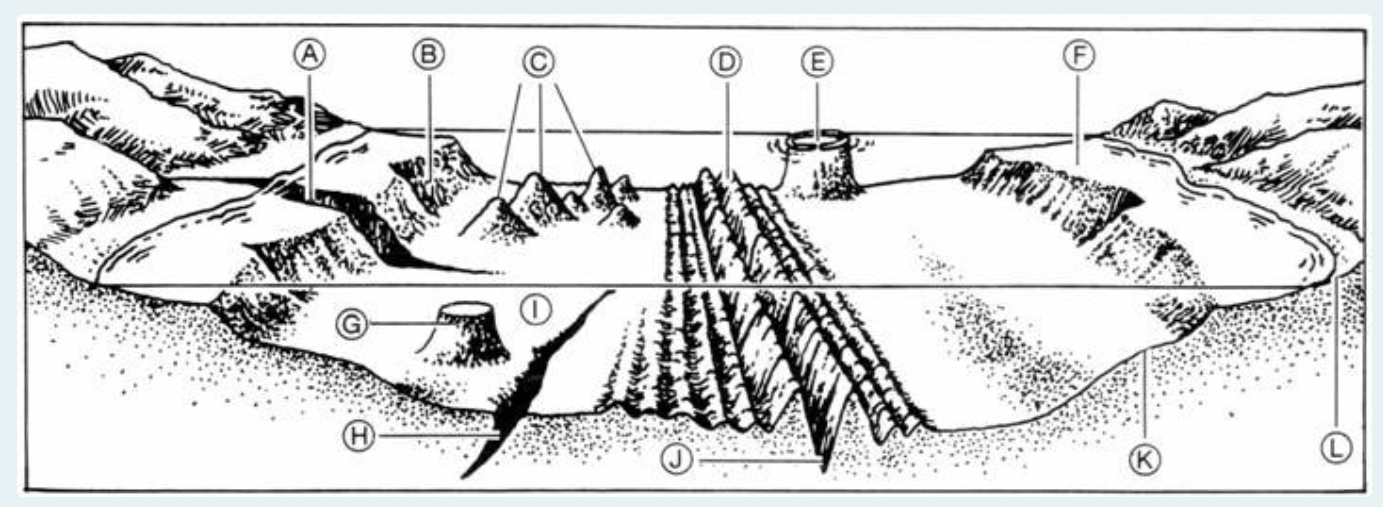
G-Guyot (Seamount with a flat top)
E- Volcanic Island
A Volcanic Island is over the top of the water, so it is like Iceland or Hawaii and other islands.
500
What drives surface currents?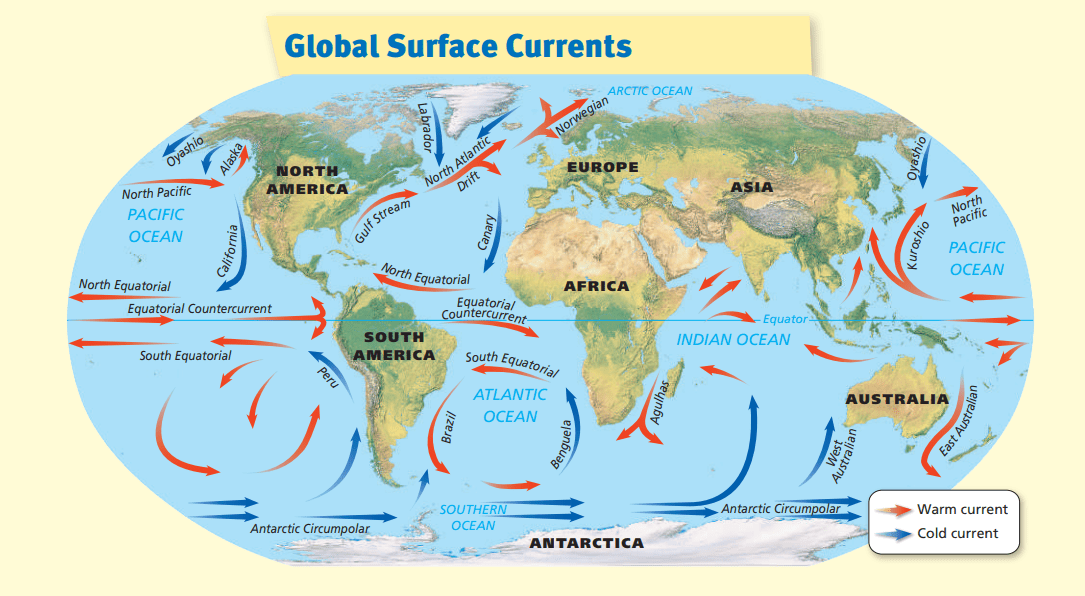
Global Winds/wind
500
What vocabulary term is shown in this picture?
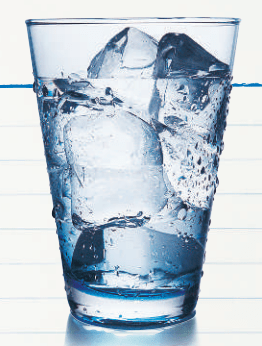
condensation
500
What does number 4 represent? What are the different types of this?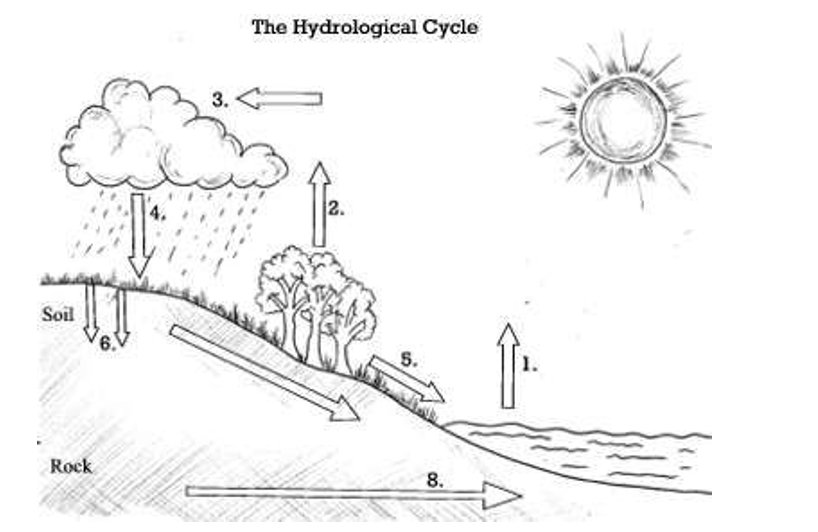
precipitation
rain, snow, sleet, hail
500
What does this picture represent?
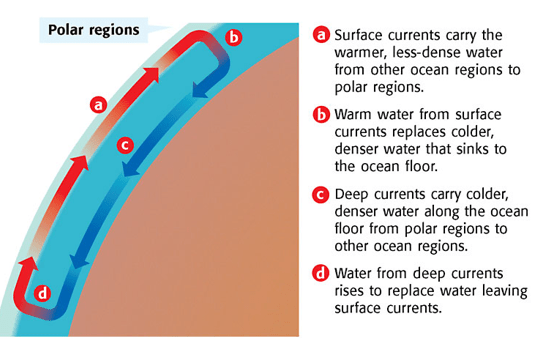
Thermohaline circulation OR the Global Conveyor belt OR convection currents in the ocean.