Evolution
Natural Selection
Biotech & Selection
Adaptations
Morphology
Misc.
100
Humans, birds, dolphins, and lizards all have similar forearm bones. What is the reason for this?
a. They live in similar environments
b. The function of these bones is the same in all animals
c. They have a common ancestor
d. They are analogous
C. They have a common ancestor
100
Darwin's theory is...
a. Theory of Acquired Characteristics
b. Theory of Natural Selection
b. Theory of Natural Selection
100
What do artificial selection and natural selection have in common?
a. They are both methods for passing on traits
b. They both occur in the natural world
c. They can both be used for gene therapy
d. They both can both be controlled in a laboratory
B. They both occur in the natural world
100
What traits would be the fittest for a hot desert habitat?
a. Methods for keeping cool, like being nocturnal
b. Brightly colored feathers
c. Flippers for swimming
d. A big shaggy coat
a. Methods for keeping cool, like being nocturnal
100
The appendix is an example of...
a. a transitional form
b. an analogous structure
c. a vestigial structure/organ
d. a homologous structure
c. a vestigial structure/organ
100
The bottleneck effect is when...
a. there is a sharp increase in the size of a population
b. a group of organisms leave a population to found a new colony
c. resistant bacteria survive and reproduce
d. there is a sharp decrease in the size of a population
d. there is a sharp decrease in the size of a population
200
Individuals with favorable traits survive, reproduce and pass on their traits to their offspring. What is this process called?
a. Mutation
b. Evolution
c. Adaptation
d. Natural selection
d. natural selection
200
What is natural selection?
a. Organisms adapt to their surroundings as the need arises
b. Organisms better adapted to their environment tend to survive, breed, and pass on the genetic traits
c. Populations of animals in nature, most often consist of genetic clones of each other
d. Populations that become isolated from each other by adapting to different environmental niches can evolve into new species
b. Organisms better adapted to their environment tend to survive, breed, and pass on the genetic traits
200
GMOs stand for:
a. Genetic mutation Organism
b. Genetically mutated operators
c. Genetically modified organism
d. Germinating modified operators
c. Genetically modified organism
200
How would you explain the phenomena of a greater number of dark colored mice, than light colored mice, living on a dark rock?
a. The mice know that being dark is safer, so they turn dark
b. The dark-colored mice increased in population because they were smarter than the light-colored mice
c. The dark-colored mice had an advantage over the light-colored mice on the dark background. The dark mice survived and were able to pass on their dark-color as a trait through reproduction
d. The light-colored mice probably moved to a different rock, so they were not counted
c. The dark-colored mice had an advantage over the light-colored mice on the dark background. The dark mice survived and were able to pass on their dark-color as a trait through reproduction
200
A whale having hip bones is an example of a(n)
a. Homologous structure
b. Analogous structure
c. Vestigial structure
d. All of these
c. Vestigial structure
200
The founder effect is when...
a. there is a sharp increase in the size of a population
b. a group of organisms leave a population to found a new colony
c. resistant bacteria survive and reproduce
d. there is a sharp decrease in the size of a population
b. a group of organisms leave a population to found a new colony
300
This scientist believed that organisms using certain characteristics (ex: giraffes stretching their necks to reach food) would lead to offspring acquiring the new trait. Who is the scientist?
John Baptiste Lamarck
300
Which is true about variation?
a. It is necessary for natural selection
b. It is caused by mutations and sexual reproduction
c. All populations have variations
d. All of the above
d. All of the above
300
DNA __________s are created using gel electrophoresis. They can be used to solve crimes or determine paternity.
DNA fingerprints
300
What is adaptive radiation?
a. Individuals adapt to their environment
b. Developing adaptations to make oneself immune to radiation from the Sun
c. Behavioral adaptations
d. As individual groups adapt to their different niches, they may evolve into distinct species
d. As individual groups adapt to their different niches, they may evolve into distinct species
300
Is the definition below for ANALOGOUS or HOMOLOGOUS?
Different structures in two organisms with the same function; they do NOT have a common ancestor/are NOT closely related
Analogous
300
Ethics can be defined as....
a. Legal principles that govern a person's behavior or the conducting of an activity.
b. Moral principles that govern a person's behavior or the conducting of an activity.
c. Moral principles that govern all of society's behavior or conducting of an activity
d. The way people read
b. Moral principles that govern a person's behavior or the conducting of an activity.
400
If an organism has a vestigial structure, the structure likely once had a function
a. In a close relative
b. In an embryo
c. In an early ancestor
d. In an unrelated organism
c. In an early ancestor
400
Charles Darwin believed...
a. That reproduction has no role in evolution
b. Individual organisms evolve within their lifetime
c. Random mutations that make organisms more fit for its environment would survive and pass on genes
d. Mutations happen in response to a need in the environment
C. Random mutations that make organisms more fit for its environment would survive and pass on genes
400
Supporters of GMOs say that GMOs can help:
a. Provide crops that are self-watering
b. Produce more food for a hungry world
c. Produce crops that will plant and harvest themselves
d. Produce plants that look good but do not taste very good
b. Produce more food for a hungry world
400
The parent organisms of a litter of kittens are black and striped. They have 5 kittens. Two are black, two are striped, and one is grey. What is this an example of?
a. Adaptive radiation
b. Descent with modification
c. Natural selection
d. Survival of the fittest
b. Descent with modification
400
Is the definition below for ANALOGOUS or HOMOLOGOUS?
Similar structures in two organisms with different functions; they have a common ancestor/are closely related
Homologous
400
___________ resistance is dangerous and can be caused by over-prescription of antibiotics or patients not taking the medication correctly.
Antibiotic
500
Which of the following pieces of evolutionary evidence deals with comparing similar structures in various species?
a. The Fossil record
b. Comparative anatomy/morphology
c. Comparing DNA
d. Layers of the Earth
b. Comparative anatomy/morphology
500
Cheetahs are the fastest land animal in the world. According to the theory of natural selection, how did the cheetah get to be so fast?
a. Cheetahs saw how fast gazelle were, so they started practicing running until they got to be really fast
b. Cheetah cubs randomly had genetic mutations that made them fast. These cubs grew up to be great hunters because of their speed and were able to survive, reproduce and pass on the genetic sequences that made them fast
c. One day a slow tortoise just suddenly evolved into a fast cheetah
d. Cheetahs ate fast animals like gazelles and the genetic material for being fast went into the cheetah’s digestive system and caused cheetahs to be fast
b. Cheetah cubs randomly had genetic mutations that made them fast. These cubs grew up to be great hunters because of their speed and were able to survive, reproduce and pass on the genetic sequences that made them fast
500
Selective breeding can be used to produce
a. Physical traits
b. Behavioral traits
c. Both a and b
c. Both a and b
500
Darwin’s theory of natural selection, states that life in the wild is competitive, and organisms with the most beneficial traits will prosper. What is this commonly known as?
a. Survival of the fittest
b. Random mutations
c. Best in Show
d. The Origin of the Species
a. Survival of the fittest
500
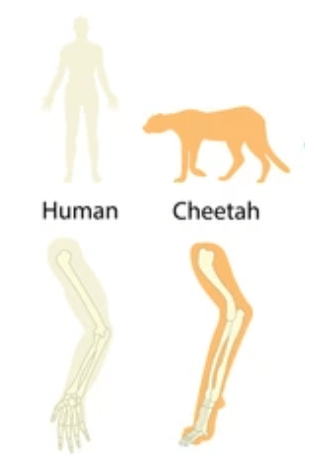 analogous or homologous?
Homologous
500
Antibiotic resistance occurs....
a. When bacteria grow a strength that allows them to resist antibiotics
b. When bacteria mutate after being exposed to an antibiotic and become resistant
c. When resistant bacteria survive an antibiotic and reproduce leading to more resistant bacteria
c. When resistant bacteria survive an antibiotic and reproduce leading to more resistant bacteria
600
A population of fish live in a local pond. A flash flood washes many fish onto the land outside of the pond & many of them die off, mostly smaller fish that were not strong enough to fight the current.
What type of event is this & what effect is discussed?
- genetic drift (random event changing population size)
- bottleneck effect (sudden, sharp decrease in population size)
600
What is speciation?
a. Organisms that are similar but have different names, such as a tortoise and a turtle
b. As a population develops new traits, it may eventually become a separate species with unique characteristics from the original organism
c. Animals dying off because they are not the fittest for their environment
d. The number of animals living in a space
b. As a population develops new traits, it may eventually become a separate species with unique characteristics from the original organism
600
Which graph below represents DIRECTIONAL selection? (black is before evolutionary selection occurs, green is after selection has occurred)
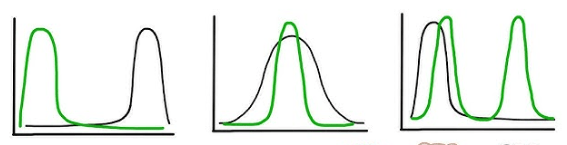
a b c
A - evolution has selected for 1 trait so the graph diagram moves in 1 direction
600
Hedgehogs chew up toxic materials such as turpentine & cigarettes then spread the toxin along their needle spines. They are very flexible which allows them to spread the toxins all over their needle spines.
Which 2 types of adaptations are discussed in the passage?
- behavioral (covering themselves in toxins)
- structural (flexibility allows them to spread the toxins across their needle spines)
600
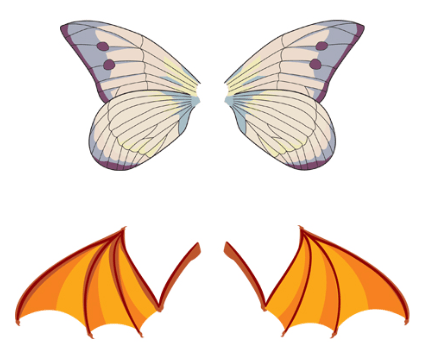 Analogous or homologous?
Analogous
600
50 people are stranded on an island. 1/2 of them are allergic to fish. Bob, the leader of the group, feeds everyone a seafood dinner. The allergic 1/2 of the population dies off and now only the non-allergic people (resistant to fish) live & reproduce. How is this analogy related to antibiotic resistance?
Antibiotic resistance is also a result of some resistant individuals (non-allergic in the analogy) survive and reproduce. The population of bacteria (people in the analogy) are now resistant against the antibiotic (the fish in the analogy).