Factors of Evolution
Mechanisms
Lines of Evidence
Analyzing Evidence
Vocabulary
100
Some bacteria in a population are naturally resistant to antibiotics. After antibiotic treatment, resistant bacteria survive and reproduce.
Which factor of evolution made this possible?
A. Variation within the population
B. Uniformity within the population
C. Lack of competition
D. No inheritance of traits
A. Variation within the population
100
Which mechanism of evolution introduces new genetic information into a population?
A. Migration
B. Mutation
C. Natural selection
D. Genetic drift
B. Mutation
100
Whale flippers, bat wings, and human arms have similar bone structures even though they perform different functions.
These structures are evidence of:
A. Analogous structures
B. Common ancestry
C. Genetic drift
D. Vestigial organs
B. Common ancestry
100
On an island, finches with larger beaks survive a drought better because they can crack hard seeds. After several generations, most finches have larger beaks.
What evidence best supports natural selection in this scenario?
A. The drought changed the birds’ DNA directly
B. Large-beaked finches survived and reproduced more successfully
C. All finches adapted equally
D. The birds chose to grow larger beaks
B. Large-beaked finches survived and reproduced more successfully
100
A trait that improves an organism’s ability to survive and reproduce
adaptation
200
A maple tree produces thousands of seeds each year, but only a few survive to become mature trees.
This situation best demonstrates:
A. Overproduction
B. Adaptation
C. Mutation
D. Artificial selection
A. Overproduction
200
A population of insects becomes resistant to pesticide after several generations.
Which mechanism is primarily responsible?
A. Mutation and natural selection
B. Genetic drift only
C. Selective breeding
D. Fossilization
A. Mutation and natural selection
200
The tiny pelvic bones found in modern whales are examples of:
A. Homologous structures
B. Adaptive radiation
C. Vestigial structures
D. Fossil records
C. Vestigial structures
200
Students observe that antibiotic-resistant bacteria become more common after repeated antibiotic use.
Which claim is best supported by this evidence?
A. Antibiotics create resistance traits intentionally
B. Resistance traits can increase through natural selection
C. All bacteria are equally resistant
D. Bacteria do not evolve
B. Resistance traits can increase through natural selection
200
A change in DNA that can introduce new traits into a population.
mutation
300
Which statement best explains why not all offspring survive in nature?
A. Organisms choose not to survive
B. Resources are limited
C. Mutations stop reproduction
D. Predators only target weak species
B. Resources are limited
300
Farmers breeding dogs for specific traits is an example of:
A. Natural selection
B. Genetic drift
C. Artificial selection
D. Speciation
C. Artificial selection
300
Which type of evidence is MOST useful for determining evolutionary relationships among closely related species?
A. DNA sequences
B. Rock layers
C. Climate data
D. Population size
A. DNA sequences
300
Scientists compare DNA sequences from four species and find that Species A and B share 98% of their DNA.
What is the best conclusion?
A. Species A and B are unrelated
B. Species A and B likely share a recent common ancestor
C. Species A evolved from Species B directly
D. Species A and B occupy the same habitat
B. Species A and B likely share a recent common ancestor
300
When no members of a species exist anymore.
extinction
400
Explain how overproduction of offspring increases the likelihood that advantageous traits will be passed on.
Overproduction leads to intense competition, which results in only the individuals with the best traits surviving and reproducing.
400
How can geographic isolation lead to speciation?
The populations in the new/different environments will be subject to different selective pressures, leading to a divergence of traits which may eventually prevent interbreeding.
400
How do fossils provide evidence that organisms have changed over time?
Fossils show us evidence of the gradual changes in species over time, when traits evolved, what ancient environments were like, and more.
400
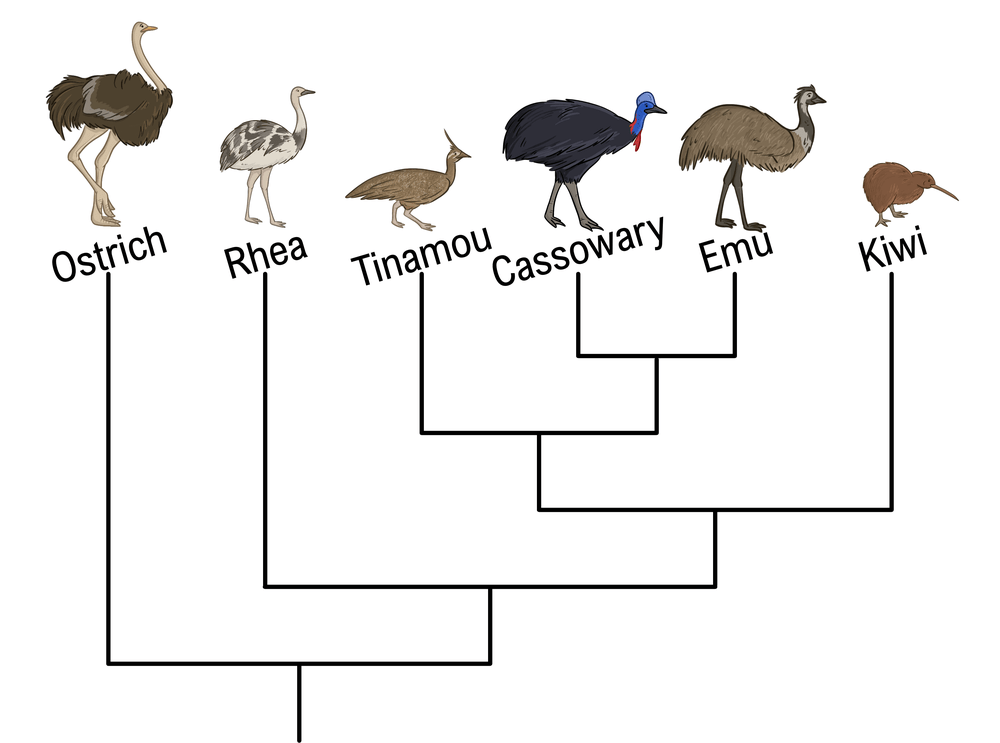
Based on the evolutionary tree diagram, which species is most closely related to the Emu and what is your evidence?
Cassowaries because they share the most recent common ancestor.
400
Term for when new species are formed, possibly due to geographic or behavioral isolation.
speciation
500

Identify and describe one adaptation of the monarch butterfly.
Bright color - warns predators they're poisonous,
Proboscis - to retrieve nectar from flowers,
Migration - to seek suitable habitat,
Diapause - they are dormant during winter
500
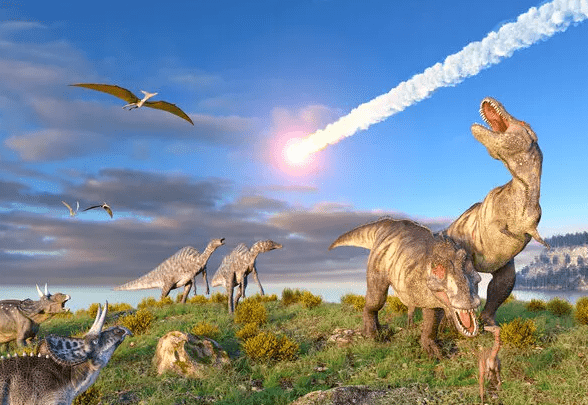
What are three possible outcomes for species after a rapid environmental change?
Some will survive and increase in number,
New species may form through speciation,
Some may go extinct.
500
Explain how embryological similarities among species support evolution.
The presence of similar structures and similar developmental patterns is evidence of common ancestry.
500
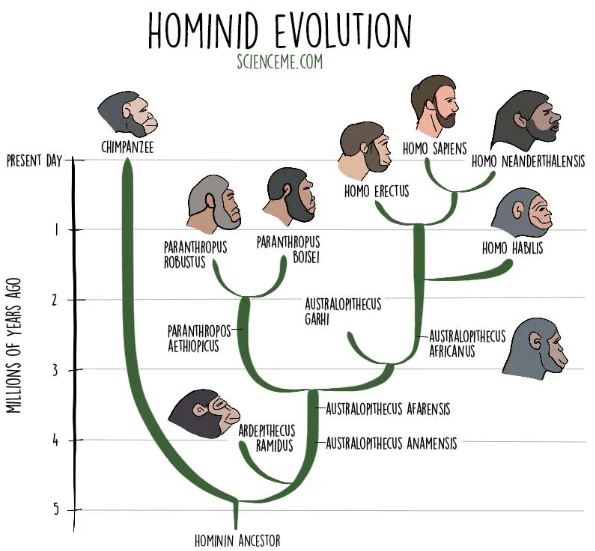
Based on the diagram, the common ancestor of humans and chimpanzees existed when?
Approximately 5 million years ago. (It's actually 6-8 million years ago - this model is inaccurate.)
500
Term for structures that are similar in function, but not sturcture.
analogous structures