Trauma & Stress
Addictions
Anxiety/OCD
Neuro/Cognitive
Eating Disorders
100
Eustress is what? How would you describe this to a patient?
Eustress is what makes us work hard to reach our goals. It also pushes us to repair broken relationships, improve in our area of work and utilize creative problem solving.
100
When caring for a client with alcohol withdrawal, what types of questions would the nurse want to ask?
CIWA is assessing the following areas:
- Agitation (0-7).
- Anxiety (0-7).
- Auditory disturbances (0-7).
- Clouding of sensorium (0-7).
- Headache (0-7).
- Nausea/vomiting (0-7).
- Paroxysmal sweats (0-7).
- Tactile disturbances (0-7).
questions should be framed in a way to gather information to complete a CIWA score
100
Anxiety is classified into what categories?
How might a patient present in each level?
Mild: special attention; increased sensory stimulation; motivational--Anxiety is not bad, but rather a warning sign.
Moderate: something
definitely wrong; nervousness/agitation; difficulty concentrating; able to be redirected
Severe: trouble thinking and reasoning; tightened muscles; increased vital signs; restless, irritable, angry
Panic: fight, flight, or freeze response; increased vital signs; dilated pupils; cognitive processes focusing on defense
100
Interventions to use with children/adolescents diagnosed with Autism spectrum disorder include?
Weighted Blankets (helps with wanting the pressure)
Social Stories (A social story is a narrative made to illustrate certain situations and problems and how people deal with them. They help children with autism understand social norms and learn how to communicate with others appropriately )
Noise Canceling Headphones (help decrease stimulation )
Sensory objects (helps with the desire to chew on objects or wanting to "feel" a certain sensation)
Visuals Schedules (PECS)
Medication (antipsychotics to help manage aggression)
100
Recurrent episodes of eating in a discrete period of time an amount of food that is larger than what most individuals would eat (i.e.- more than 5,000 cal) at least 2 days a week for 6 months without purging behaviors
Binge Eating Disorder
Check facts on Anorexia and Bulimia as a review
200
Risk factors for PTSD include what?
Age, female gender, personal or family history of mental illness, TBI, lower education level, multiple factors occurring at the same that increase risk of PTSD
200
Stimulant (meth, cocaine, etc) abuse can lead to patients experiencing what types of complications?
Hallucinations
Violence/Aggression (potential for violence)
Impaired judgment
Severe to panic levels of anxiety
200
When caring for a patient with severe or panic level anxiety, what is the main priority for the nurse?
What type of medication would the nurse anticipate being ordered?
Safety- stay with the patient. remind them they are safe and use short, direct sentences
Benzo's are used for short-term, immediate relief
200
Education for parents and children with ADHD regarding medication should include what?
• Most common side effects are insomnia, loss of
appetite and weight loss
Interventions to help with side effects:
•Encourage a good breakfast before taking the medication
• Monitor weight using appropriate growth charts
• Do not take late in the day ( no dosing after 3 usually to help prevent insomnia)
200
What is a symptom of purging?
Discoloration of teeth and/or tooth decay; rupture of the esophagus
300
How might a nurse expect a patient to act if they are diagnosed with Reactive Attachment Disorder?
Or
Disinhibited Reactive Attachment Disorder?
Reactive Attachment Disorder: closed off, harm time forming relationships, will push people away
Disinhibited Reactive Attachment Disorder: overfriendly, wants to build relationships with everyone, will have poor boundaries
300
Opioid abuse is treated with what medications? how is it managed?
Buprenorphine (also the idea is to taper the patient off of it)
Clonidine can be used to manage autonomic symptoms (n&v, diarrhea)
Clients also benefit from peer support and outpatient therapy to determine the underlying cause of their substance abuse
300
Obsessions are classified as?
Compulsions are classified as?
A short term goal for a patient being treated for OCD is?
Obsessions = thoughts
Compulsions = behaviors
Short term goal = reduction in compulsions
300
Communication strategies to use with clients with ADHD include what?
Ensure the patient makes eye contact before you start talking or giving directions
Short, simple directions
Have them repeat back what was said
Offer positive reinforcement/praise for completing the tasks
300
This is the most common type of therapy for virtually all types of eating disorders
What is psychotherapy (cognitive therapy)
400
How might a patient present if having an acute episode of PTSD?
Flashbacks
Avoidance behaviors
Alteration in arousal
Persistent negative alterations in cognition and mood
May have dissociative episodes or feelings of "detachment"
400
Medications used to help patients maintain sobriety from alcohol include?
•Disulfiram (Antabuse)- helps with impulse drinking d/t long lasting effects, when mixed with alcohol the patient will have violent physical reactions
•Naltrexone (Vivitrol)- reduces desired pleasant feelings by blocking release of endorphins, also blocks cravings
•Acamprosate (Campral)- reduces unpleasant symptoms of abstinence and decreases cravings
400
Other disorders related to OCD include?
•Self-soothing behaviors:
–Excoriation (skin picking)
–Onychophagia (nail biting)
–Trichotillomania (hair pulling)
•Reward-seeking behaviors:
–Kleptomania (compulsive stealing)
–Oniomania (compulsive buying)
–Hoarding (excessive acquisition)
–Pyromania (fire setting)
•Disorders of body appearance and function:
–Body dysmorphic disorder (preoccupation with slight or even imagined physical imperfection)
–Body identity integrity disorder (feeling alienated from a part of the body to the extent of seeking amputation of the identified body part)
•Excoriation AKA dermatillomania
–Skin picking
–Leads to medical complications
–May require medicine, surgery, plastic surgery to treat
•Onychophagia
–Nail biting
–Onset is in childhood- behavior decreases by age 18
–SSRI antidepressants for treatment
•Trichotillomania
–Repetitive, chronic hair-pulling
–Distress and functional impairment
–Common onset in childhood, comorbidities with anxiety and depression
400
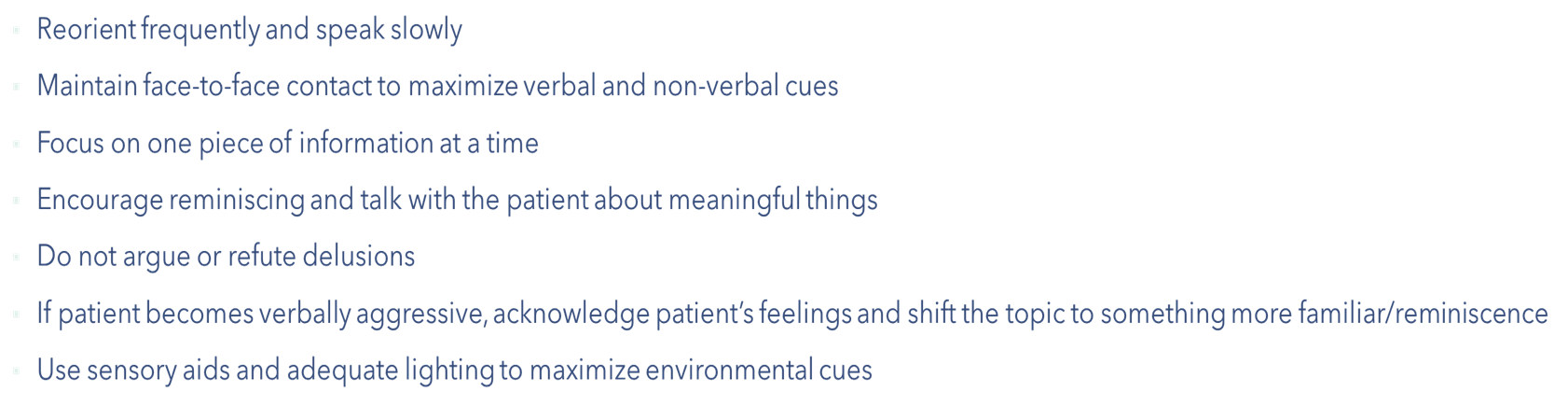
Clients with Alzheimer's/Dementia benefit from what types of interventions?
Distraction (appropriate to their diagnosis)
Reminiscing therapy
Independence (again, appropriate to their diagnosis- stage of condition)
SAFETY!
Locks on doors if needed
Assisting with ADL's
Ensuing they are eating/drinking
400
What are warning signs/symptoms of bulimia?
Examples of compensatory behaviors
Taking laxatives and over exercising, purging, abuse of stimulants
500
Clients with PTSD should avoid what drug class due to their high risk of substance abuse (self-medicating)?
Benzo's
500
Withdrawal from alcohol can be seen within what time frame?
8-12 hours
It usually peaks within 24-48 hours after the last drink ( or decreased consumption)
500
A main goal for a client with OCD includes?
limiting the time spent on the compulsions
Example: if they typically take 1 hour to complete their morning routine, maybe have them aim for 45 minutes (it should lesson the number of times they are doing the compulsive behavior)
500
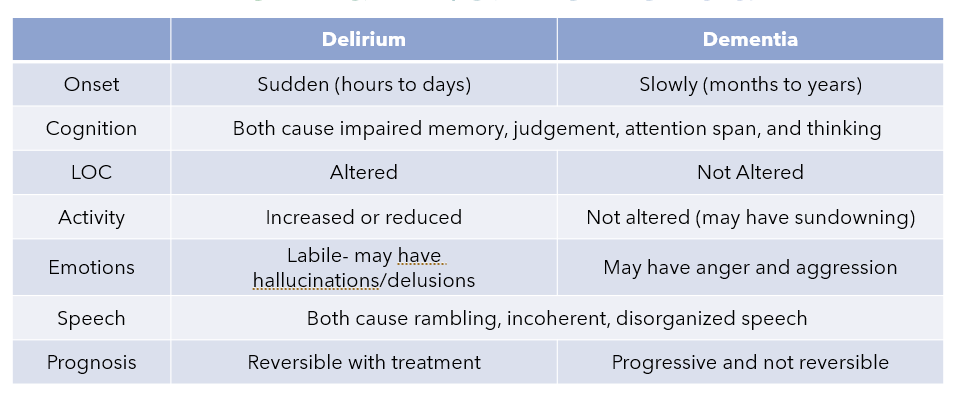
What are some of the similarities and differences between delirium and dementia?
500
Reasons for concerns related to an eating disorder ( requiring immediate attention)
Low heart rate
Low B/P
Electrolyte imbalances
Cardiac issues
Extreme weight loss
Dehydration