Safety and Sanitation
Kitchen Equipment
Recipes
Misc. 1
Misc. 2
100
Define cross contamination. Why is cross contamination dangerous?
When harmful bacteria from one food are transferred to another food or object.
Cross contamination can cause foodborne illness.
100
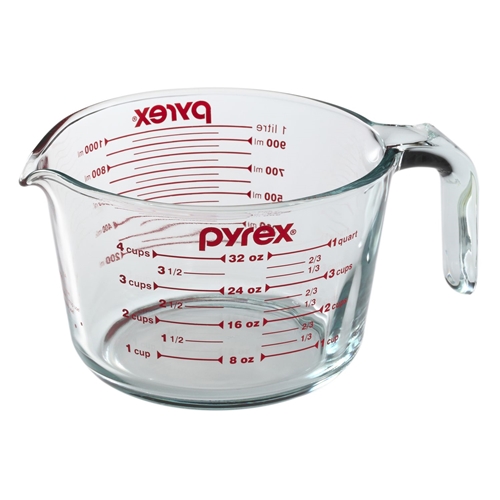
What is the name of this kitchen tool? What is it used for?
Liquid measuring cup used for measuring liquid ingredients
100
What is the yield of a recipe?
How much the recipe makes (serving size)
100
What is pasteurization?
Heating milk (or other liquids) to a high temperature to kill harmful bacteria before consumption.
100
What is the most effective way of stopping the spread of germs to other people?
Washing your hands
200
What are the symptoms of a foodborne illness that affect your digestive system?
Nausea, vomiting, diarrhea, abdominal cramps
200

Dry measuring cups used for measuring dry ingredients
200
What is the abbreviation for the word "teaspoon" used in recipes?
t or tsp.
200
Which of the 6 key nutrients is our body's main source of energy?
Carbohydrates
200
What two ingredients does yeast need to work properly? What are the functions of those ingredients?
Warm water is needed to activate the yeast.
Sugar is used to feed the yeast, causing the production of CO2 gas which makes bread dough rise.
300
What are the temperatures considered the danger zone?
What happens when foods are in the danger zone?
The danger zone is 40-140 degrees.
Bacteria grows the fastest on food when in the danger zone.
300
What kitchen tool is used to incorporate air into mixtures?
A Whisk
300
What word is the abbreviation "Tbsp." used for?
Tablespoon
300
List the 6 key nutrients.
Carbohydrates, proteins, fats, vitamins, minerals, and water
300
What is the difference between herbs, spices, and blends?
Herbs are made from the leaves of plants, spices are made from other parts of the plant (not leaves), blends are combinations of herbs and spices.
400
Name 4 common kitchen accidents
Cuts, burns, falls, electric shock, chemical poisoning, choking
400
What kitchen tool should cookies be placed on after coming out of the oven?
Cooling rack
400
When should you add whole herbs and spices into a recipe?
When should you add ground herbs and spices into a recipe?
Whole herbs and spices should be added at the beginning of cooking because they need time to release their flavor.
Ground herbs and spices should be added at the end of cooking because they flavor food immediatley.
400
List the 5 main food groups as described by the MyPlate food guide.
Fruits, vegetables, grains, protein, and dairy
400
The foodborne illness that attacks the nervous system causing muscle weakness, blurry vision, difficulty speaking, and even death is called _____.
Botulism
500
Name the 4 concepts of kitchen safety and explain each
Clean- clean hands, dishes, and kitchen surfaces to prevent the spread of foodborne illness
Separate- separate raw foods from ready to eat foods
Cook- cook all foods, especially meats, to the proper internal temperature
Chill- chill leftovers in the refrigerator to keep fresh
500

What is the name of this kitchen tool? What is it used for?
Pastry blender. Used for cutting solid fats into dry ingredients, such as when making pastries.
500
What are the parts of a well written recipe?
Name of recipe, yield, ingredients, measurements, directions, temperature, equipment, and cooking time.
500
Define emulsion. What is the difference between a temporary emulsion and a permanent emulsion?
An emulsion is a mixture of 2 or more substances that don't naturally mix together (Ex: oil and water)
A temporary emulsion will separate after sitting still, a permanent emulsion will not.
500
List the 6 categories of fruits. Give an example of each.
Berries, drupes, pomes, melons, citrus, and tropical