Forces
Waves
Speed, Velocity, Acceleration
Energy
Examples of Newton's Laws
100
The unit of measurement for force.
Newtons
100
The term for the range of electromagnetic waves placed in order of increasing frequency.
Electromagnetic Spectrum
100
When speed is given with a direction
Velocity
100
Energy due to motion.
Kinetic Energy
100
A water bottle sitting on a table.
Example of Newton's 1st Law
200
All forces acting on an object are equal, there is no change in motion.
Balanced Forces
200
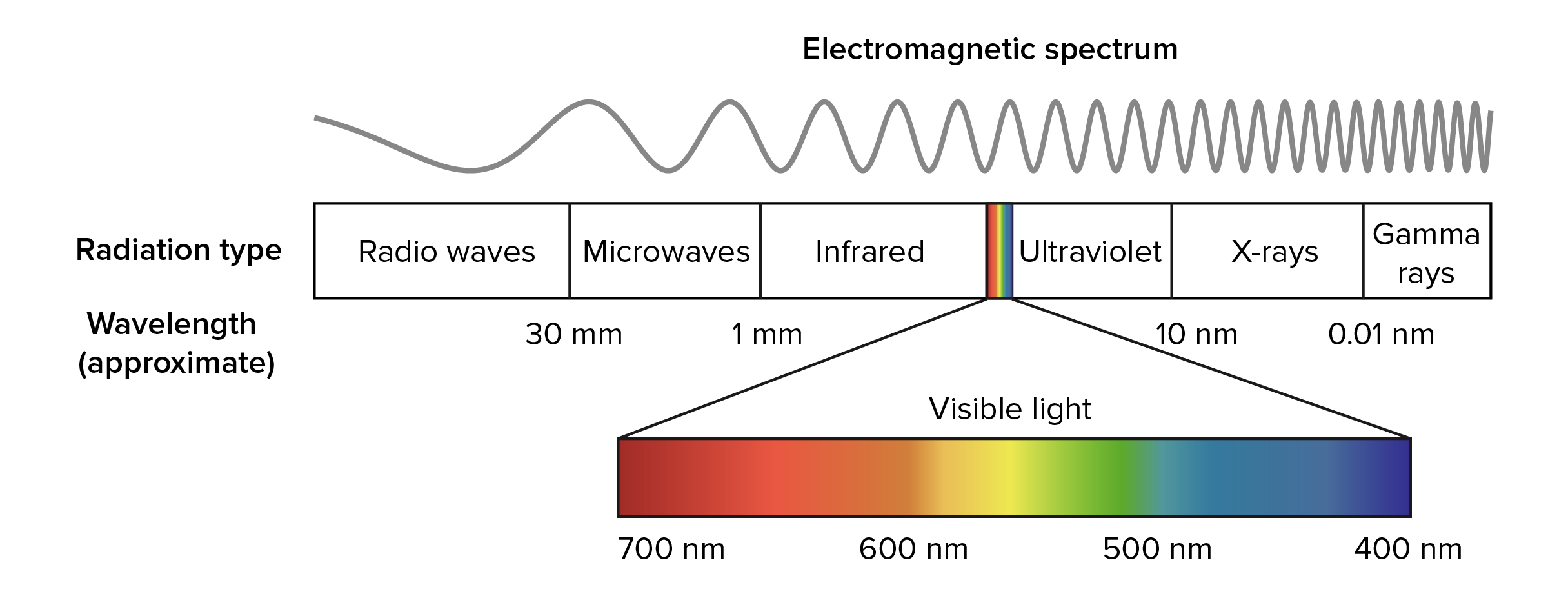
EM waves with a shorter wavelengths have this type of frequency.
High Frequency
200
The distance an object travels per unit of time.
Speed
200
Stored energy due to the interactions between objects or particles.
Potential Energy
200
A model rocket flies upwards as the engine combusts and creates a force downwards on Earth.
Example of Newton's 3rd Law
300
When forces acting on an object are unequal, there is a change in motion.
Unbalanced Forces
300
EM waves with a longer wavelengths have this type of frequency.
Low Frequency
300
The change in an object's velocity over time
Acceleration
300
This type of energy always transfers from hot to cold temperatures.
Thermal Energy
300
A wheelbarrow filled with heavy rocks is harder to move than one filled with grass.
Example of Newton's 2nd Law
400
The tendency to resist change in motion.
Inertia
400
All waves on the electromagnetic spectrum are classified as this type of wave.
Transverse Wave
400
The distance an object traveled with a speed of 50 mph for 2 hours.
100 miles
400
Energy can neither be created nor destroyed. It can only be transformed.
Law of Conservation of Energy
400
A car passenger's body moves forward when the driver applies the brakes.
Example of Newton's 1st Law
500
The acceleration of an object depends on these two factors.
Net Force and Mass
500
Frequency in waves are measured in this unit of measurement.
Hertz (Hz)
500
The average speed of an object traveling 300 miles in 6 hours.
50 mph
500
The measure of kinetic energy of the particles of a substance
Temperature
500
A bowling ball and a basketball are rolled with the same amount force. The basketball moves further across the room.
Example of Newton's 2nd Law