Infection infection what's your complexion?
For the love of... wash your hands
Enzymatic magic
Viva la Virulence
Where'd you get those genes?
Sequelae soliloquies
Name that infectious agent
50 shades of x-ray gray
100
The primary cause of death in 1/3 of people greater than 65.
What is an infection?
100
The process that destroys all viable microbes, viruses, and endospores.
What is sterilization?
100
A virus that uses enzymes to form complementary DNA from a template RNA.
What is a Retro-transcribing virus?
100
Aids in the breakdown of fibrin clots.
What is streptokinase?
100
The gene that MRSA uses as a mechanism for drug resistance.
What is the Mec-A gene?
100
Drug inactivation, restrict access, efflux pump, altering target site, and altered pathway.
What are the mechanisms of drug resistance?
100
Most potent microbial toxin known that blocks release of acetylcholine.
What is Botulinum toxin?
100
Materials that resist the passage of x-rays.
What is radiopaque?
200
The quality of producing disease.
What is pathogenicity?
200
Stepping on a nail would be this kind of transmission.
What is a non-communicable transmission?
200
Coagulates plasma and blood promoting evasion of opsonization and phagocytosis.
What is coagulase?
200
Enhances adhesion increasing virulency.
What is fimbriae?
200
Small changes in the genome continuously happen over time and are responsible for viral epidemics.
What is Antigenic drift?
200
Occurs when the primary infection is not cleared by the adaptive immune response.
What are persistent viral infections?
200
A gram-positive cocci chain that is catalase negative-- hallmarked by Beta-hemolysis and sensitive to bacitracin.
What is Streptococcus pyogenes?
200
The diagnostic procedure that uses the highest radiation dose.
What is computed tomography?
300
The two most important differential stains.
What are Gram stain and Acid-fast stain?
300
The most common infection site of nosocomial infections.
What is the urinary tract?
300
Inactivates penicillin and other antibiotics.
What are Beta-lactamases?
300
One of the most pathogenic bacteria that can cause disease at any body site.
What is Staphylococcus aures?
300
Causes complete RBC lysis.
What is beta-hemolysis?
300
Caused by epithelial toxins producing fever, hypotension, erythroderma followed by desquamation.
What is Toxic shock syndrome?
300
Associated with aggressive infections and a high mortality rate.
What is staphylococcus lugdunensis?
300
Test that is ideal for looking at neurological tissue, tendons, and ligamnets.
What is an MRI?
400
When an infectious agent breaks loose from local infection and is seeded or disseminated into other tissues.
What is a focal infection?
400
A medication commonly given that causes predisposition to infections (immunosuppressant).
What are corticosteroids?
400
Detects coagulase and surface protein A found on Staph-Aureus cells.
What is the Rapid Latex Agglutination test?
400
A surface antigen that protects from bacteria being dissolved by lysozymes.
What is C-carbohydrate?
400
Abrupt and major changes to the viral genome that is responsible for pandemics.
What is antigenic shift?
400
The ability of an infection when the host becomes immunocompromised as seen with cold sores from Herpies simplex virus.
What is viral latency?
400
The most commonly isolated yeast that is opportunistic and causes infection in any body site.
What is Candida albicans?
400
Is indicated by blunting of the costophrenic angle.
What is pleural effusion?
500
When a pathogen remains viable but is dormant within the host.
What is a latent infection?
500
Harbors the adult parasite.
What is a definitive host?
500
Digest connective tissue increasing spreading factor by promoting invasion that leads to cellulitis.
What is Hyaluronidase?
500
This Gram-positive bacteria is arranged in pairs and lancets and presents with large capsules that are the major virulence factor.
What is Streptococcus pneumoniae?
500
Potent immune stimulator that triggers the secretion of interleukins, tumor necrosis factor and other cytokines.
What is lipid A?
500
A delayed inflammatory condition of the joints, heart, and subcutaneous tissue that occurs 1-5 weeks after pharyngitis infection only.
What is Rheumatic fever?
500
Later symptoms include insomnia, anxiety, confusion, paralysis, hallucinations, agitation, hypersalivation, dysphagia, and hydrophobia.
What is Rabies?
500
DAILY DOUBLE!!!!
This SPECIFIC procedure's purpose is to highlight deficiencies in a lumen or vasculature; can highlight inflammatory processes.
What is a CT scan with contrast?
600
When a unequal relationship in which one species derives benefit without helping or harming the other.
What is commensalism?
600
History of travel to tropics or immigration with a CBC showing increased eosinophils.
What is helminth infestation?
600
Relenza and Tamiflu are antivirals that inhibit this surface enzyme.
What are Neuraminidase inhibitors?
600
Virulence factors of this bacteria include enterotoxins that cause epithelial necrosis of the colon and endospore formation that can live 5 months to a year on surfaces.
What is Clostridium difficile?
600
Acid-fast cell walls that protect from lysozyme and antibacterial agents, resistant to drying, cord factor, and low infectious dose contribute to virulancy.
What is Mycobacterium Tuberculosis?
600
A type III hypersensitivity causing deposition of Ag-Ab complexes in kidneys; presents as nephritis, hematuria, and increased BP. IS NOT PREVENTED with antibiotic prophylaxis.
What is Acute glomerulonephritis?
600
Transmitted by oocyst ingestion from environment like cat feces.
What is Toxoplasma gondii?
600
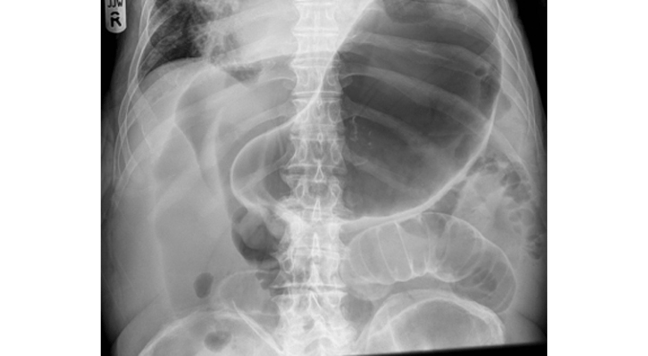
The pathology that can be identified in this x-ray.
What is Rigler's Sign?
700
When a host causes an excessive or inappropriate response to a microorganism.
What is an indirect effect of an infection?
700
The two most common parasitic diseases with high rates in children of rural areas, poor marginalized communities and low income countries.
What is Giardia and Cryptosporidium?
700
This exoenzyme digest a protective coating on mucous membranes (factor in amoebic dysentery).
What is mucinase?
700
The three types of virulence factors when invading a host.
What is -Antiphagocytic factors
-Exoenzymes or degradative enzymes
-Toxins
700
Transfer of genetic material from one bacterium to another by means of a bacteriophage vector.
What is Transduction?
700
Characterized by low platelet count, hemolytic anemia, and kidney failure that is associated with an increased risk with antibiotic therapy and children.
What is Hemolytic uremic syndrome?
700
The acronym for common transplacental infection of the fetus.
What is TORCH?
700
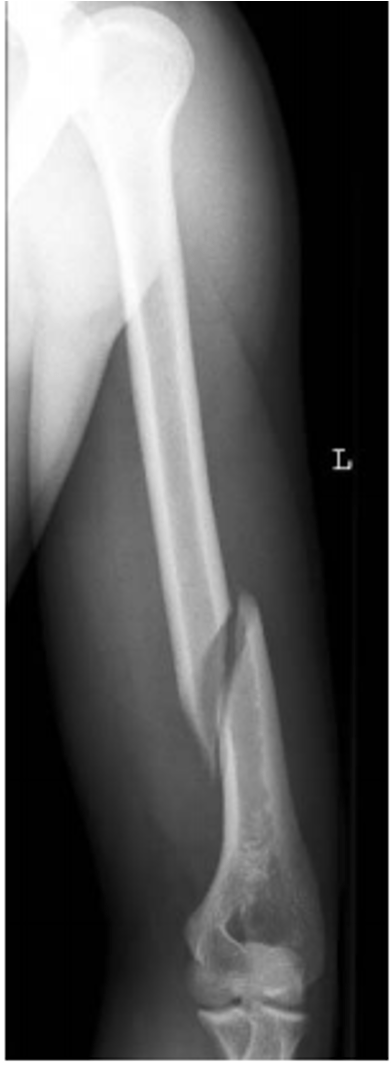 What kind of fracture is this classified as?
Spiral Fracture