Cardiac Cycle
Calculations
Normal Values
Doppler shift
Miscellaneous
100
Is atrial contraction an electrical or mechanical event?
Mechanical
How about the "p" wave?
Electrical
100
Calculate the CSA if the LVOT diameter is 2.0 cm.
CSA = 3.14
CSA= LVOT d2 X .785
CSA = (2x2)x .785
CSA = 4x .785
100
What is a the cutoff for a normal LA volume measurement? (include units)
<34 cc/m2 (or ml/m2)
Normal 16-34
100
If we are perpendicular to flow (zero doppler shift) with our color flow doppler, what color will we see?
Black
Angle we are most parallel to flow?
0 degrees
90 degrees is perpendicular
100
T/F If we increase our depth, it will increase our frame rate.
False
It will decrease our frame rate
200
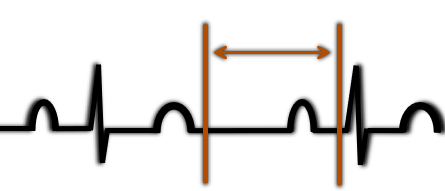
What part of the cardiac cycle is this?
Diastole
200
Calculate the RVSP if the TR velocity is 3.0 m/s and the RA pressure is estimated as 15 mmhg. (include units)
RVSP= 51 mmhg
RVSP= 4(TRV2) + RAP
4 (9) + 15
200
What is the cutoff for a severely reduced EF (ejection fraction) include units.
<30%
200
If the Reynolds number is greater than this, we will see turbulent flow.
2000
200
Which type of doppler is not subject to the Nyquist limit?
CW (continuous wave doppler)
300
On which wave on the EKG do we make our ascending aorta measurement?
Onset of the QRS complex
300
Calculate the ejection fraction based on the following information: LVEDV 110 cc LVESV 44cc
EF= 60%
LVEDV-LVESV/LVEDV x 100%
(110-44/110) x 100
300
What is the normal value range for dP/dt?
>1200
300
If we see red flow with our color doppler, this means the flow is moving in which direction in relation to the transducer (towards or away), it would be (above or below) the baseline on our spectral doppler flow, and its a (positive or negative) doppler shift?
Towards the transducer, above the baseline, positive doppler shift.
300
According to ASE, if the IVC measures 2.4 cm and collapses 42% we would estimate RA pressure at what? (include units)
15mmhg
>2.1 cm, collapses less than 50%
when do we measure IVC? (at end inspiration or expiration? at its biggest or smallest?)
400
We measure left atrial volumes at this phase in the cardiac cycle.
End systole
400
Calculate the stroke volume (include units)
LVOT diameter of 2.2 cm and an LVOT TVI of 22cm.
84 ml or cc's
(or 83 if you didn't round up)
400
List the normal, indeterminate, and abnormal value ranges for the E/e' ratio.
>8
8-14
>14
we use this to estimate LA pressure.
400
If the transducer sends out a transmitted frequency of 3,400,000 HZ and the reflected frequency is 3,000,000 HZ, the color flow Doppler would be displayed as ______________. (using the typical color flow map of echocardiography BART)
Blue
negative doppler shift= blue flow
Reflected frequency- transmitted frequency= doppler shift
Above or below baseline? - below
400
T/F According to Poiseuille's law if the pressure difference decreases, the rate of flow will decrease
True
500
At what point in the cardiac cycle would we measure Tricuspid Regurgitation peak velocity?
Mid-systole?
(or if you just have systole that's ok)
500
Given an LVEDD of 48mm and an LVESD of 28mm, calculate the ejection fraction (no apical factor), including units
EF = 66%
(or 70% if you didn't round up)
LVEDD2- LVESD2/LVEDD2
2304-784/2304 = 66%
500
What is the range for a mildly enlarged left atrial volume index for men and women? (include units)
mildly enlarged: 35-41 ml/m2
Normal 16-34
Mildly enlarged 35-41
Mod enlarged 42-48
Severely enlarged >48
500
What happens to the Doppler Pulse Repetition Frequency (PRF) if we increase our depth?
(will it decrease or increase?)
Decrease
It will decrease as they are inversely related. PRF is the greatest at a shallow depth. Takes less time for the pulse to reach the reflector and return to the transducer so it can send out more pulses per second.
500
If the left ventricle is stiff and non-compliant:
1. Will filling pressures be high or low?
2. Will the LA be normal, dilated, or small?
1. High filling pressures
2. LA will be dilated
LA has to push blood into the LV, increase in pressure, LA will dilate to compensate.