Key Terms
Clinical manifestations of a fracture
Clinical manifestations of complications
Types of fractures
Interprofessional Care
100
A disruption or break of the bone.
What is a Fracture.
100
Then nurse knows that that this is her most important intervention when it comes to assessing the clinical manifestations of a fracture.
Neurovascular assessment.
100
Open fractures and soft tissue injuries have the highest incident of this. They often require Irrigated with saline and require debridement I & D) of gross contaminants.
Infection
100
A fracture where the bone is exposed and protruding from the skin.
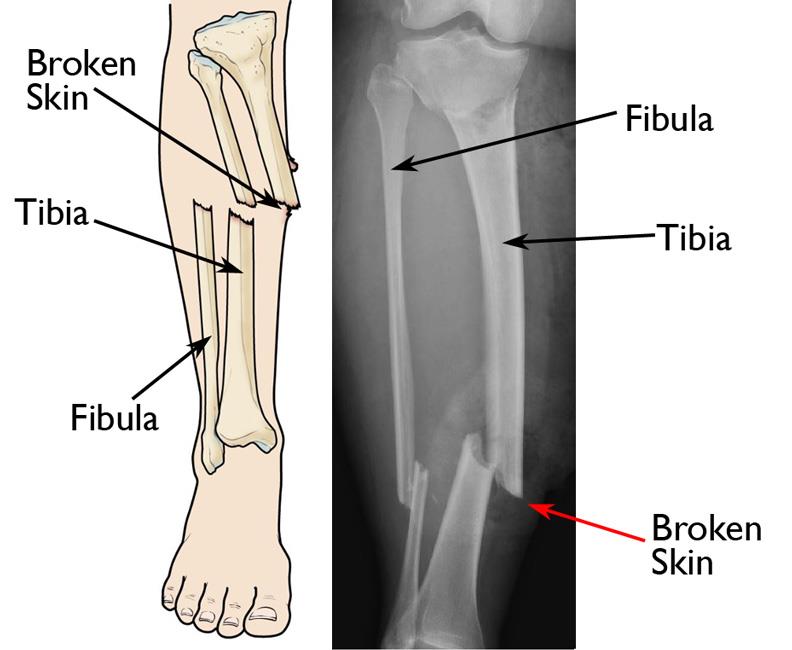
what is an Open fracture
100
Please ensure patient teaching about not using something inside of this to decrease itching. Do not get this wet, do not cover for prolonged periods of time. Elevation can help with swelling. But if the client begins to have symptoms like numbness, or cool digits have them notify the provider.
What is a Cast
200
Application of a pulling force to an injured or diseased body part or extremity.
What is Traction
200
As the nurse assesses for the clinical manifestations what makes up the vascular assessment portion.
color, temperature, capillary refill, peripheral pulses, edema
200
What are the six p's of compartment syndrome?
pain out of proportion to the injury, increasing pressure, paresthesia, pallor, paralysis, pulselessness (late sign)
200
A fracture is caused by a bending or crushing and the fracture line is only partially through the bone.
What is an Incomplete fracture
200
Traction is a device that applies force on a fractured extremity to attain alignment and to decrease pain and muscle spasm. What are two examples.
Bucks and skeletal (remember to assess skin and provide pin care as needed with skeletal traction)
300
A condition in which swelling causes increased pressure within a limited space (muscle compartment).
Compartment syndrome
300
As the nurse assesses for the clinical manifestations what makes up the peripheral neurologic assessment portion.
sensation, motor function, pain
300
Early recognition of this syndrome with effective management called fasciotomies are essential to avoid permanent damage to the muscles and nerves.
Compartment syndrome
300
In this fracture the line extends in a spiral direction along the bone.

What is a Spiral
300
These two procedures go hand in hand. It is the correction of bone through a surgical incision. Pins, wires, screws, plates, and rods, or nails be used.
Open reduction internal fixation (ORIF)
400
Systemic fat globules from fractures that are distributed into tissues, lungs, and other organs after a traumatic skeletal injury. This is a contributory factor in mortality associated with fractures. Early recognition of this can prevent a lethal course for the client.
Fat embolism syndrome (FES)
400
A nurse may or may not see this finding with a fracture.
What is bone deformity
400
A nurse can prevent this complication by administering prophylactic medication like heparin or enoxaparin, and ensuring that SCD's are correctly applied and working properly. TED's may also be ordered. If permitted the client may perform ROM exercises.
Venous Thromboembolism
400
These fractures are transvers, spiral, or greenstick and they are considered nondisplaced fractures where the bone is separated but the bone remains in normal position.

What is Non displaced
400
Name some medications that may be used when treating fractures.
muscle relaxants, analgesia, cefazolin (make sure your client is not allergic to PCN), tetanus and diphtheria immunization(especially for open fractures)
500
An abnormal sensation like numbness, tingling.
paresthesia
500
Name some clinical manifestations of a fracture
immediate localized pain, decreased function, inability to bear weight or use the affected part, guarding, bone deformity
500
This can be a lethal complication especially of long bone fractures. Many patients may have symptoms within 24 to 48 hours after injury. They may have confusion, loss of memory, agitation, poor oxygenation, difficulty breathing, petechiae. This complication does not have any specific laboratory examination for its discovery.
Fat embolism syndrome (FES)
500
This is a displaced fracture (where the bones are not in alignment) and it has several fragments.

What is a Comminuted fracture
500
This is used to salvage a limb. It has metal pins that are attached to external rods to promote stabilization of a fracture.
External fixation also called an external fixator. (Remember this requires pin care per policy)