The Practice of Science
Our Solar System
Properties of Matter
Organs and Organ Systems
Adaptations
Force, Mass, and Motion
100
The procedure carried out to carefully observe, study, or test something in order to find out more about it.
Investigation
100
A large, round body that revolves around a star in its own orbit.
Planet
100
Anything that has mass and takes up space.
Matter
100
A ________________ is any living thing.
Organism
100
The place where a living thing lives.
Habitat
100
Any change in the position of an object.
Motion
200
Statements about future events based on information.
Predictions
200
A nearly round body that crosses the orbit of other bodies. Some examples include Eris, Ceres, and Makemake.
Dwarf Planet
200
The amount of space something takes up.
Volume
200
The job of this system is to sense information about the environment and communicate within the body.
Nervous System
200
Adaptations that are differences in the bodies of plants and animals. These types of adaptations could help an animal hide, hunt, or reproduce.
Physical adaptations
200
This can cause an object at rest to begin moving, or to change position, also known as a push or pull.
Forces
300
The steps followed in an experiment.
Procedure
300
The cause of day and night on Earth.
Earth's rotation on its axis.
300
Which is a property of solids?
A. takes the shape of its container
B. keeps its shape
C. fills its container
D. can be poured
B. Keeps its shape
300
This system supports and protects the body, and allows for movement.
Skeletal
300
Behaviors that animals know how to do without being taught.
Instincts
300
The amount of matter in an object.
Mass
400
The parts of an experiment that you test, things that might be different from each other in an experiment.
Variable
400
Planets with rocky surfaces, on the inside of the asteroid belt, and closer to the sun, are referred to as:
Inner planets
400
Study this thermometer.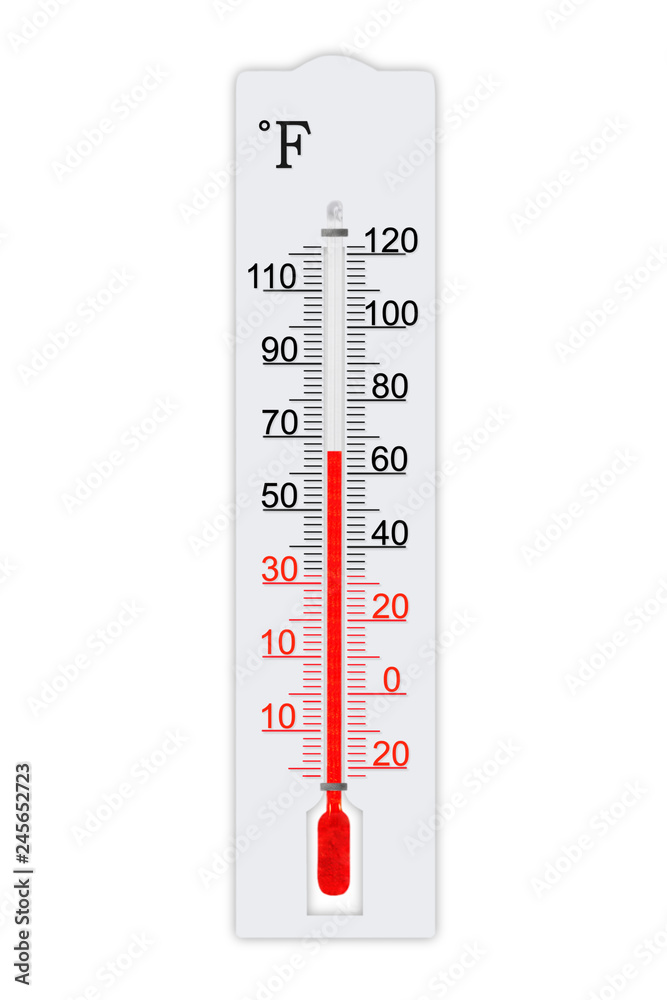
Which properties does water have at this temperature?
A. it would fill its container
B. it would hold its own shape
C. it would not have a shape
D. it would take the shape of its container
D. it would take the shape of its container
400
This system pumps oxygen and nutrients throughout the body and helps remove waste.
Circulatory
400
Tadpoles living in water before developing into frogs is an example of a ________________.
Life Cycle Adaptation
400
If equal forces act on an object in opposite directions, the forces are balanced. Only __________ _________ affect an object's motion.
Unbalanced Forces
500
The part of an experiment that stays the same, and to which all the other parts are compared.
Control
500
It is noon (12:00pm) where you are. What time of day is it on the opposite side of the Earth?
Midnight, 12:00 am
500
How can you measure the properties of matter?
By using science tools
500
This system protects the inside of the body and helps control body temperature. This system includes your skin, hair, and nails.
Integumentary System
500
This is where the ocean meets the land. It is constantly struck by waves. When the tide goes out, this area is exposed to air and sunlight, and living things here have adaptations to protect their bodies from being crushed, washed away, or dried out.
Intertidal Zone
500
Which cannot be changed by applying force to an object?
A. mass
B. direction
C. speed
D. velocity
A. mass