The Practice of Science
Our Solar System
Properties of Matter
Organs and Organ Systems
Adaptations
Force, Mass, and Motion
100
The procedure carried out to carefully observe, study, or test something in order to find out more about it.
Investigation
100
A large, round body that revolves around a star in its own orbit.
Planet
100
Anything that has mass and takes up space.
Matter
100
A ________________ is any living thing.
Organism
100
The place where a living thing lives.
Habitat
100
Any change in the position of an object.
Motion
200
a logical conclusion based on previous experiences, observations, and knowledge.
Inference
200
A nearly round body that crosses the orbit of other bodies. Some examples include Eris, Ceres, and Makemake.
Dwarf Planet
200
The amount of space something takes up.
Volume
200
The job of this system is to sense information about the environment and communicate within the body.
Nervous System
200
Adaptations that are differences in the bodies of organisms. These types of adaptations could help an animal hide, hunt, or reproduce.
Physical adaptations
200
This can cause an object at rest to begin moving, or to change position, also known as a push or pull.
Forces
300
Statements about future events based on information.
Predictions
300
The cause of day and night on Earth.
Earth's rotation on its axis.
300
Which is a property of solids?
A. takes the shape of its container
B. keeps its shape
C. fills its container
D. can be poured
B. Keeps its shape
300
This system supports and protects the body, and allows for movement.
Skeletal
300
Behaviors that animals know how to do without being taught.
Instincts
300
The amount of matter a substance has.
Mass
400
General term for the factors of an experiment that can be changed, things that might be different from each other in an experiment.
Variable
400
Planets with rocky surfaces, on the inside of the asteroid belt, and closer to the sun, are referred to as:
Inner/Terrestrial planets
400
Study this thermometer.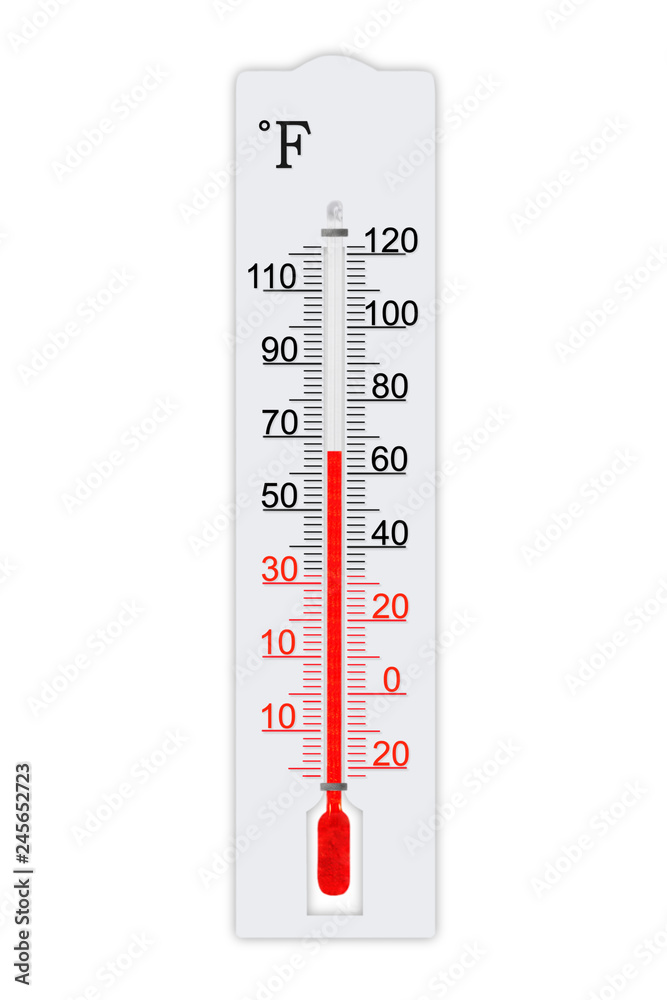
Which properties does water have at this temperature?
A. it would fill its container
B. it would hold its own shape
C. it would not have a shape
D. it would take the shape of its container
D. it would take the shape of its container
400
This system pumps oxygen and nutrients throughout the body and helps remove waste.
Circulatory
400
The unique role an individual plays within its community
Niche
400
If equal forces act on an object in opposite directions, the forces are balanced. Only __________ _________ affect an object's motion.
Unbalanced Forces
500
The steps followed in an experiment.
Procedure
500
It is noon (12:00pm) where you are. What time of day is it on the opposite side of the Earth?
Midnight, 12:00 am
500
Tool used to measure weight in Newtons
Spring Scale
500
What 2 systems work together to deliver oxygen to cells?
Respiratory and Circulatory
500
This is where the ocean meets the land. It is constantly struck by waves. When the tide goes out, this area is exposed to air and sunlight, and living things here have adaptations to protect their bodies from being crushed, washed away, or dried out.
Intertidal Zone
500
The gravitational force between 2 objects depends on these two factors.
Mass and Distance
600
In a controlled experiment, this is the group that receives no test variable, to which all other groups are compared.
Control Group
600
The universe contains ____ of galaxies, each with ____ of stars.
Billions of galaxies each with Billions of stars
600
Calculate the density of a substances with a mass of 40 grams that occupies a volume of 20 cm3. Answer must include correct units.
D= M / V
D= 40g / 20cm3
D= 2 g/cm3
600
Which 2 systems work together to remove waste from the body?
Excretory and circulatory system
600
A typed of animal behavior that comes from experience and socialization
Learned Behavior
600
When the only force acting on an object is gravity
Free Fall