Theories & Laws
Earth Processes
Properties of Waves
Physical & Chemical Changes
Cell Processes
Organelles
100
Scientific ____ describe what always happens under certain conditions in nature.
Laws
100
All of the continents were once all together forming a supercontinent called...
Pangea
100
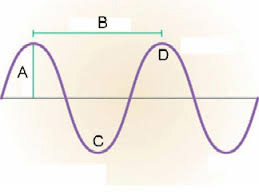 What is letter B?
Wavelength
100
Melting an ice cube
Physical change
100
Plants are called primary producers because they convert inorganic energy into organic energy (sugar) through photosynthesis. What is the inorganic energy that plants require for this process?
Sunlight
100
Where cellular respiration occurs. ("The powerhouse" of the cell)
Mitochondria
200
Law that states that energy in the universe cannot be created nor destroyed, but only transformed.
Law of Conservation of Energy
200
What forms at continental convergent boundaries?
Mountains
200
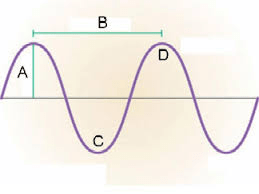
What is letter A?
Amplitude
200
Baking a cake
Chemical change
200
The green photosynthetic pigment found chiefly in the chloroplasts of plant
Chlorophyll
200
Contains the DNA. (Like the cell's "headquarters")
Nucleus
300
Theory that explains the change in the characteristics of a species over several generations and relies on the process of natural selection.
Theory of Evolution
300
This occurs in the mantle that causes tectonic plate movement
Convection currents
300
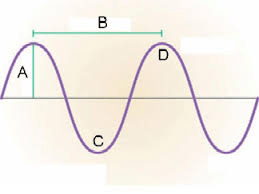
What are letters C and D?
C- trough
D- crest
300
Dissolving sugar and water
Physical change
300
Plants remove this molecule from the atmosphere for photosynthesis
Carbon dioxide
300
Controls what goes in and out of the cell. Helps to maintain homeostasis. EVERY cell has this!
Cell membrane
400
A theory that all matter is composed of small particles, which are constantly in random motion.
Kinetic Theory of Matter
400
What forms at oceanic divergent boundaries?
Mid-ocean ridges
400
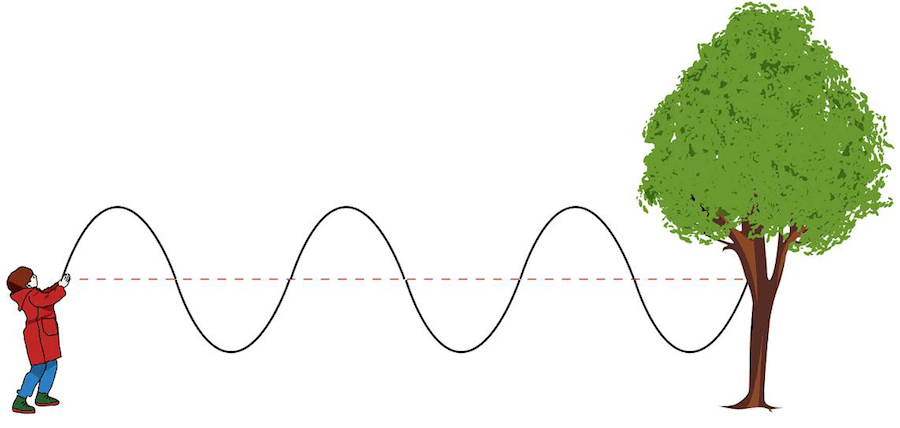 What type of wave is this where matter is disturbed perpendicular to the direction of wave travel?
Transverse wave
400
Ripening of fruits
Chemical change
400
What is the energy molecule produced in cellular respiration?
ATP
400
Holds water, nutrients, and waste. Larger in plant cells.
Vacuole
500
What are the 3 fundamental principles of the Cell Theory?
1. Cells are the most basic unit of life
2. All living things are made of cells
3. All cells come from preexisting cells
500
What is the rigid, rocky outer layer of Earth, consisting of the crust and the solid outermost layer of the upper mantle.
Lithosphere
500
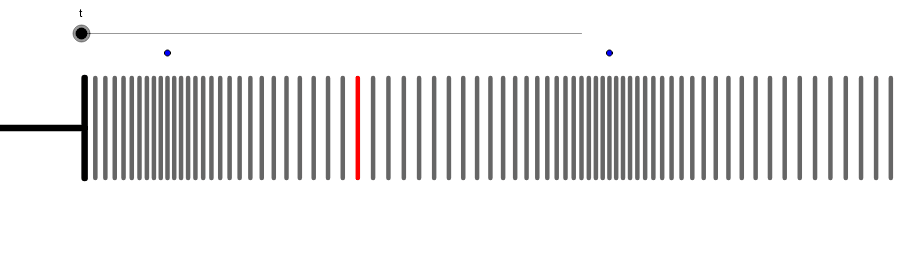 What type of wave is this where matter is disturbed parallel to the direction of wave travel?
Longitudinal wave
500
What factor can increase the reaction rate for chemical changes?
Increasing temperature
500
This gaseous molecule is a waste product of cellular respiration
Carbon dioxide
500
Where photosynthesis occurs
Chloroplast
600
What are Newton's 3 Laws of Motion?
1. Law of Inertia (object's tendency to resist a change in motion)
2. Law of Acceleration (Force = Mass x Acceleration)
3. Law of Action-Reaction (every action has an equal and opposite reaction)
600
The thin, almost liquid, layer under the lithosphere
Asthenosphere
600
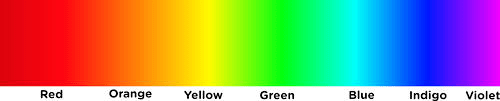 Violet is the highest energy wavelength of the visible light spectrum. What other TWO wave properties of violet are associated with this fact???
Short wavelength
High frequency
600
Name at least 3 of the 5 signs for witnessing a chemical change.
1. production of a gas
2. production of an odor
3. change in color
4. change in energy
5. formation of a precipitate
600
Glucose is produced by plants during photosynthesis. What is the chemical formula for glucose?
C6H12O6
600
Sorts and modifies proteins before packaging and shipping them to other parts of the cell. (Like a protein "post office")
Golgi Apparatus