Properties of Matter, Part 1
Properties of Matter, Part 2
Atoms
The Periodic Table
Substances
Acids & Bases
Changes in Matter
Energy & The Carbon Cycle
100
A MEASURE OF THE AMOUNT OF MATTER IN AN OBJECT
UNITS IN GRAMS, KILOGRAMS
MEASURED USING TRIPLE BEAM BALANCE.
MASS
100
The ability of a substance to be dissolved into another substance.
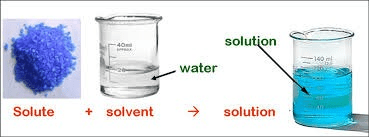
SOLUBILITY
100
What 2 particles are found inside the nucleus of an atom?
proton
neutron
100
Horizontal rows on the periodic table
Periods
100
Pure substance that has all of the same type of atoms
They are found on the periodic table
element
100
Substances from 0 to 6 on the pH scale.
Sour taste.
Reacts with metals
acids
100
Happens when there is a re-arrangement of the molecules of a substance.
NO New Substances formed!
Can be reversed.
Ex: Changes in state of matter, shape, size, volume, mass, weight, and density.
physical change
100
States that matter is not created or destroyed, only rearranged or recycled.
Law of Conservation of Matter
200
A MEASURE OF THE SPACE AN OBJECT OCCUPIES
UNITS IN CUBIC CENTIMETERS (CM³) OR MILLILITERS (ML).
VOLUME
200
The substance that is dissolved into the solvent.
SOLUTE
200
Where is the electron found in an atom?
Outside the nucleus in the electron cloud
200
Columns on the periodic table that share the same properties.
Families/Groups
200
When two or more DIFFERENT elements are combined chemically by being bonded
Turn into a new substance with completely new properties.
compound
200
Substances from 8 to 14 on the pH scale.
Bitter taste.
Bases
200
Occur when the molecules of a substance are separated or joined and changed into a new substance with new properties.
Can’t be reversed.
Ex: Bubbling and fizzing, light production, smoke, and presence of heat.
chemical change
200
water + CO2 = glucose + O2
photosynthesis
300
A COMPARISON OF AN OBJECT’S MASS TO ITS VOLUME.
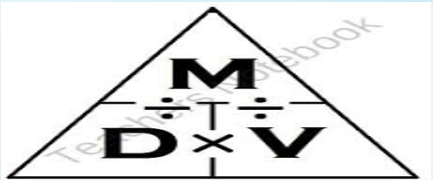
DENSITY
300
The substance into which the solute is dissolved.
SOLVENT
300
Shows the number of protons in the nucleus of the atom.
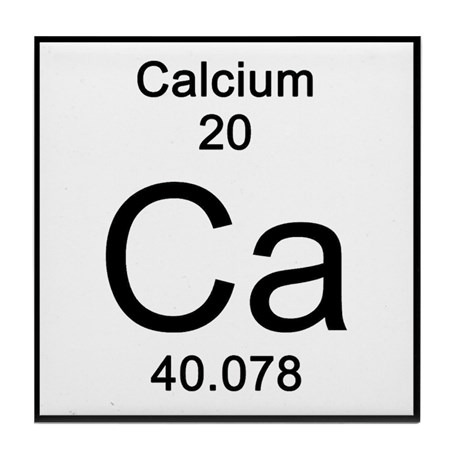
Atomic number
300
The periodic table arranges all the elements in groups according to what?
Similar properties
300
When two or more substances are combined physically (in the same place), but not chemically bonded together.
mixture
300
Result when an acid and a base neutralize each other (cancel each other out).
Salts
300
The rate of a chemical reaction will _______________ when heat is added.
INCREASE
300
Humans & other animals breathe in oxygen and transform sugar into energy then breathe out carbon dioxide due to this process...
cellular respiration
400
property related to allowing electricity to pass through it easily
ELECTRICAL CONDUCTIVITY
400
When the solute is dissolved into the solvent.
SOLUTION
400
Tells us the Protons + Neutrons of an atom of that element

Atomic mass
400
As you move through each element on the periodic table, you add a _________.
Proton
400
Two or more substances that are combined PHYSICALLY, but not chemically bonded.
You get DIFFERENT amounts in each sample.
EX: Chex Mix, Italian Dressing, concrete
heterogenous mixture
400
Pure substances are made from one or more elements from the periodic table that are ______________ combined.
chemically
400
Mass cannot be created or destroyed, just changed from one form to another.
LAW OF CONSERVATION OF MASS
400
a complex series of processes through which carbon atoms are transferred through the ecosystem
The Carbon Cycle
500
property related to allowing heat energy to pass through it easily
THERMAL CONDUCTIVITY
500
When the solution can’t dissolve any more solute.
SATURATION POINT
500
In every atom, the number of these 2 particles are the same.
protons, electrons
500
What increases as you move through the periodic table? (Hint: there are 2 answers!)
Atomic number
Atomic mass
500
When one substance is dissolved throughout another substance in equal amounts.
You get the SAME amounts in each sample.
Example: Coffee, Air, Sweet Tea
homogenous mixture
500
Mixtures and Solutions are made of two or more substances that are __________ combined.
physically
500
Four siblings did chores during the weekend. Ling cooked eggs. Gabe raked leaves. Chris sewed buttons. Briana dried laundry.
WHICH IS THE CHEMICAL CHANGE?
Ling cooking eggs!
500
What process is occurring at X?
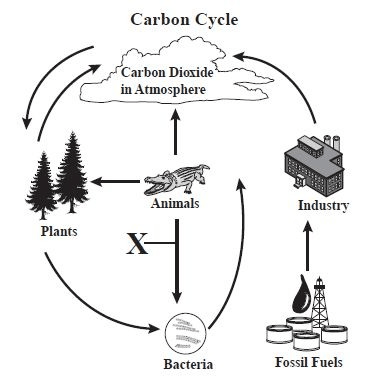
Decomposition