Behaviors
Heredity
Punnett Squares
Fossils
Double Jeopardy
100
Which statement is TRUE?
a. Plants learn instinctive behaviors.
b. Animals learn instinctive behaviors.
c. Plants and animals inherit instinctive behaviors.
d. None of the above.
c. Plants and animals inherit instinctive behaviors.
Explanation:
Instinctive behaviors are behaviors that animals are born knowing how do. They do not need to learn how to do these behaviors. Examples of instinctive behaviors are yawning, blinking, migrating, and hibernating.
100
Which trait does the kid share with its mom?
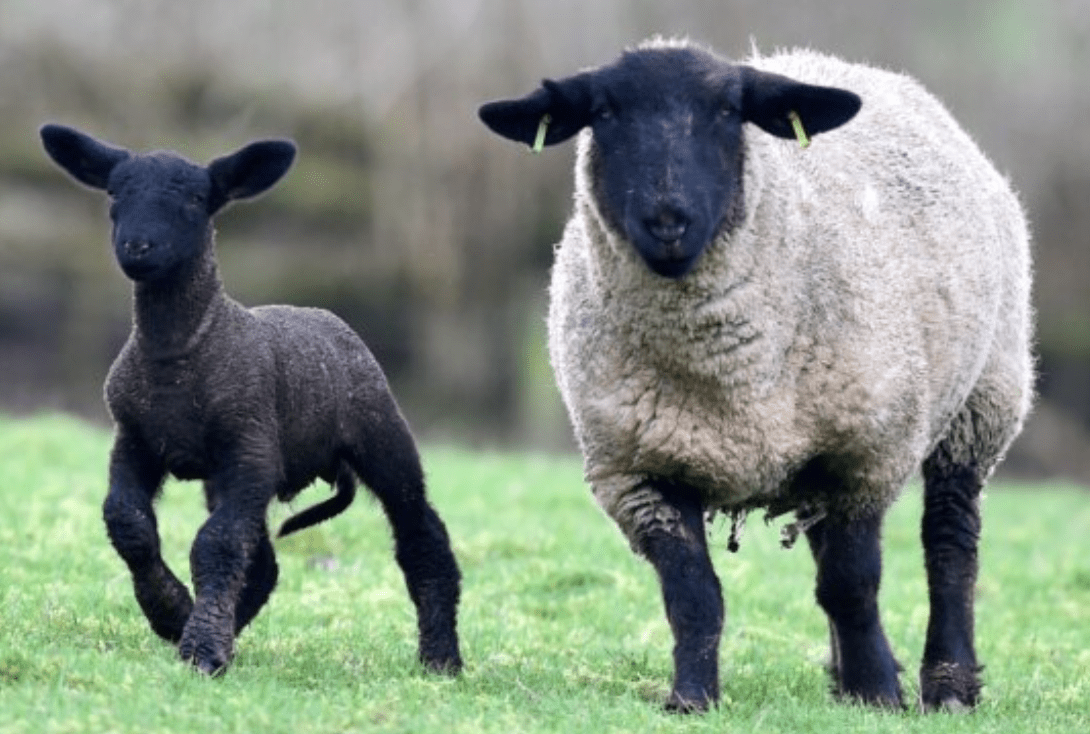
a. size
b. tail
c. color
d. ears
d. ears
100
A person's genotype is their unique sequence of DNA. More specifically, this term is used to refer to the two genes a person has inherited from their mother and father. Phenotype is the observable physical characteristic of this genotype.
Which are examples of a genotype? Select all that apply.
a. BB
b. red hair
c. Gg
d. freckles
e. blue eyes
a. BB
c. Gg
100
This sea star fossil was discovered in northeastern Ohio. This area is now dry land.
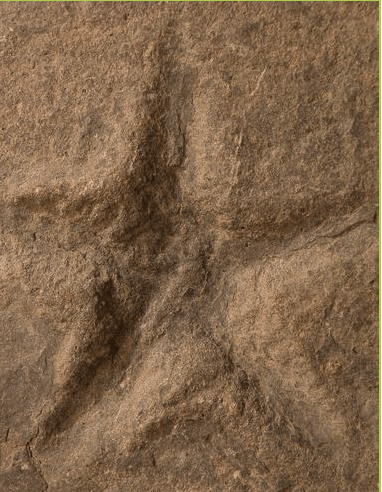
What do you think the environment in Ohio was like in the past?
In the past, there was an ocean in the area.
Explanation:
The presence of fossils of organisms usually found in an ocean is a clue that an ocean must have existed in the area in the past, even if the land is dry in the present day. This means the ocean must have dried up over time, exposing the fossils.
100
Look at the variety of plants growing together in this greenhouse. One of the types of plants shown has genes that contain instructions for growing broad, red leaves. Another type has genes that contain instructions for growing flowers and green leaves.
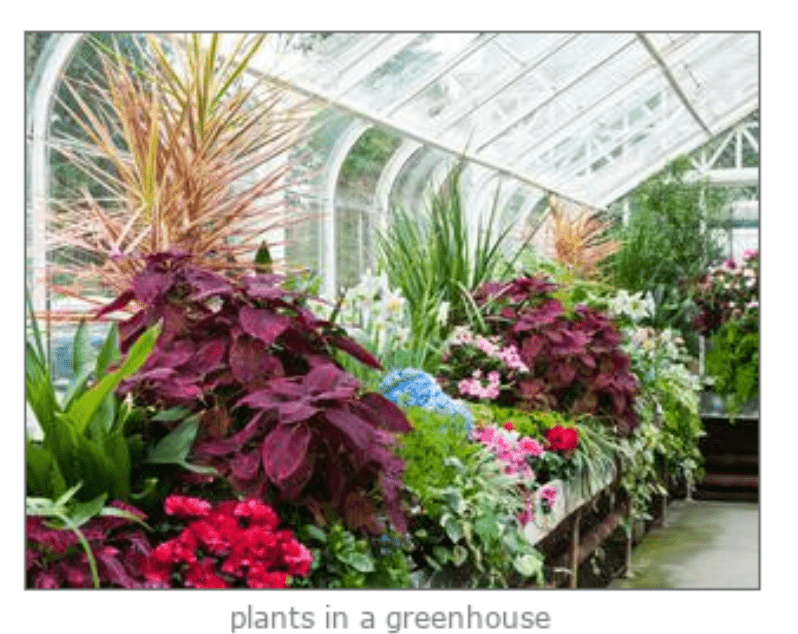
All of the plants received about the same amount of water, nutrients, and sunlight as they grew.
What most likely caused the different types of plants in the greenhouse to have different traits?
a. mostly genetic factors
b. mostly environmental factors
a. mostly genetic factors
200
Learned behaviors are _____ flexible and adaptable than instincts.
a. less
b. more
c. just as
d. much less
b. more
Explanation:
Learned behaviors can be improved with practice, so they are more flexible and adaptable. For example, you can improve how well you play an instrument with practice. By contrast, it is more difficult to change when you sneeze, blink, or yawn.
200
A mushroom grew from the spores of another mushroom, known as the _____ mushroom.

a. major
b. child
c. large
d. parent
d. parent
Explanation:
Plant and animal offspring inherit traits from BOTH of their parents. Examples of traits a flower may inherit from its parents are flower color, height, and seed shape. Examples of traits an animal may inherit from its parents are eye color, hair color, and height.
200
A person's genotype is their unique sequence of DNA. More specifically, this term is used to refer to the two genes a person has inherited from their mother and father. Phenotype is the observable physical characteristic of this genotype.
Which are examples of a phenotype? Select all that apply.
a. dimples
b. FF
c. Hh
d. widow's peak
e. Pp
a. dimples
d. widow's peak
200
The following diagram shows an example of a rock sequence. Use the rock sequence to answer the question below.
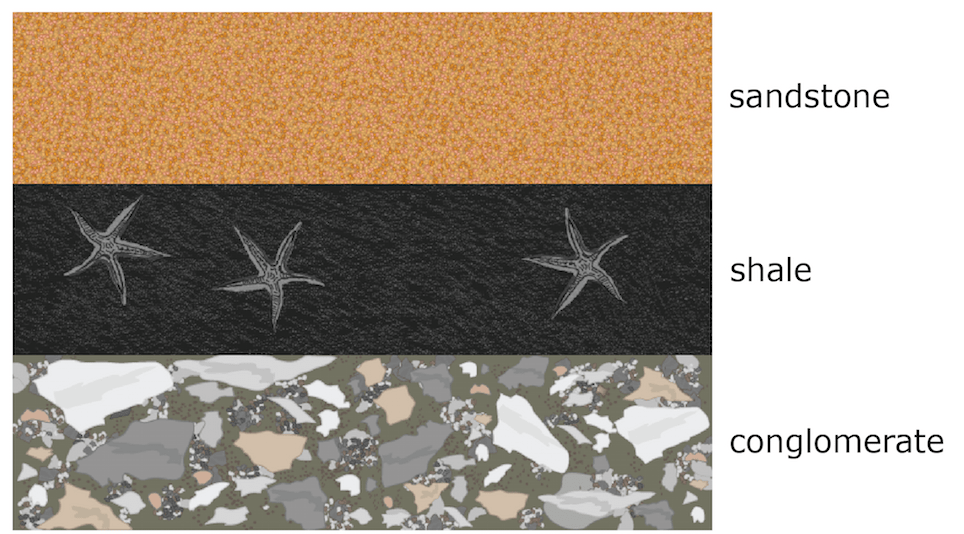
The conglomerate layer was formed from sediment deposited by ice. The youngest sediment in this layer was deposited about 370 million years ago.
The shale layer was formed from sediment deposited by water. This layer contains fossils of sea stars. The youngest sediment in this layer was deposited about 290 million years ago.
The sandstone layer was formed from sediment deposited by water and wind. The youngest sediment in this layer was deposited about 150 million years ago.
No fossils were found in the conglomerate layer or in the sandstone layer. What can you conclude?
a. No organism lived in this area 125 million years ago or 370 million years ago.
b. Fossils can form in shale, but they cannot form in sandstone.
c. Organisms may have lived in this area 100 million years ago, but their preserved remains were not found.
c. Organisms may have lived in this area 100 million years ago, but their preserved remains were not found.
Explanation:
What can you conclude from a rock layer with no fossils?
Most organisms do not become fossils. Instead, their bodies are decomposed, or broken down. The apples in this picture are decomposing. They will not become fossils.
When fossils are absent in a place, it is probably because all of the organisms that lived there were decomposed and not preserved. So, if fossils are absent in an area, it does not prove that no organisms lived there.
200
Read the description of a trait.
Marcy has natural red hair.
What information supports the conclusion that Marcy inherited this trait?
a. Marcy's dad passed down this trait to her.
b. Marcy's mom passed down this trait to her.
c. Marcy's parents passed down this trait to her.
d. Marcy's sister passed down tis trait to her.
c. Marcy's parents passed down this trait to her.
300
The following are all examples of instinctive behavior EXCEPT:
a. blinking
b. breathing
c. talking
d. sneezing
c. talking
300
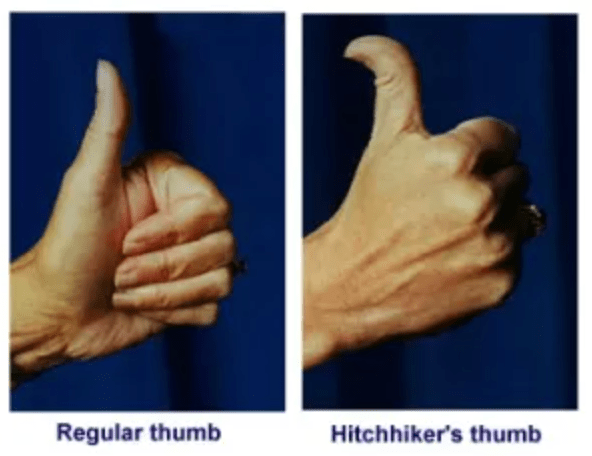
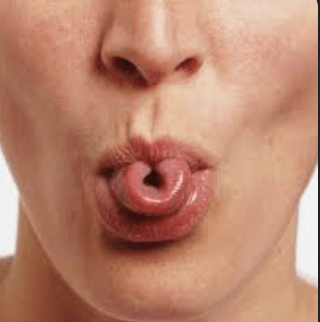
Which is NOT an example of an inherited trait?
a. dimples
b. widow's peak
c. sunburn
d. tongue rolling
c. sunburn
Explanation: Inherited traits are passed down from parents to their offspring at birth. They are NOT a result of the environment. Examples of inherited traits are freckles, a hitchhiker's thumb, and tongue rolling.
300
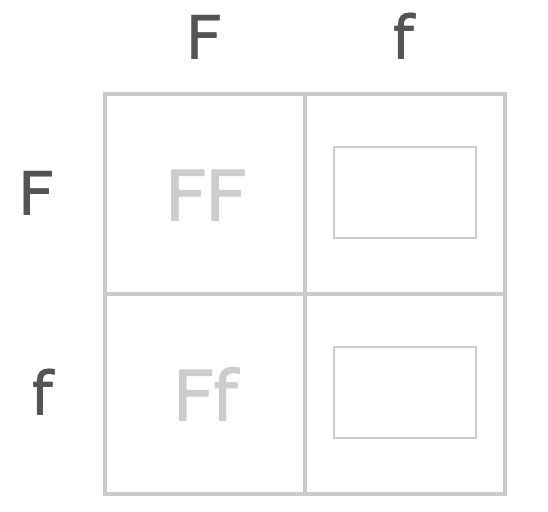
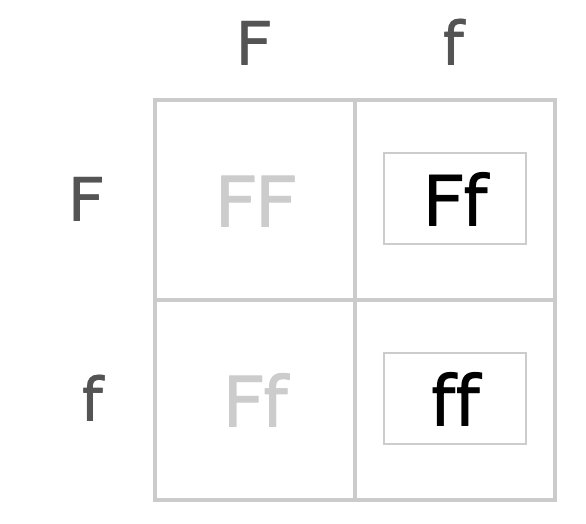
In a group of hamsters, some individuals have short fur and others have long fur. In this group, the gene for the fur length trait has two alleles. The allele for short fur (F) is dominant over the allele for long fur (f).
Draw and complete the Punnett square below to show all possible genotypes of the offspring from a cross between two hamsters.
300
This picture shows a fossil of an ancient animal called Aeger. Aeger fossils have been found in limestone deposits from Germany. Some of those fossils are more than 140,000,000 years old.
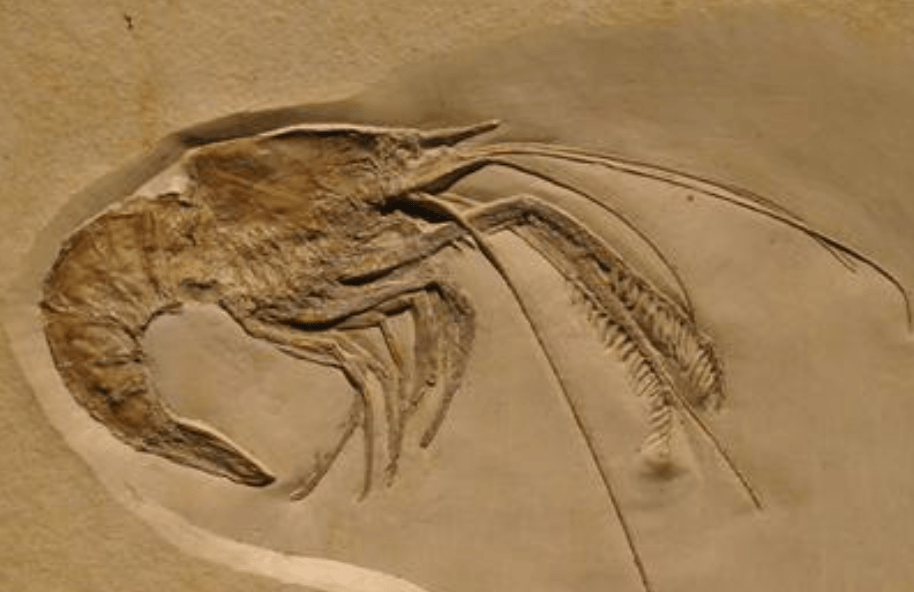
Which traits did Aeger have? Select the traits you can observe on the fossil.
a. thin legs
b. large, wide claws
c. a tail that curves upward
d. a mostly black body
e. a long, thin antennae
a. thin legs
e. a long, thin antennae
300
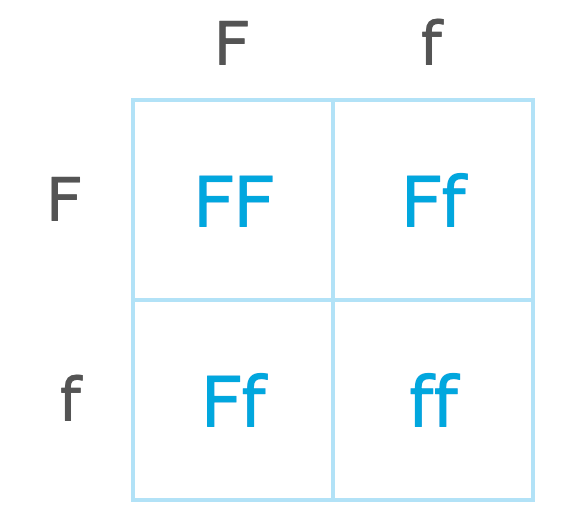
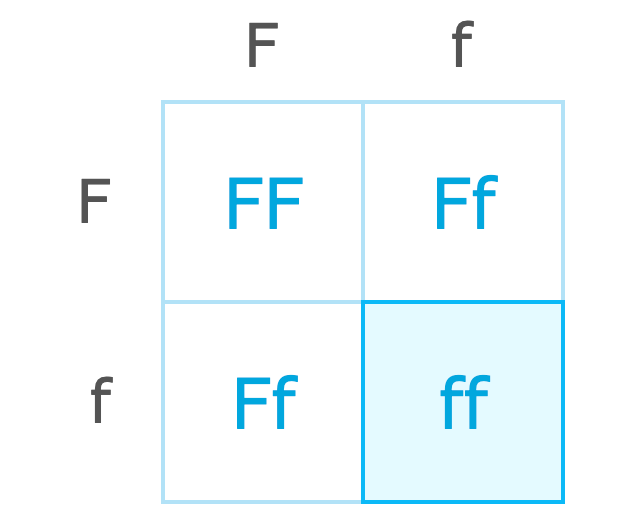
In a group of hamsters, some individuals have short fur and others have long fur. In this group, the gene for the fur length trait has two alleles. The allele for short fur (F) is dominant over the allele for long fur (f).
The Punnett square below shows a cross between two hamsters. Consider the phenotypes of the offspring shown. Select one box that represents offspring with long fur.
400
When animals are adapting to a new situation they are developing and changing. What is this behavior called?
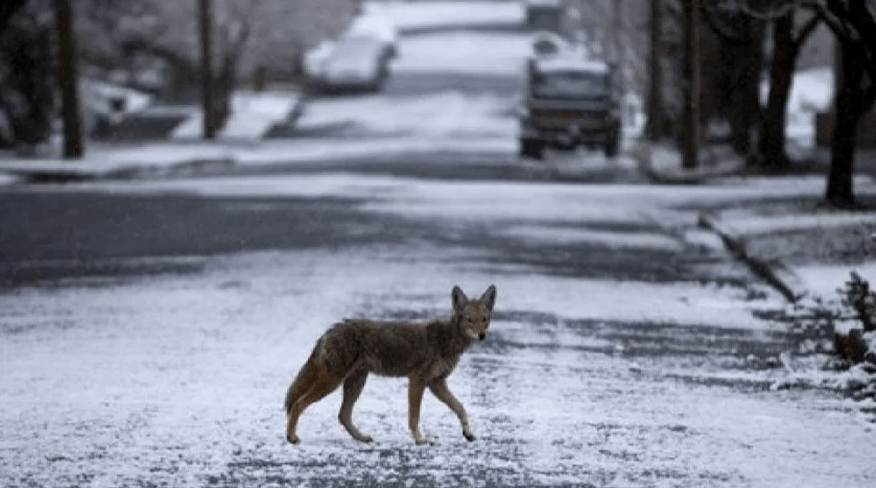
learned behavior
Explanation:
Learned behavior is behavior that is developed AFTER birth. An animal must learn the new behavior. Examples of learned behavior are learning a language, riding a bike, hunting, or climbing a tree.
400
Siamese cats are born white. Once born, cooler temperatures cause them to develop the different colors seen in this picture. What is Siamese cat fur color an example of?
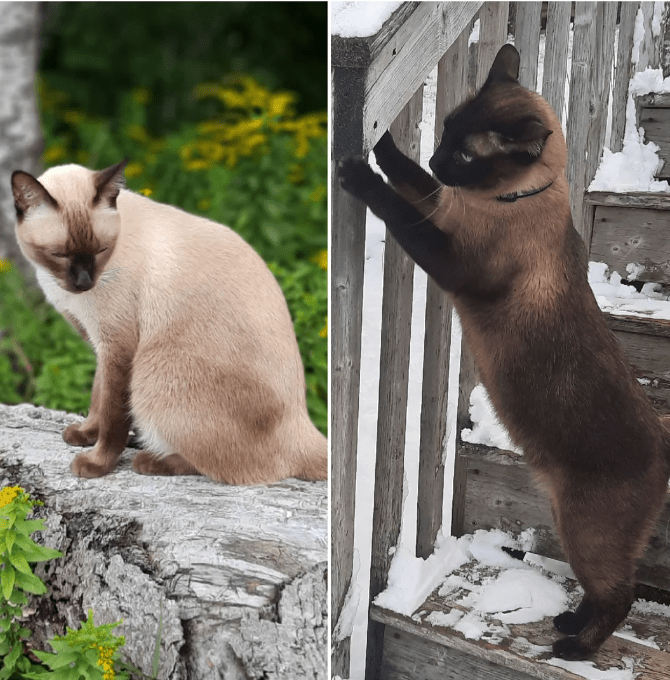
a. Only genes control an animal's traits.
b. Environment can affect how genes are expressed.
c. Only the environment affects an animal's traits.
d. Environment cannot affect how genes are expressed.
b. Environment can affect how genes are expressed.
400
In a group of rose plants, some individuals have light yellow flowers and others have dark yellow flowers. In this group, the gene for the flower color trait has two alleles. The allele for light yellow flowers (F) is dominant over the allele for dark yellow flowers (f).
The Punnett square below shows a cross between two rose plants. Consider the phenotypes of the offspring shown. Select ALL of the phenotypes that represent offspring with light yellow flowers.
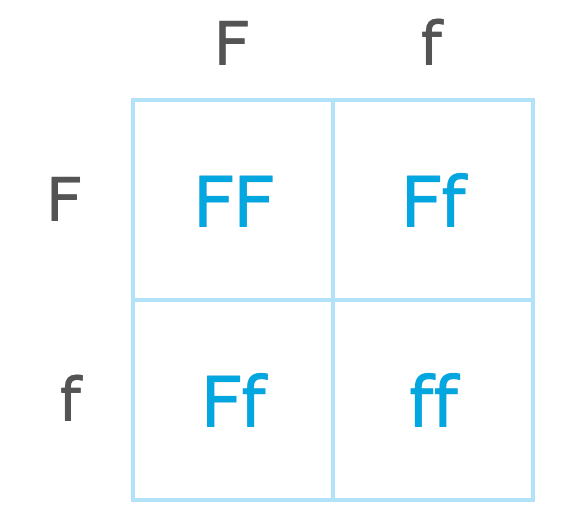
FF and Ff
400
The following diagram shows an example of a rock sequence. Use the rock sequence to answer the question below.
The conglomerate layer was formed from sediment deposited by ice. The youngest sediment in this layer was deposited about 370 million years ago.
The shale layer was formed from sediment deposited by water. This layer contains fossils of sea stars. The youngest sediment in this layer was deposited about 290 million years ago.
The sandstone layer was formed from sediment deposited by water and wind. The youngest sediment in this layer was deposited about 150 million years ago.
Think about the sea stars that became fossils. When might these sea stars have been alive?
a. 117 million years ago
b. 421 million years ago
c. 293 million years ago
c. 293 million years ago.
400
Look at the two pictures below. The ostrich is a modern animal and the Andalgalornis is an extinct one. The ostrich has many traits the Andalgalornis had.
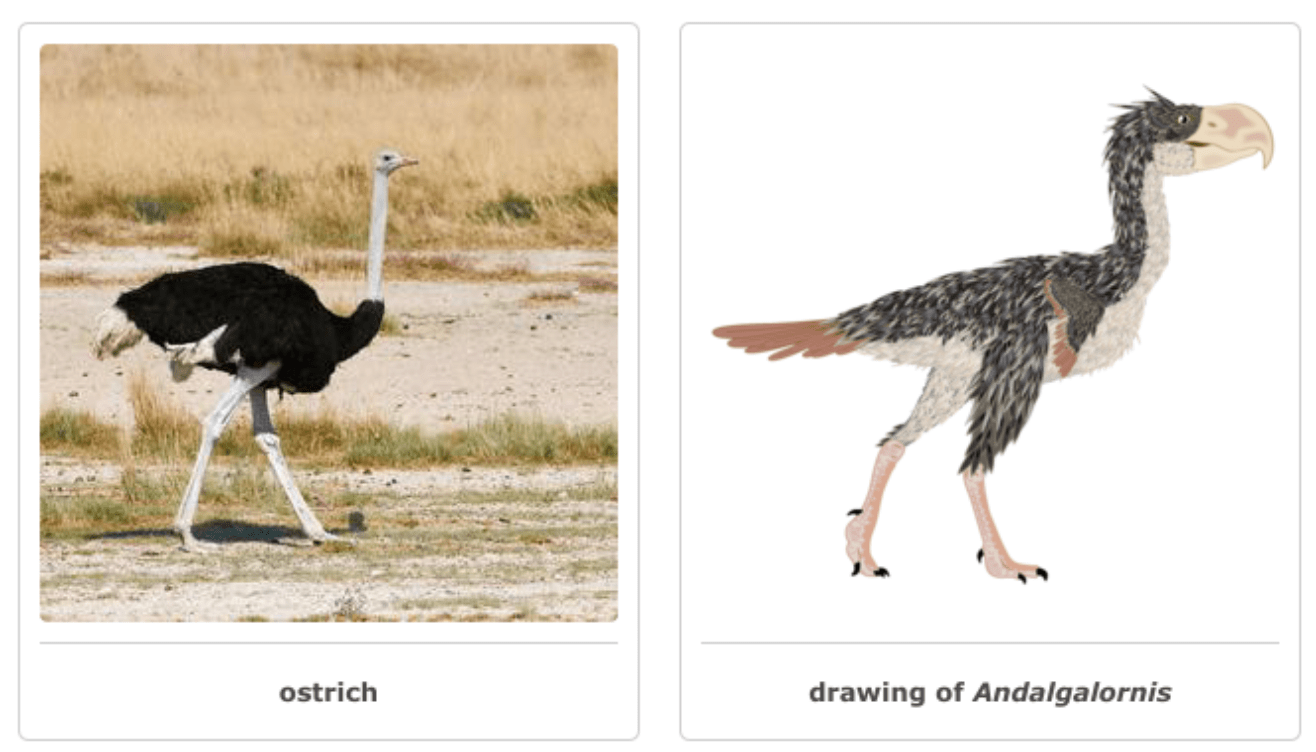
Which of the following statements are best supported by these pictures? Select all that apply.
a. The ostrich has a long neck, and so did Andalgalornis.
b. Andalgalornis had a sharp hooked beak, and the ostrich does not.
c. The ostrich has feathers covering part of its body, and so did Andalgalornis.
d. Andalgalornis had long legs, but the ostrich does not.
a. The ostrich has a long neck, and so did Andalgalornis.
b. Andalgalornis had a sharp hooked beak, and the ostrich does not.
500
Bears do not need to learn how to feed their newborn cubs. What type of animal behavior is this?
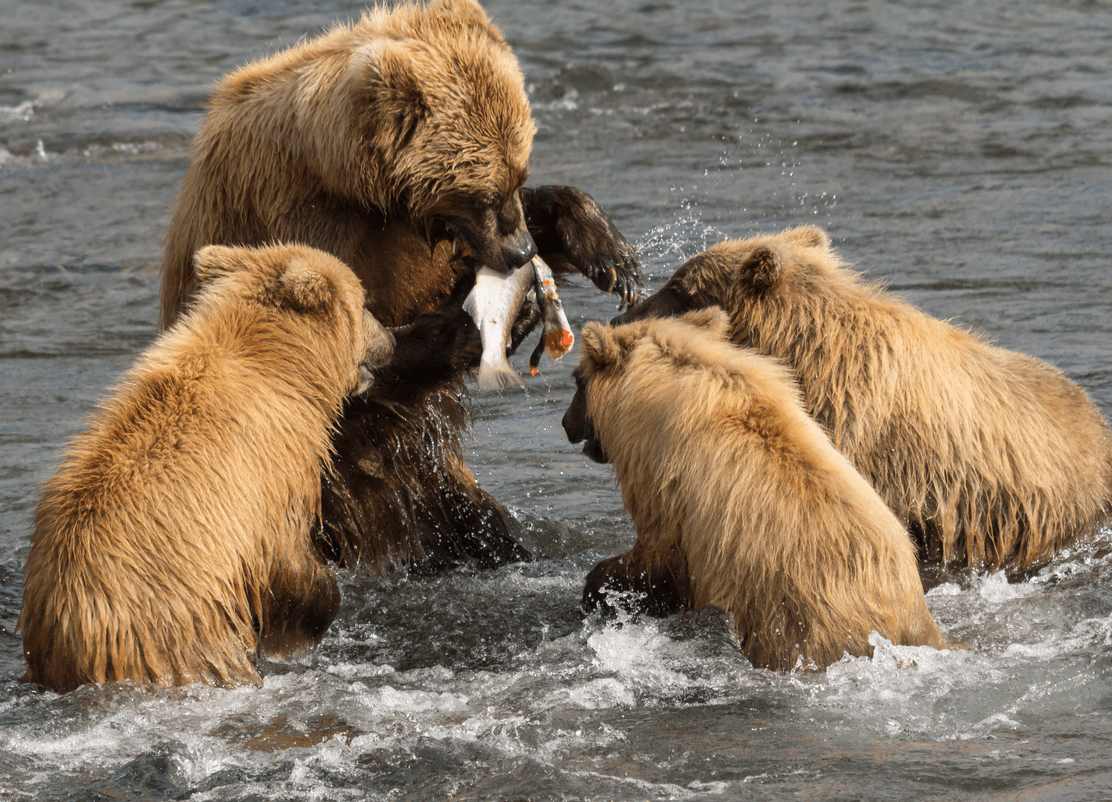
instinctive behavior
Explanation:
Instinctive behavior is behavior that animals are born knowing how to do. Examples include blinking, yawning, migrating, and hibernating.
500
The scar in the picture is an example of what type of trait?
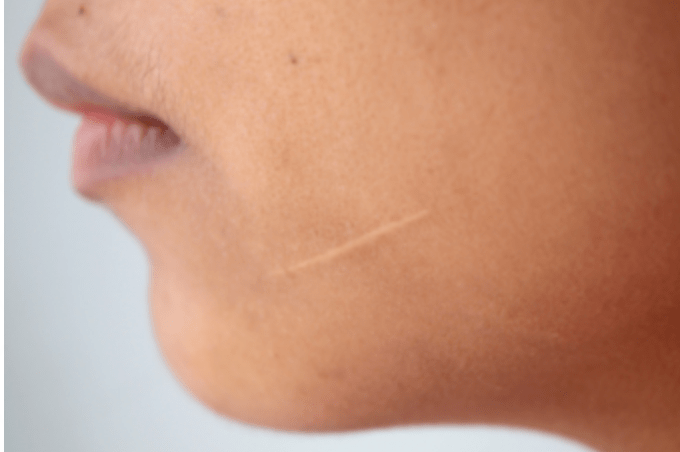
acquired trait
Explanation:
Acquired traits are traits that an individual acquires AFTER birth. These are NOT passed down from parents. Examples of acquired traits are scars, ear piercings, suntans, and dyed hair.
500
In a group of fruit flies, some fruit flies have a gray body and others have a black body. In this group, the gene for the body color trait has two alleles. The allele for a black body (b) is recessive to the allele for a gray body (B).
A certain fruit fly from the group has a gray body.
Based on this fruit fly's phenotype for the body color trait, which of the following could be its genotype for the body color gene? Select all that apply.
a. BB
b. Bb
c. bb
BB and Bb
500
Look at the two pictures below. The Komodo Dragon is a modern animal and the Mosasaurus is an extinct one. The Komodo Dragon has many traits the Mosasaurus had.
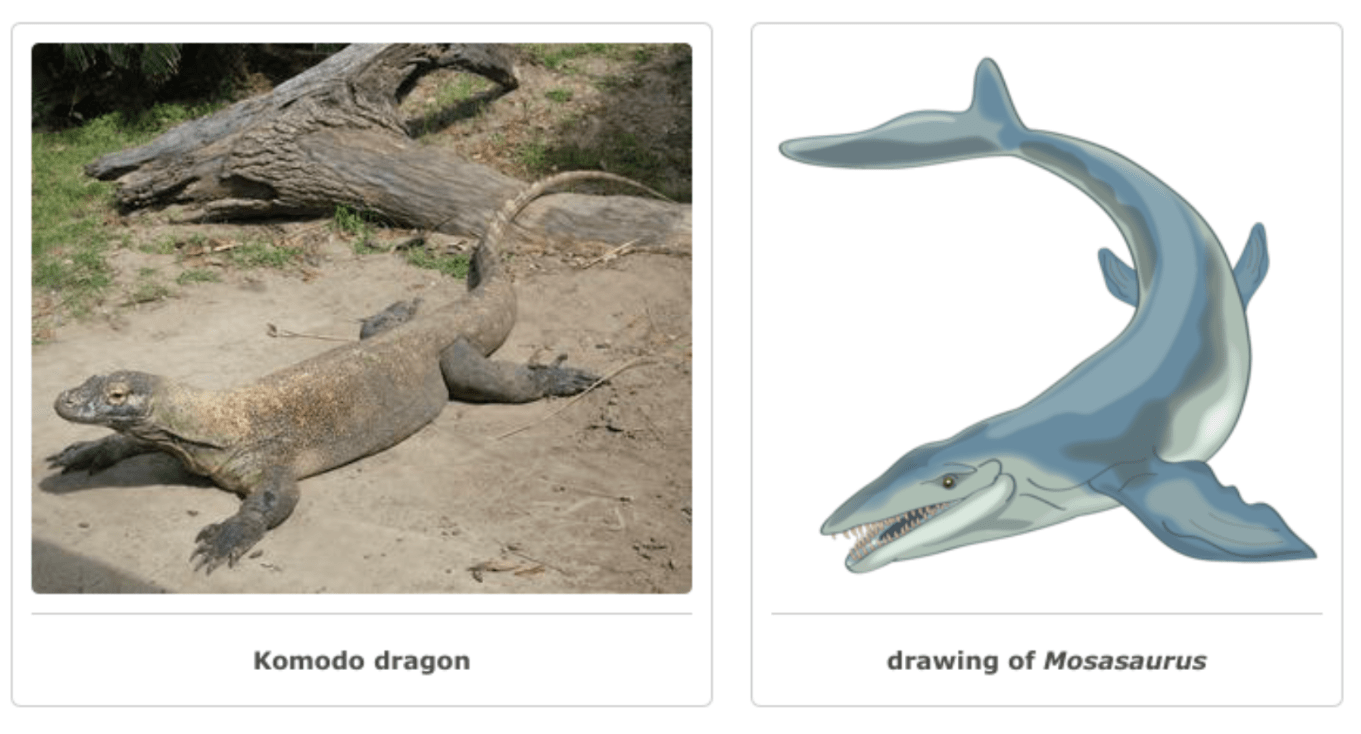
Which of the following statements are best supported by these pictures? Select all that apply.
a. The Komodo Dragon has claws, but the Mosasaurus did not.
b. Mosasaurus had a tail, and so does the Komodo Dragon.
c. Mosasaurus had a flippers, and but the Komodo Dragon does not.
d. Mosasaurus did not have teeth, and neither does the Komodo Dragon.
a. The Komodo Dragon has claws, but the Mosasaurus did not.
b. Mosasaurus had a tail, and so does the Komodo Dragon.
c. Mosasaurus had a flippers, and but the Komodo Dragon does not.
500
Use the rock sequence to answer the questions.
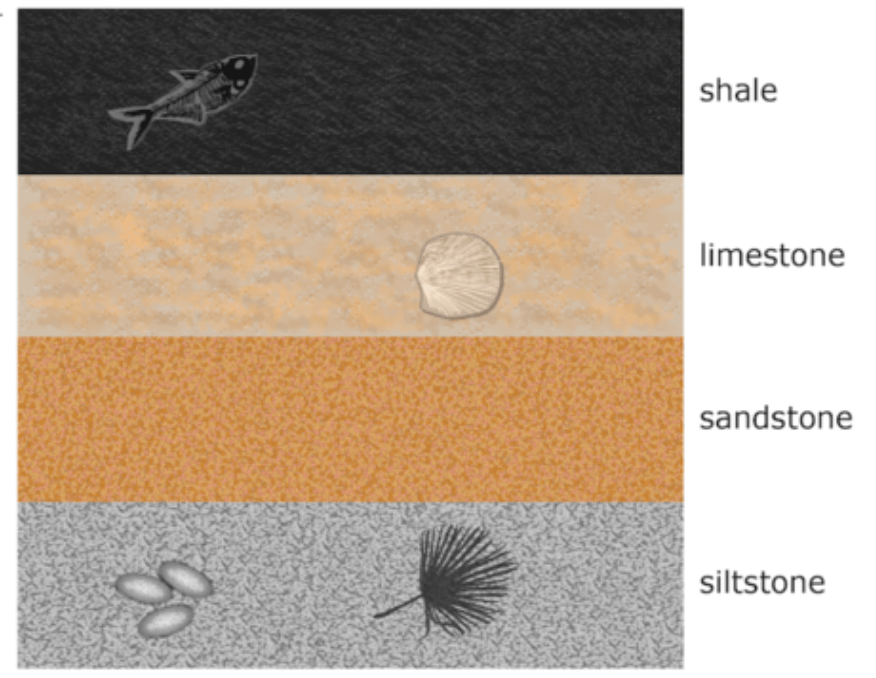
This diagram shows a rock sequence with four layers. The sediment in all four layers was deposited by water.
Three of the rock layers contain fossils. The shale layer contains a fossil of a fish. The limestone layer contains a fossil of a clam. The siltstone layer contains fossils of crocodile eggs and a leaf from a palm tree.
Think about the crocodile whose eggs are preserved in the siltstone layer. If the crocodile's body had also been preserved as a fossil, where would it most likely be found?
a. the sandstone layer
b. the siltstone layer
c. the shale layer
d. the limestone layer
b. the siltstone layer
Explanation:
The crocodile eggs and palm tree leaf are clues that there was a fresh body of water in the siltstone layer, which is where a crocodile is most likely to have lived. The clam and the fish are clues there was an ocean (salt water) in the limestone and shale layers.