Angle 1
Angles 2
Angles 3
Angles 4
Angles 5
100
An angle that is 45 degrees.
What is an acute angle?
100
The unit by which angles are measures.
What are degrees?
100
The supplement angle to an 81 degree angle.
What is 99 degrees?
100
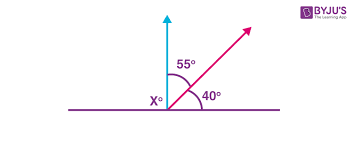
The term for when two angles share one arm and a vertex.
What is adjacent?
100

Each angle pair would be an example of _________ angles.
What are supplementary angles?
200
An angle that is larger than a right angle, but smaller than a straight angle.
What is an obtuse angle?
200
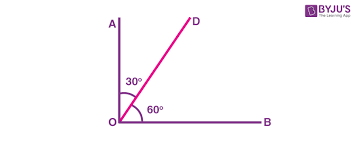
The types of angles shown (not acute).
What are complementary angles?
200
The common endpoint that two arms share in an angle is called the what?
What is a vertex?
200
The tool we use to measure and create angles.
What is a protractor?
200
Draw a pair of vertical angles.

300
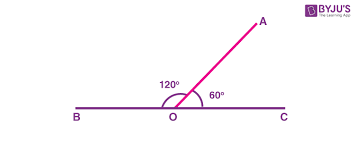
The type of angle that these two angles add up to.
What is a straight angle?
300
If an angle is 161 degrees, an adjacent angle must be this big in order to form a straight angle.
What is 19 degrees?
300
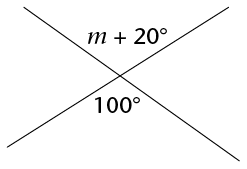
The value of m.
What is 80 degrees?
300
1/4 of a circle would be this type of angle.
What is a right angle?
300
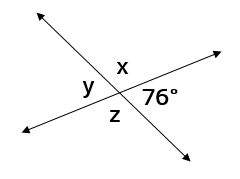
The measurement of angle Y.
What is 76 degrees?
400

Two ways to classify these two angles (not obtuse of acute).
What are supplementary and adjacent?
400
If I were a 42 degree angle, I would need what size of angle to make a right angle?
What is 48 degrees?
400
The vertex of <XYZ and <ZYA.
What is Y?
400
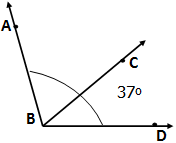
The angle measure of <ABC if <ABD measures 100 degrees.
What is 63 degrees?
400
The measurement of angle Z.
What is 104 degrees?
500
An angle that measures 245 degrees.
What is a reflex angle?
500
If an angle is 70 degrees, an adjacent angle must be this big in order to form a straight angle.
What is 110 degrees?
500
The vertex of <PQR
What is Q?
500
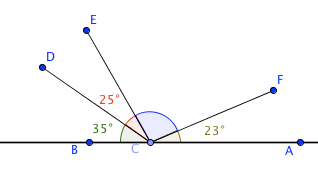
The angle measure of angle <ECF.
What is 97 degrees?
500
A pair of supplementary angles.
What are....
-Angles 1 and 2
-Angles 2 and 3
-Angles 1 and 4
-Angles 3 and 4