Respiratory Functions & Life Support
Muscles of Respiration
Life vs. Speech Breathing
Lung Volumes & Capacities
Respiratory Assessments & Clinical Measures
100
This muscle contracts to start breathing in.
What is the diaphragm?
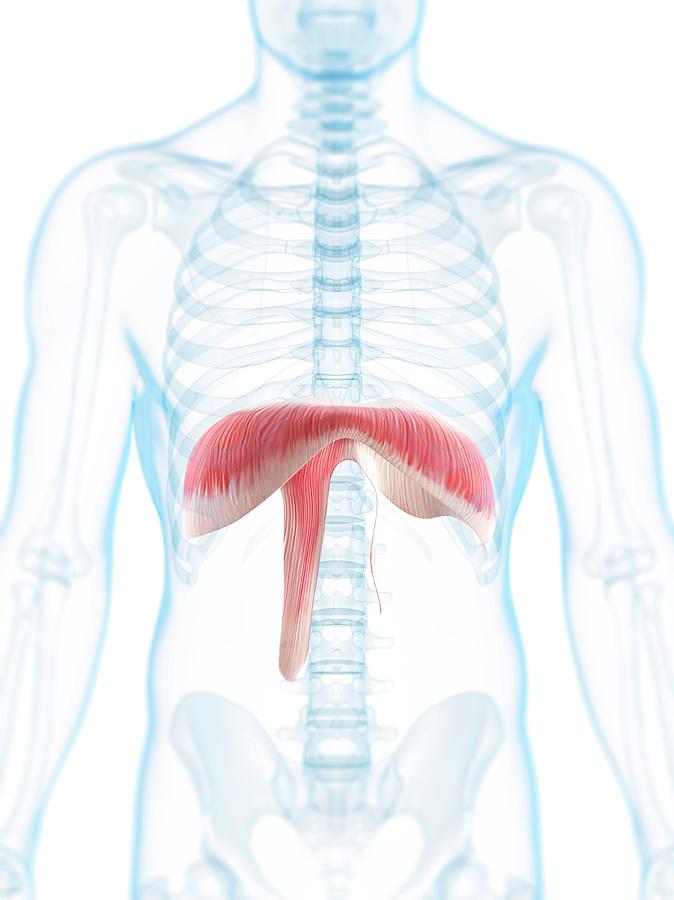
100
This is the general term for the group of muscles that are not primary but help the body with deep inspiration.
What are accessory muscles?
100
This type of automatic breathing helps maintain the balance of oxygen and carbon dioxide in the body.
What is life breathing?
100
This is the volume of air moving in and out during quiet, resting breathing.
What is tidal volume (TV)?
100
This simple clinical task measures how long a person can sustain a vowel sound on one breath.
What is maximum phonation time (MPT)?
200
When air moves into the lungs because the chest cavity gets bigger, this event is happening.
What is inhalation (inspiration)?

200
These muscles are positioned laterally between the ribs and run downward and forward to elevate the rib cage during inhalation.
What are the external intercostals?
200
During quiet tidal breathing, the respiratory cycle is divided into 40% inhalation and this percentage of exhalation.
What is 60%?
200
This is the maximum amount of air that can be inhaled after a normal tidal inspiration.
What is inspiratory reserve volume (IRV)?
200
This assessment uses bands around the rib cage and abdomen to measure how the chest wall moves during breathing.
What is respiratory inductance plethysmography (RIP)?
300
This is the tiny air sac where oxygen enters the blood and carbon dioxide leaves it.
What is the alveolus?

300
These deeper muscles run perpendicular to the external intercostals and are primarily active during forced exhalation.
What are the internal intercostals?
300
Life breathing and speech breathing differ in their inhalation-to-exhalation ratio, with speech requiring a much longer exhalation phase.
What is life breathing at about 40% inhalation and 60% exhalation, and speech breathing at about 10% inhalation and 90% exhalation?
300
This is the volume of air that remains in the lungs after a maximal exhalation.
What is residual volume (RV)
300
This medical specialty performs Arterial Blood Gas (ABG) tests to measure oxygen, carbon dioxide, and pH levels in the blood.
Respiratory Therapist
400
This step of respiration moves oxygen through the bloodstream to the body’s tissues.
What is gas transport?

400
This specific nerve, arising from the spinal roots C3 through C5, provides the necessary innervation for the diaphragm to function.
What is the phrenic nerve?
400
This physical law explains that as lung volume increases, air pressure decreases, causing air to flow into the lungs.
What is Boyle’s Law?
400
This formula calculates Vital Capacity (VC).
What is VC = IC + ERV?
400
This respiratory test measures lung volumes and airflow to assess overall pulmonary function.
What is spirometry?
500
This process happens inside the body’s cells when they use oxygen to make energy and release carbon dioxide.
What is internal (cellular) respiration?

500
This is the set of thoracic spinal nerves (T1-T11) responsible for innervating both the internal and external intercostal muscles.
What are the intercostal nerves?
500
Speech breathing provides the controlled airflow and pressure needed to sustain phonation and connected speech.
What is subglottic pressure?
500
This is the equation for Total Lung Capacity (TLC)
What is TLC = TV + IRV + ERV + RV?
500
This device is used in clinical practice to measure a patient’s oxygen saturation levels (O2 Sat)
What is a pulse Oximeter?