Reproduction
Carbon Cycle
Ecosystems
Photosynthesis
Cellular Respiration
100
The diagram below represents reproduction in a yeast cell. The genes in the bud are identical to the genes in the parent.
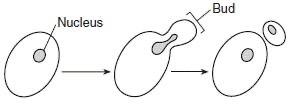
This type of production of offspring is a form of
sexual reproduction 3. asexual reproduction
2. gene manipulation 4. genetic engineering
What is 3. asexual reproduction?
100
During the carbon cycle, green plants take in carbon dioxide gas from the air to produce glucose. This interaction best illustrates a direct link between which two spheres of Earth?
The geosphere and the hydrosphere
The biosphere and the atmosphere
The hydrosphere and the atmosphere
The biosphere and the geosphere
What is 2. The biosphere and the atmosphere
100
The two main types of environmental factors.
What are abiotic and biotic factors?
100
The reactants of photosynthesis.
What is sunlight, carbon dioxide, and water?
100
The reactants of cellular respiration.
What is glucose and oxygen?
200
In the human female reproductive system, within which structure does the fertilization of an egg by a sperm cell normally occur?
A. Uterus
B. Placenta
C. Ovary
D. Oviduct (Fallopian tube)
What is D. Oviduct (Fallopian Tube)
200
Living organisms require carbon to build molecules such as carbohydrates, lipids, proteins, and nucleic acids. How does carbon typically enter the living web of an ecosystem?
A. Animals inhale carbon dioxide from the atmosphere.
B. Decomposers release carbon directly into the roots of plants.
C. Producers absorb carbon dioxide from the air during photosynthesis.
D. Bacteria fix gaseous carbon into organic nitrates in the soil.
What is C. Producers absorb carbon dioxide from the air during photosynthesis.
200
Which group of organisms feeds at every trophic level of a food web?
A.Decomposers
B.Autotrophs
C.Primary consumers
D.Top predators
What are A. decomposers
200
The products of photosynthesis.
What is glucose and oxygen?
200
The products of cellular respiration.
What is ATP, water, and carbon dioxide?
300
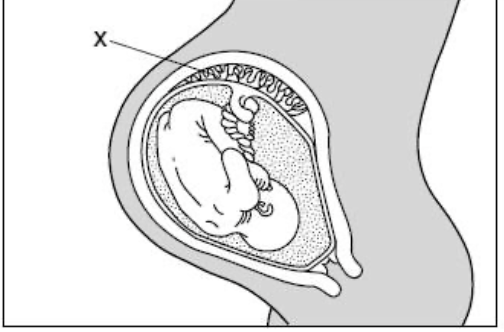
Which statement best describes an important process carried out by structure X?
1. Milk passes from the mother to the fetus.
2. Materials are exchanged between fetal and maternal blood.
3. Maternal blood is converted into fetal blood.
4. Oxygen diffuses from fetal blood to maternal blood.
What is 2. Materials are exchanged between fetal and maternal blood.
300
Which statement best describes the role of decomposers in a terrestrial ecosystem?
A.They synthesize organic nutrients directly from inorganic soil minerals.
B.They release nutrients from dead organic matter, making them available to producers.
C.They convert solar energy into chemical energy stored in organic molecules.
D.They act as primary consumers by feeding directly on living plant tissues.
What is B.They release nutrients from dead organic matter, making them available to producers.
300
An ecosystem can only support a certain number of organisms of a specific species over a long period of time. This maximum population size is known as the:
Carrying capacity
Ecological succession
Biotic potential
Growth rate
What is 1. Carrying Capacity
300
Glucose is used for this.
What is plant reproduction and growth?
300
Which two life processes are most directly responsible for cycling carbon and oxygen through an ecosystem?
A. Homeostasis and Immunity
B. Photosynthesis and Respiration
C. Transpiration and Excretion
D. Deamination and Recombination
What is B. Photosynthesis and Respiration
400
Which statement best describes the primary function of the human male reproductive system?
A. It synthesizes specialized proteins that stimulate immune responses in the offspring.
B. It undergoes cyclical mitotic divisions to produce thousands of genetically identical polar bodies.
C. It regulates the water balance and urea excretion levels within the developing zygote.
D. It produces gametes and provides a pathway for their delivery outside the body.
What is D. It produces gametes and provides a pathway for their delivery outside the body.
400
An increase in the burning of fossil fuels directly disrupts the carbon cycle by doing which of the following?
A. Removing oxygen from the atmosphere so it can no longer be used for respiration
B. Accelerating the rate at which plants can perform carbon fixation
C. Increasing the atmospheric concentration of greenhouse gases like carbon dioxide
D. Decreasing the total amount of carbon available to decomposers
What is C. Increasing the atmospheric concentration of greenhouse gases like carbon dioxide
400
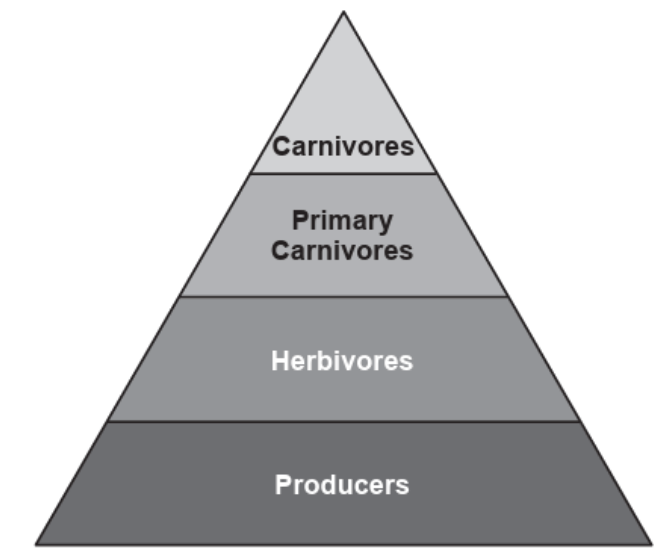
Which level of the pyramid contains the greatest amount of available energy?
A. Producers
B. Herbivores
C. Primary Carnivores
D. Carnivores
What is A. Producers
400
Radiant energy is transformed into this through the process of photosynthesis.
What is chemical energy?
400
ATP is used for this.
What are life processes such as regulating body temperature, moving, reproduction, and growing?
500
A reproductive system is represented in the diagram. Which structure is correctly paired with its reproductive function?
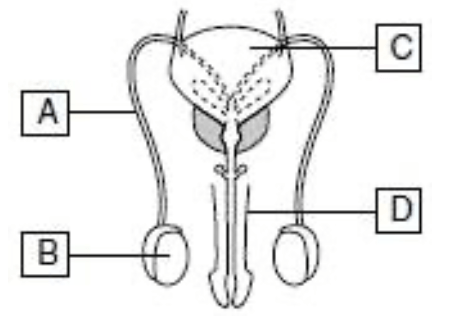
A – pathway of gametes
B – synthesis of progesterone
C – production of sperm
4. D – regulation of homeostasis
What is A - pathway of gametes.
500
How does large-scale deforestation impact the carbon cycle?
A. It decreases atmospheric carbon dioxide because fewer leaves are dropping and decaying.
B. It increases atmospheric carbon dioxide because there are fewer producers to perform photosynthesis.
C. It increases atmospheric oxygen levels because more sunlight reaches the forest floor.
D. It stabilizes the cycle by allowing more carbon to be stored permanently in the soil.
What is B. It increases atmospheric carbon dioxide because there are fewer producers to perform photosynthesis.
500
A population of chipmunks lives in a stable forest ecosystem. Which factor would most likely cause a permanent decrease in the carrying capacity of the forest for these chipmunks?
A. An unusually rainy summer that increases the growth of berry bushes
B. A temporary increase in the hawk population during the spring season
C. A decrease in the number of primary consumers competing for the same food
D. The introduction of a disease that destroys the oak trees providing acorns
What is D. The introduction of a disease that destroys the oak trees providing acorns
500
The organelle where photosynthesis occurs.
What is a chloroplast?
500
Carbohydrates are broken down into this during digestion.
What is sugar?