Head Areas & Anatomy
Projection & Angles
Sculpting Procedures
Forms & Texture
Gradation & Men's Design
100
The area all around the hairline is referred to as the:
Perimeter
100
This term, also known as elevation, is the angle at which the hair is held in relation to the curve of the head:
Projection
100
A constant, stable guide to which all lengths are directed is referred to as a:
Stationary design line
100
This term identifies a smooth texture with no visible ends:
Unactivated texture
100
Facial hair design includes beards, goatees, mustaches and:
sideburns
200
The highest point of the head is the:
Apex
200
Angles between 60 and 90 degrees represent this type of projection:
High projection
200
A moveable guide that consists of a small amount of previously cut hair is known as what type of design line?
Mobile design line (or traveling guide)
200
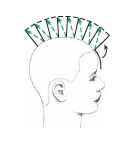
This form is also referred to as a 90 degree angle cut:
Uniformly layered form
200
Medium gradation generally extends into this area:
occipital
300
The protruding bone below the crest area at the back of the head is the:
Occipital
300
These projection angles are used to sculpt a solid form:
Natural Fall & 0 degrees
300
These two types of finger and shear positions are used while cutting:
parallel and nonparallel
300
In a graduated form, the line that divides the activated and unactivated textures is known as the:
Ridgeline
300
This technique is used when lengths are too short to control between your fingers:
Overcomb (shear-over-comb or clipper-over-comb)
400
The area below the occipital is referred to as the:
Nape
400
This projection angle is used to create the arrangement of hair lengths that are the same throughout the head:
90 degrees
400
This term identifies checking the accuracy of a sculpture by using the opposite parting pattern:
Cross-checking
400
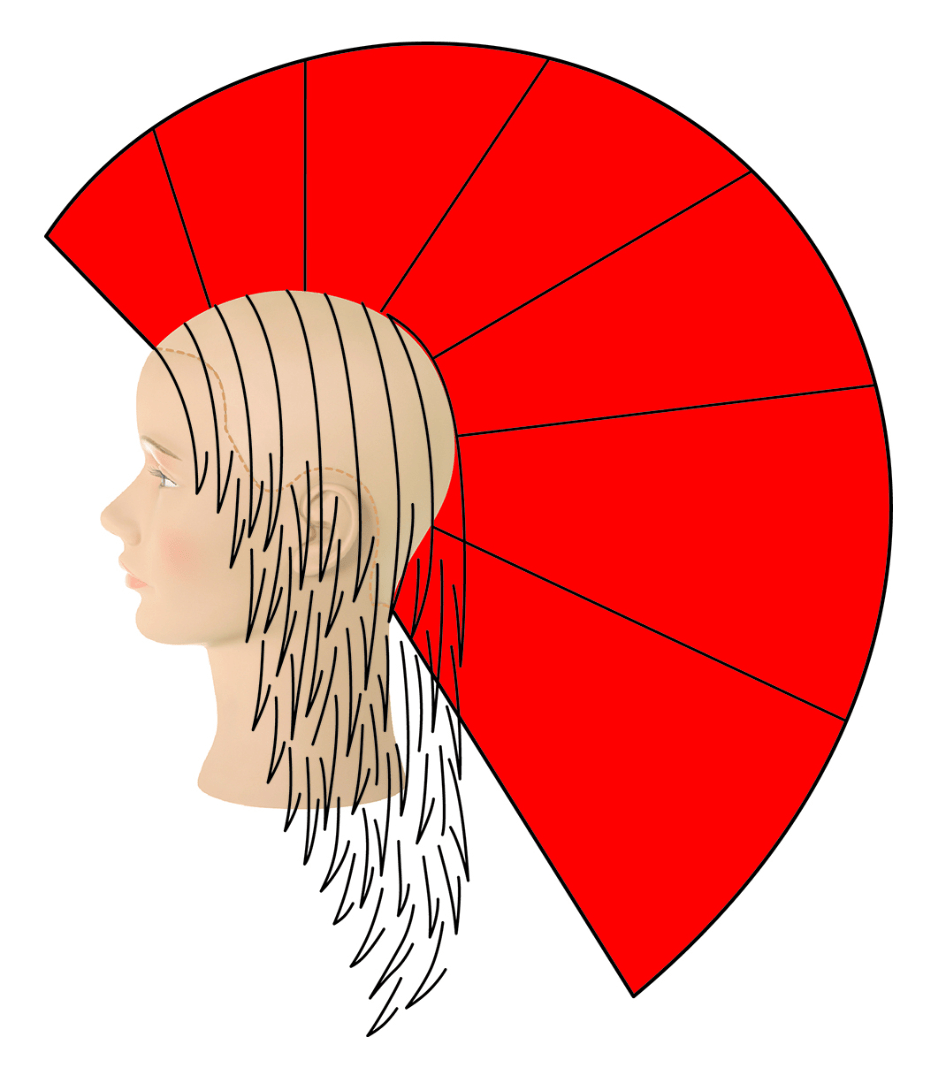
This basic form consists of shorter interior lengths progressing to longer exterior lengths:
Increased layered
400
To refine the perimeter in a shear-over-comb technique, designers use this tool:
Taper comb
500
The widest area around the head is known as the:
Crest area
500
A graduated form is also referred to as a wedge or a:
45 degree angle cut
500
The 7 Sculpting Procedures are section, head position, part, distribute, project, finger/shear position and:
Design line
500
At the basic level of observation, hair sculpture is identified by its silhouette, also known as:
Form
500
In gradation, the higher the angle of the comb, the greater the amount of:
Transparency