EndoLarry
Panic Rheum
Vampire Food
Tubes and Tubules
Bowels that Howl
100
Benign genetic condition causing hypercalcemia, normal to high PTH level and low 24 hr urinary calcium
Familial Hypocalciuric Hypercalcemia
*Patients typically have no symptoms of hypercalcemia. Parathyroidectomy is not indicated because hypercalcemia will not resolve with surgery.
100
Medium and small vessel necrotizing vasculitis associated with renal artery microaneurysms, mesenteric ischemia and orchitis. It is also associated with Hep B
Polyarteritis Nodosa (PAN)
100
Common cause of macrocytosis in a patient being treated for sickle cell anemia
Hydroxyurea
100
Consider one of these disorders in a patient with CKD whose urine dipstick protein is 1+ but their 24 hour urine protein is 3500 mg
Paraproteinemias
Accept amyloid, multiple myeloma, light chain disease, MGUS, waldenstroms macroglobulinemia
100
A 55 year old female with history of Roux En Y gastric bypass surgery presents with 6 months of nonbloody diarrhea. Episodes occur 3-5 times per day and often awaken her from sleep. Oral glucose tolerance test and gastric emptying study are unremarkable, colonoscopy with biopsies are negative for IBD and microscopic colitis. What is the most likely diagnosis?
SIBO
*Seen in patients with IBD, systemic sclerosis and hx of bariatric surgery
**Diagnosis: clinical symptoms with positive glucose or lactulose breath test
***Treatment: Antibiotics
200
Genetic syndrome in a patient with a history of thyroid cancer and hyperparathyroidism who presents with uncontrolled hypertension, tachycardia and severe anxiety
MEN2A
*Gene is RET proto oncogene. Features: Medullary thyroid cancer, PTH hyperplasia, Pheochromocytoma
**KNOW YOUR MENs :)
200
Criteria used for diagnosis of acute rheumatic fever.
Includes both major (carditis, arthritis, chorea, erythema marginatum and subcutaneous nodules) and minor criteria (arthralgia, fever, elevated inflammatory markers and prolonged PR interval)
Jones criteria
*Remember this is an autoimmune response to Group A Strep (pyogenes) infection. More common in children. Long term complications include mitral and aortic valvular disease.
200
Common cause of unresponsiveness to erythropoeitin stimulating agents in ESRD patients with microcytic anemia
Iron Deficiency
*Treat with IV Iron
200
Formula that predicts a successful extubation if the calculated result is <105, provided that the underlying condition for intubation has improved/resolved
Rapid shallow breathing index (accept RSBI)
*Respiratory rate/tidal volume
200
Treatment for Barrett esophagus without dysplasia
PPI
*Endoscopic ablation or mucosal resection is recommended for patients with confirmed low- or high-grade dysplasia.
**In patients with BE and no dysplasia, surveillance examinations should occur at intervals no more frequently than 3 to 5 years.
***More frequent intervals of 12 months are indicated in patients with BE and low-grade dysplasia who do not choose endoscopic ablation
300
Cause of treatment refractory hypothyroidism in a patient on daily oral iron supplementation as treatment for iron deficiency anemia from menorrhagia
Impaired synthroid absorption secondary to oral iron therapy.
*Take iron at least 4 hours after taking synthroid!
300
p-ANCA positive non-granulomatous necrotizing vasculitis associated with alveolar hemorrhage, pulmonary fibrosis, ischemic and hemorrhagic CNS infarcts and normal serum eosinophils
Microscopic polyangiitis
*GPA is c-ANCA and granulomatous with sinus/nasal symptoms
**EGPA is p-ANCA and granulomatous with asthma and sinus/nasal symptoms as well as eosinophilia
300
Treatment for active bleeding in a patient with coagulopathy of liver disease with platelet count of 75,000 and fibrinogen of 55 mg/dL
Cryoprecipitate
*Active bleeding in patients with coagulopathy of liver disease should be managed with cryoprecipitate to maintain fibrinogen levels greater than 100 mg/dL (1 g/L) and platelet transfusions to achieve a platelet count greater than 50,000/μL (50 × 109/L).
300
Phenomenon in which air in the lungs does not have enough time to exit before the next breath begins. Can occur when the respiratory rate is set too high on the ventilator and can lead to hypotension and hemodynamic instability
Auto-PEEP (accept breath stacking)
*The main strategies to minimize auto-PEEP are to prolong the expiratory time (with lower respiration rate) and administer bronchodilators.
300
Duration of time to wait before confirming eradication of H pylori after treatment?
4 weeks or later
*Eradication of H. pylori is tested with a 13C-urea breath test, fecal antigen test, or gastric biopsy performed during upper endoscopy no sooner than 4 weeks after completion of eradication therapy and cessation of PPI therapy (if possible)
400
Treatment for an elderly male with bone pain and this hip/pelvis X-ray
Single dose of 5 mg IV zolendronic acid (accept bisphosphonates)
*Usually do not have to treat if asymptomatic, can consider treatment for patients with super high alk phos
400
A patient develops fever, pruritic skin rash and arthralgias 10 days after receiving an anti TNF monoclonal antibody infusion as treatment for psoriatic arthritis.
What is the most likely diagnosis? **HINT this is a type 3 hypersensitivity reaction (immune complex mediated)
Serum sickness
*Other inciting agents include vaccines, venoms and antivenoms.
**Serum sickness like reactions are without immune complexes and occur after antibiotics and vaccines
400
Non-genetic bleeding disorder associated with pregnancy, post-partum state, malignancy, autoimmune conditions and medications.
PT and platelets are normal and PTT is prolonged. Mixing studies do not correct the PTT. It results from autoantibodies to factor VIII.
Acquired Hemophilia.
*When mixing studies DO NOT correct abnormal coags, suspect an autoimmune condition!!
400
A 19 year old female college student is found to have a metabolic alkalosis and elevated urine chloride. What of the following is the most likely diagnosis?
A) Bulimia
B) Laxative abuse
C) Diuretic abuse
Diuretic abuse!
Vomiting: metabolic alkalosis, urine Cl <15
Diuretic abuse: metabolic alkalosis, urine Cl >15
Diarrhea/laxative abuse: non anion gap metabolic acidosis, negative urine anion gap ((UNa + UK) – UCl)
400
Hereditary GI cancer syndrome with mucocutaneous pigmentation on lips and buccal mucosa
Peutz-Jeghers syndrome
*Gene mutation: STK11
**Increased risks of other cancers: Lung, breast, testicular, uterine, ovarian, cervical, pancreatic
500
A 45 year old female presents with rapid weight loss, hyperglycemia, low albumin and this skin rash. A pancreatic mass is seen on imaging. What is the likely diagnosis?
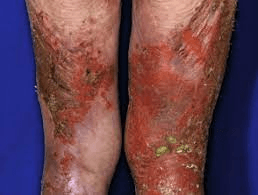
Glucagonoma
*Skin rash is known as necrotic migratory erythema.
**20% of patients also have MEN 1.
500
Clinical syndrome characterized by recurrent episodes of inflammatory mono- or oligoarthritis. It lasts for hours to days and may be migratory or nonmigratory, with interval symptom-free periods lasting days to months. Affected joints recover without permanent damage.
Palindromic rheumatism
*Roughly half of patients will develop another rheumatologic disease, usually RA sometimes SLE
500
The caregiver of an elderly dementia patient with very poor PO intake secondary to advanced dementia has noticed increased bleeding after blood draws and glucose checks. She is not on any blood thinners. What is the most likely diagnosis?
Vitamin K Deficiency
500
Suspect this type of kidney stone in a patient with chronic UTIs with urea splitting organisms, an elevated urine pH and this KUB:
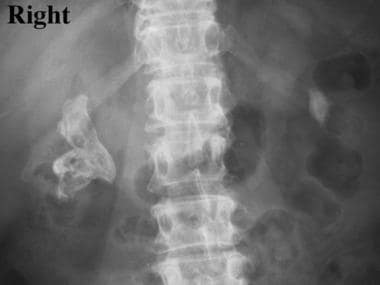
Struvite stones (accept magnesium ammonium phosphate stones)
*Cause staghorn calculi
**May require urological intervention for stone removal and source control
500
A patient presents with recurrent pancreatitis and a narrowed main pancreatic duct and sausage-shaped pancreas on imaging. He does not drink alcohol and takes no medications. ERCP reveals no stones in the pancreatic duct. Symptoms improve with steroids. What is the most likely diagnosis?
Autoimmune pancreatitis.
*Type 1: IgG4
**Type 2: Pancreas only, associated with IBD