Health Promotion and Prevention
The Complete Health History
Assessment Techniques
Assessment Equipment
Vital Signs
Pain & Musculoskeletal Assessment
Mental Health/Neuro
Cardio-vascular
Respiratory
Hair/skin/nail & Nutrition
Abdomen/ GI/GU
100
They are the three levels of prevention.
What are primary, secondary and tertiary prevention?
100
It is usually the first information collected in a health history.
What is biographical data?
100
The four skills required to do an assessment.
What are inspection, palpation, percussion and auscultation?
100
It is the end piece on a stethoscope used for soft, low pitched sounds.
What is the bell.
100
It is the normal range for adult pulse rate.
What is 60-100 beats per minute.
100
This is always subjective.
What is pain?
100
Grade of a sluggish or dimminished reflex
What is +1
100
A blowing or swishing sound indicating blood flow turbulence through a vessel?
What is a bruit?
100
Consists of two lobes.
What is the left lung?
100
This can be seen in the nails and can be indicative of anemia.
What is spooning?
100
Tenderness of light palpation in the right lower quadrant could indicate a disorder of which structure?
What is the appendix?
200
It is "behavior motivated by the desire to increase well-being and actualize human health potential"
What is health promotion?
200
Childhood illnesses, serious or chronic illnesses, immunizations, hospitalizations, are part of this section of the health history.
What is past health?
200
This is used to feel the texture, size, shape, consistency, etc. of particular body parts as well as identify areas the patient reports as being tender.
What is palpation?
200
You do this to your stethoscope after you have finished the exam.
What is clean the end piece with alcohol.
200
It is the amount of time a normal pulse or respiratory rate should be counted for.
What is 30 seconds x2 or 15 seconds x4.
200
This connective tissue holds muscles to bones.
What is a tendon?
200
Splaying of the toes during a check of this reflex.
What is a positive babinski?
200
Area of redness, warmth, and edema of a unilateral lower extremity.
What are the signs of a blood clot?
200
This condition is due to long term hypoxemia, where the angle between the nail and the nail bed is >180 degrees.
What is clubbing?
200
In fair skinned individual cyanosis presents as this.
What is a grayish-blue tone?
DAILY DOUBLE: What tone do we see in darker skinned individuals?
200
A result of free fluid in the peritoneal cavity.
What is ascites?
DAILY DOUBLE: What type of organ dysfunction might you see this finding in?
300
Name 3 examples of primary prevention.
What are immunizations, water sanitation, seat belt and helmet laws, promoting healthy diet, promoting exercise, fluorination of water.
300
A diagram representing family history.
What is a genogram.
300
This is the correct order for palpation.
What is light palpation followed by deeper palpation.
300
It is the real name of the gauge and blood pressure cuff.
What is a sphygmomanometer?
300
Name the five routes for taking temperature.
What are oral, temporal, axilla, rectal and tympanic.
300
Defined as moving a limb toward the midline of the body
What is adduction?
300
Abrupt change that may occur (especially in older, hospitalized patients) that results in impaired judgment, memory and/or altered level of consciousness.
What is delirium?
DAILY DOUBLE: How does this vary from dementia?
300
Causes decreased cardiac output when the heart fails as a pump and the circulation becomes backed up and congested.
What is heart failure?
DAILY DOUBLE: What is the difference between right and left sided heart failure?
300
Free air in the pleural space that causes partial or complete lung collapse.
What is pneumothorax?
DAILY DOUBLE: What would your assessment finding be for a patient with a left pneumothorax?
300
Asymmetry, border irregularities, color variation, diameter >6mm, evolving.
What are signs of melanoma?
300
This is defined by yellowing skin.
What is jaundice?
400
Caring for someone in a rehabilitation facility is an example of what level of prevention?
What is tertiary prevention?
400
A subjective sensation that the patient feels from a disorder.
What is a symptom.
400
When auscultating the headpiece should be in direct contact with this.
What is the skin?
400
You need one of these to visualize the structures of the eye.
What is an ophthalmoscope?
400
Pulse assessment should include these four elements.
What are rate, rhythm, amplitude (intensity) and equality.
400
An audible and sometimes palpable crunching or grating that accompanies movement of a joint.
What is crepitus?
400
Sudden loss of vision, balance, and speech.
What are signs/symptoms of CVA?
400
Where the pulmonic valve can be auscultated.
What is the 2nd ICS, left sternal border?
DAILY DOUBLE: It keeps the blood from flowing from_________ back into _____________.
400
Have the patient cough if you hear these to see if lung sounds change.
What are adventitious sounds?
DAILY DOUBLE: Which adventitious sound may clear with coughing?
400
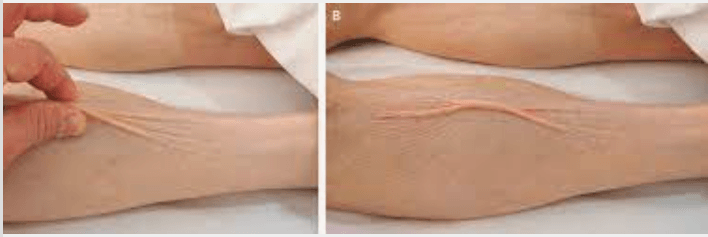
What is poor skin turgor?
400
Pain in this area may indicate kidney inflammation.
What is the costovertebral angle?
DAILY DOUBLE: What other signs/symptoms might there be with kidney dysfunction?
500
Helping out with a blood pressure fair
What is secondary prevention?
500
When a positive symptom is reported, OLD CARTS is used and it means:
What is onset, location, duration, characteristics, aggravating factors, related symptoms, treatment, severity
500
This is done by tapping on a patient's body through your own finger or hand.
What is indirect percussion?
500
Your hands are visibly soiled, it is best to do this next
What is wash with soap and water
500
Cold, poor perfusion, fingernail polish might affect this.
What is a pulse oximetry reading?
500
This is an anterior curvature of the spine
What is lordosis?
500
Jerky, uncoordinated movement of the foot/heel when doing the heel-shin test.
What is ataxia?
500
African Americans, Mexican Americans, American Indians, and native Hawaiian's have the highest risk of this.
What is coronary artery disease?
DAILY DOUBLE: How do the risk factors for CAD compare to the risk factors for HTN?
500
diameter of 1:1.5
What is a normal A/P:Lateral diameter of the chest?
500
Dull, coarse, brittle hair; cracking at corners of mouth; dry, dull skin.
What are signs/symptoms of nutritional deficiencies?
500
Changes in bowel habits, abdominal fullness/bloating, and rectal bleeding.
What are signs/symptoms of colorectal cancer?
600
"Behavior motivated by the desire to actively avoid illness, detect it early, or maintain functioning within its constraints"
Health Protection
600
"Because it is something many teens experiment with, we ask all our teen patients if they have experimented with tobacco, alcohol or drug use" is an example of this interview technique?
What is permission giving?
600
Type of palpation used by generalist nurses.
What is light palpation?
600
This chart is held approximately 14 inches from the patient to assess near vision.
What is the Rosenbaum chart?
600
This will cause a falsely low blood pressure reading.
What is a cuff that is too large, arm above heart level, not inflating the cuff far enough, deflating too rapidly, pressing too firmly on brachial artery?
600
Findings of this type of assessment of a joint/muscle: warmth, fluid collections, masses or tenderness?
What is palpation?
600
A feeling of spinning due to either neurologic dysfunction or vestibular disorder.
What is vertigo?
600
During assessment of a health adult, what is palpated at the fifth intercostal space at the midclavicular line.
What is the apical impulse?
DAILY DOUBLE: What valve does this area assess?
600
A course, crackling sensation palpable over the skin surface when there is air leaking under subcutaneous tissue.
What is crepitus?
DAILY DOUBLE: Crepitus is common in patients with chest tubes or pneumothorax. What assessment findings do we see in patients with untreated tension pneumothorax?
600
Vitamins B & C
What are water-soluble vitamins?
DAILY DOUBLE: What is the difference between fat and water soluble vitamins?
600
Vascular assessment of the aorta consists of this.
What is assessing for bulging, large pulsations or bruit?
700
This is the 1st and last Korotkoff sound heard
What is systolic and diastolic BP?
700
Risk factors for this condition are increasing age, female gender, obesity, injury or overuse of joints, and family history.
What is osteoarthritis?
DAILY DOUBLE: Name five risks of osteoporosis.
700
High blood pressure, high cholesterol, diabetes, obesity, previous TIA or stroke, heart disease and sickle cell disease are conditions for this.
What are risk factors of stroke?
700
This vascular disorder results in cool legs with minimal hair growth, thin/shiny skin, and small, necrotic sores to the feet/toes with well-defined borders.
What is peripheral artery disease?
DAILY DOUBLE: What type of pain will these patients have?
700
This disease process is noted by air trapping in the lungs, a barrel chest (increasing A/P:Lateral diameter up to 1:1), and ribs at a horizontal angle in relation to the spine.
What is emphysema (COPD)?
DAILY DOUBLE: What is another chronic pulmonary disease?
700
Can result from poor or limited food intake, wasting diseases or malabsorptive syndrome/surgeries, or endocrine imbalances.
What is protein-calorie malnutrition?
DAILY DOUBLE: What are the signs/symptoms of a malnourished individual?
700
People with this condition frequently have pain anywhere from 1-4 hours after eating and epigastric pain upon palpation.
What is peptic ulcer disease?