Respiratory Terms
Respiratory
Respiratory Interventions
Cardiovascular
Acyanotic Defects
Cyanotic Defects
100
What term describes bluish discoloration of the skin and mucous membranes due to decreased oxygenation?
Cyanosis
100
What common upper respiratory infection is also known as the “common cold”?
Nasopharyngitis - notify the child's health care provider if the child develops signs of an earache or has a fever over 100.4, or if there is evidence of respiratory complications. Fussiness, a cough, and mild fever are normal signs.
100
What device helps deliver bronchodilators more effectively in children using a metered-dose inhaler?
Spacer
100
What is an area of anatomic narrowing, causing obstruction to blood flow, increased pressure before the obstruction; decreased pressure beyond the obstruction?
Stenosis- usually occurs near the valve
100
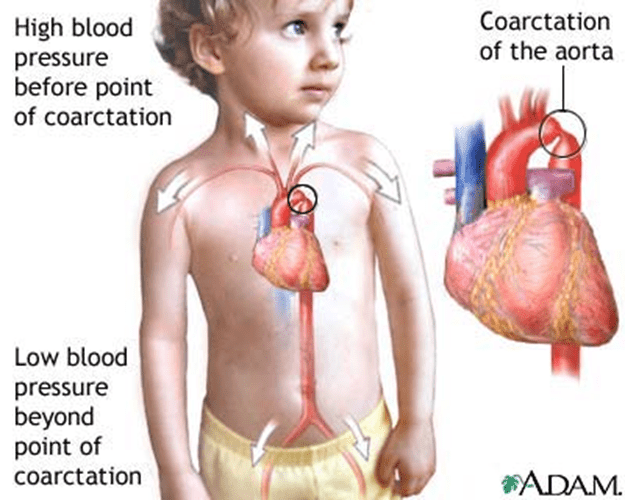
Which assessment finding is most characteristic of coarctation of the aorta?
A. Equal pulses in all extremities
B. Bounding femoral pulses
C. Higher blood pressure in the arms than in the legs
D. Central cyanosis at birth
Answer: C
Rationale:
Coarctation of the aorta is a narrowing of the aorta, resulting in increased blood pressure and bounding pulses in the upper extremities and decreased pressure and weaker pulses in the lower extremities.
100
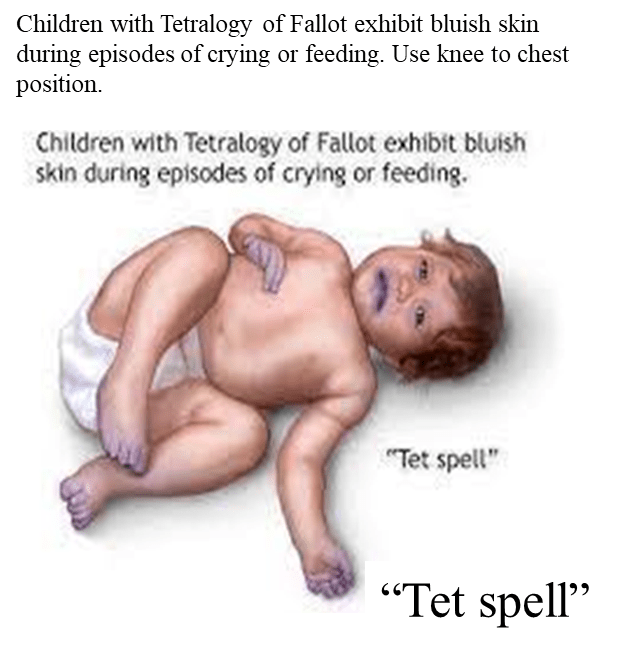
During a hypercyanotic (“tet”) spell, what position should the child be placed in?
A. Supine
B. High Fowler’s
C. Knee-chest position
D. Trendelenburg
Answer: C
Rationale:
The knee-chest position increases systemic vascular resistance, reducing right-to-left shunting and improving oxygenation.
200
What is the term for cessation of breathing?
Apnea
200
What chronic inflammatory airway disease is characterized by reversible bronchoconstriction, wheezing, nonproductive cough, and shortness of breath?
Asthma
200
What nursing intervention is critical when caring for a child with RSV to prevent transmission?
Contact precautions
200
A child with heart failure develops swelling in the lower extremities and periorbital area. What underlying condition is causing these findings?
A. Pulmonary hypertension
B. Decreased renal perfusion
C. Systemic venous congestion
D. Myocardial ischemia
Answer: C
Rationale:
Systemic venous congestion occurs when the heart cannot effectively pump blood forward, causing blood to back up into the venous system. This increased venous pressure leads to peripheral edema and fluid accumulation.
200
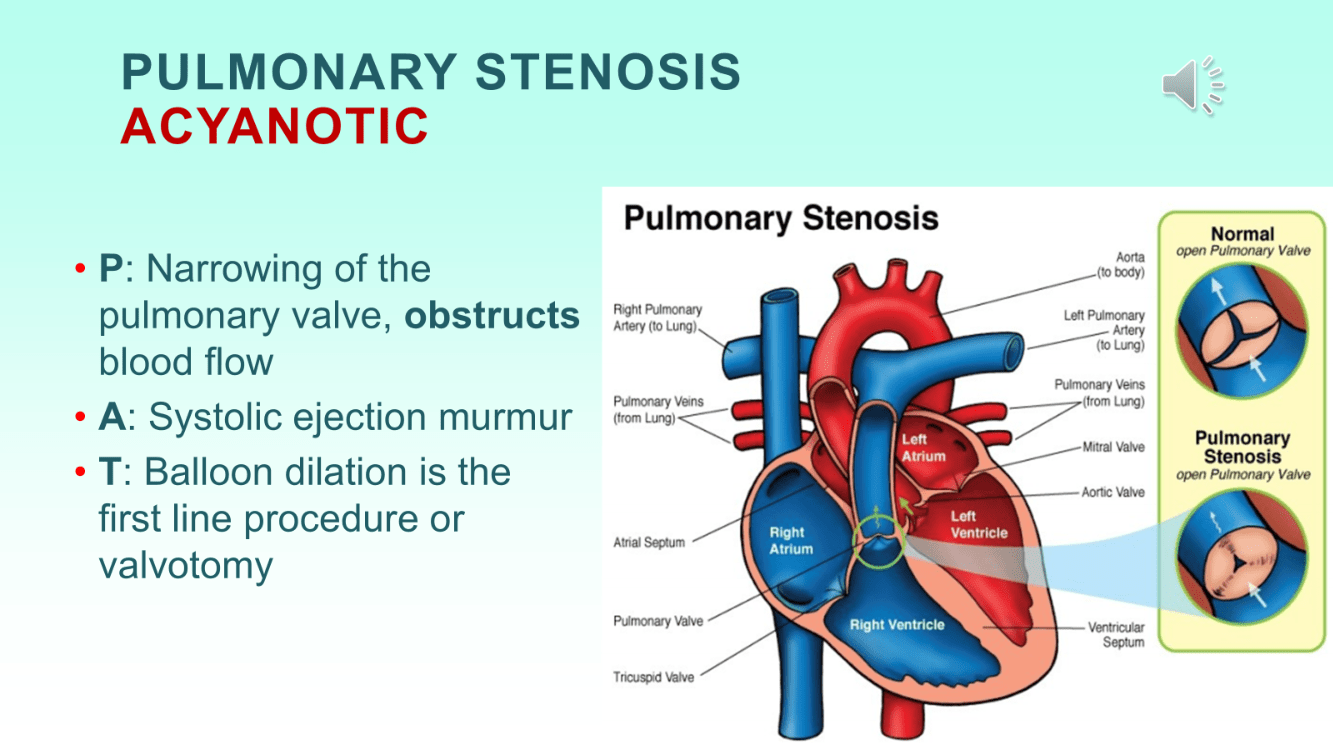
Narrowing of the pulmonary valve, obstructs blood flow is called
Pulmonary stenosis obstructs blood flow from the right ventricle to the pulmonary artery, increasing right ventricular workload. Heart murmur is heard. Balloon dilation or valvotomy is used for treatment.
200
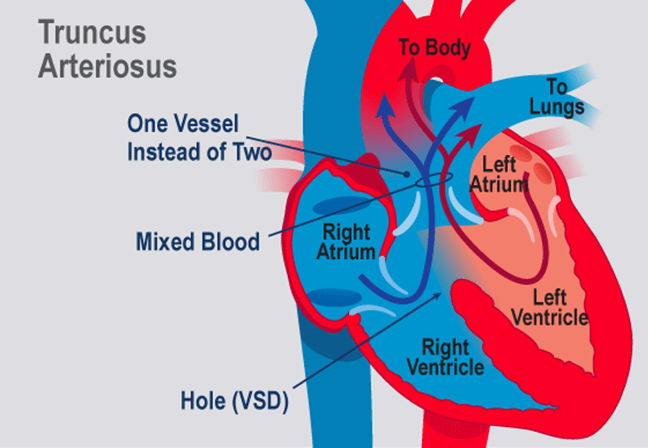
Truncus arteriosus is characterized by:
A. Two separate great vessels
B. One common arterial trunk supplying systemic and pulmonary circulation
C. Absence of the pulmonary valve
D. Complete absence of septal defects
Answer: B
Rationale:
In truncus arteriosus, one single arterial blood vessels leaves the heart, supplying both systemic and pulmonary circulation, resulting in mixing of blood.
300
What is the term for high-pitched, musical sounds heard during expiration caused by airway narrowing?
Wheezing
300
What genetic disorder causes thick, sticky mucus that leads to chronic lung infections and pancreatic insufficiency, and is diagnosed with the sweat choloride test?
Cystic Fibrosis- Children with CF require a well-balanced, high-protein, high-calorie diet because of impaired intestinal absorption due to mucus buildup.
300
What therapy is essential in cystic fibrosis to help mobilize thick pulmonary secretions?
Chest physiotherapy (CPT)
300
What is the primary benefit of digoxin in children with heart failure?
A. Decreases heart rate significantly
B. Increases cardiac output
C. Prevents arrhythmias
D. Reduces blood volume
Answer: B
Rationale:
Digoxin improves myocardial contractility, increasing cardiac output and improving systemic perfusion. Improved cardiac output reduces venous congestion. As venous pressure decreases, fluid accumulation and edema are reduced. Digoxin also contributes to decreased heart size over time.
300
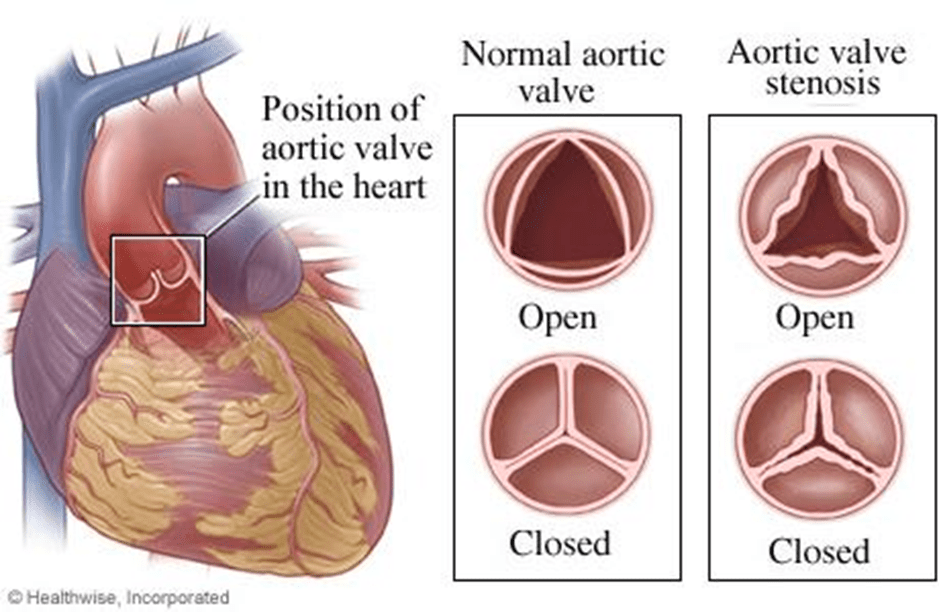
Narrowing of the aortic valve that causes obstruction to left ventricular outflow, increasing workload on the left ventricle, and leading to left ventricular hypertrophy. Causes exercise intolerance and decreased pulse and BP in lower extremities.
Aortic Stenosis
300
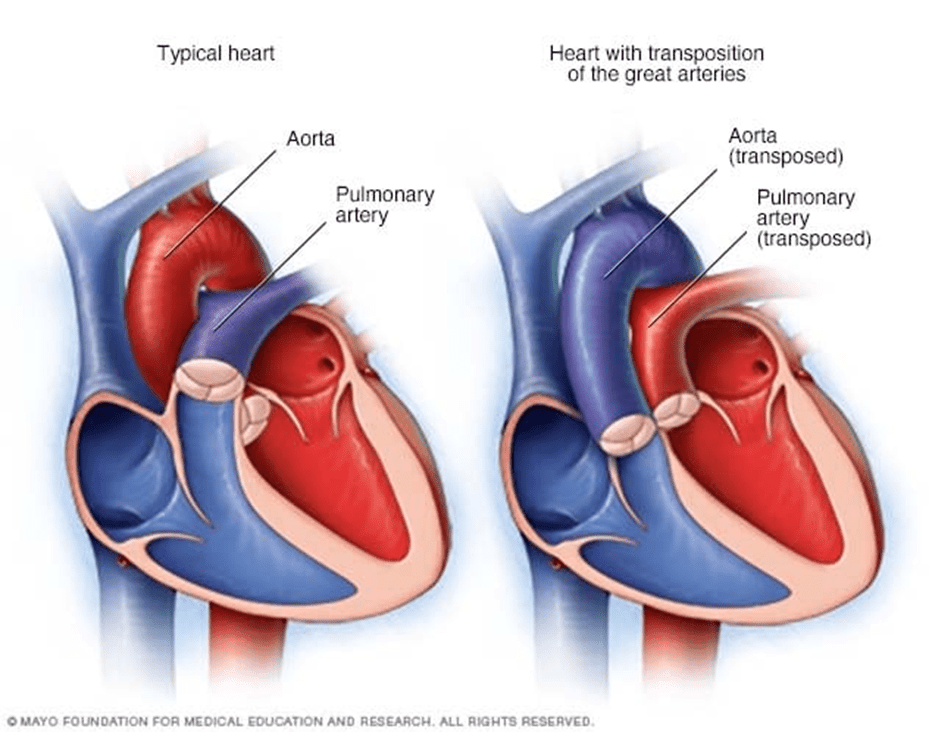
Defect that presents with the 2 main arteries that carry blood out of the heart, the main pulmonary artery and aorta, are switched in position. Aorta connected to the right instead of left ventricle, pulmonary artery connected to the left ventricle not the right ventricle. Must also have PDA or septal defect to survive at birth. Causes mixed blood flow.
Transposition of the Great Arteries (TGA) - The newborn will present with cyanosis and enlarged heart on x-ray (may look like boot). Surgery is required within the first 2 weeks of life.
400
What is the medical term for difficult or labored breathing?
Dyspnea
400
What respiratory virus is the most common cause of bronchiolitis in infants and is characterized by wheezing, cough, and increased mucus production?
RSV - Education regarding handy hygiene is especially important to prevent the spread of the virus
400
What medication class is used for quick relief of acute bronchospasm in asthma?
Short-acting bronchodilators (e.g., albuterol)
400
Why must dehydration be strictly prevented in a child with chronic hypoxemia?
A. Dehydration worsens pulmonary edema
B. Dehydration increases the risk of stroke
C. Dehydration decreases cardiac output
D. Dehydration causes bradycardia
Answer: B
Rationale:
Children with persistent hypoxia often develop polycythemia, which increases blood viscosity. Dehydration further thickens the blood, significantly increasing the risk of thrombosis and cerebrovascular accidents (strokes).
400
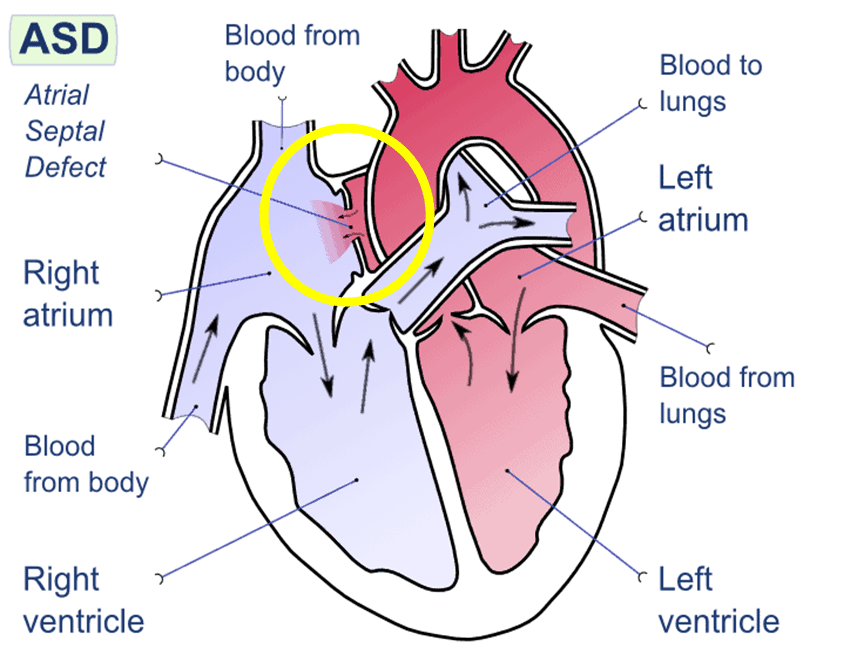
This defect results from an opening between the right and left septum and increases pulmonary blood flow. The defect requires closing of the opening via cardiac catheterization or open-heart surgery.
400
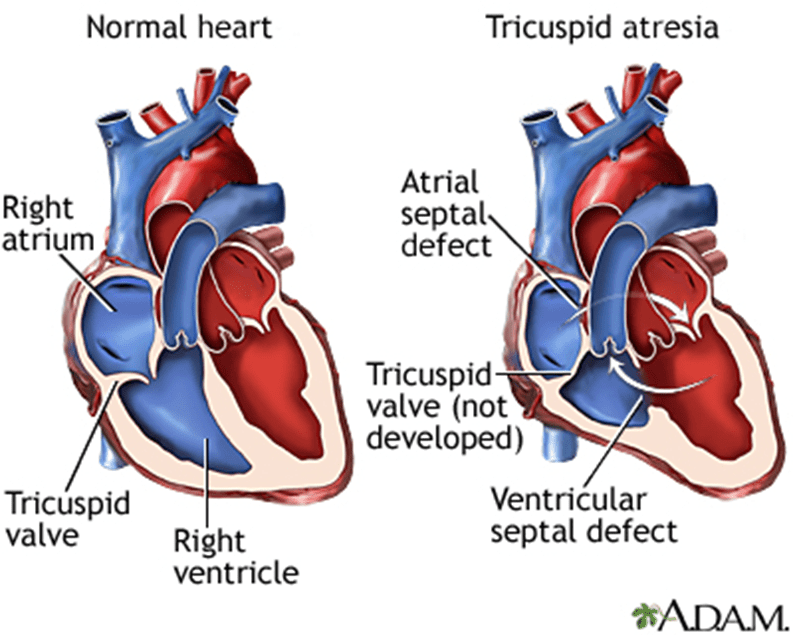
Tricuspid atresia results in which primary problem?
A. Excess pulmonary blood flow
B. Absence of tricuspid valve preventing normal right ventricular flow
C. Left ventricular obstruction
D. Parallel circulation
Answer: B
Rationale:
Tricuspid atresia is characterized by absence of the tricuspid valve, preventing blood flow from the right atrium to the right ventricle and decreasing pulmonary blood flow.
500
What is the term for rapid breathing in a child?
Tachypnea
500
What upper airway illness is characterized by a barking cough, inspiratory stridor, and hoarseness?
Acute laryngotracheobronchitis (Croup) - Parent's prescense at the bedside will reduce anxity and ease child's respiratory efforts
500
What is the primary intervention for a child with suspected epiglottitis?
This is considered a medical emergency! Maintain airway and prepare for intubation (do NOT examine throat with tongue blade)
500
What is the most significant long-term complication of rheumatic fever?
A. Chronic pneumonia
B. Renal failure
C. Cardiac valve damage
D. Seizure disorder
Answer: C
Rationale:
Rheumatic fever can cause chronic inflammation and scarring of the heart valves, particularly the mitral valve, leading to permanent valvular dysfunction.
500
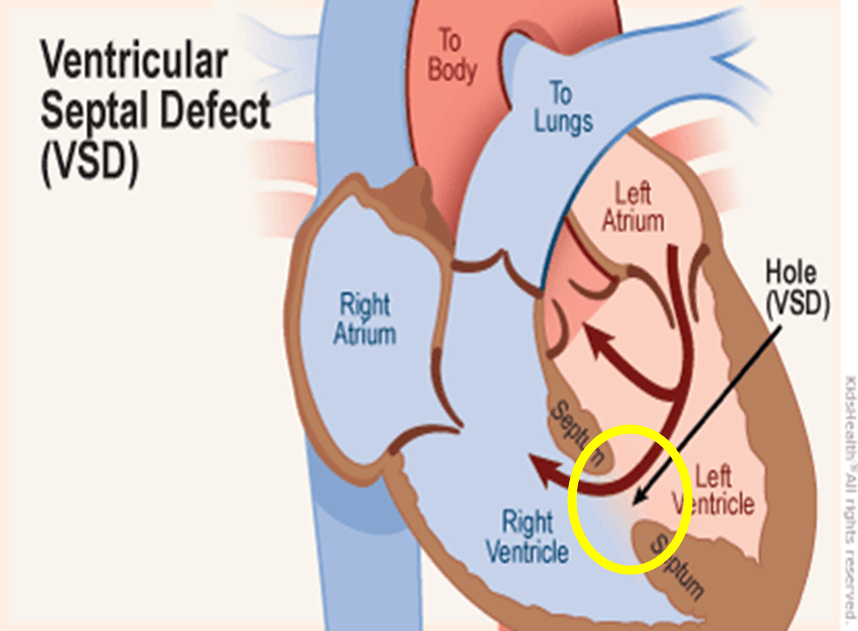
This defect is due to a hole in the septum between the left and right ventricle, blood flow increases from the left to the right side, which increases pulmonary blood flow.
Ventricular Septal Defect- a large VSD in an infant commonly results in heart failure symptoms.
500
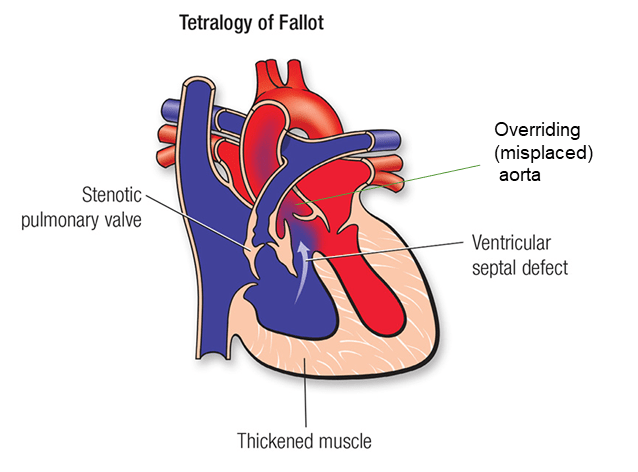
Which set of defects makes up Tetralogy of Fallot?
A. ASD, VSD, PDA, pulmonary stenosis
B. VSD, pulmonary stenosis, overriding aorta, right ventricular hypertrophy
C. Transposed vessels, VSD, PDA
D. Tricuspid atresia and ASD
Answer: B
Rationale:
TOF consists of four defects: VSD, pulmonary stenosis, overriding aorta, and right ventricular hypertrophy.
600
What term describes a harsh, vibrating sound heard over the upper airway during inspiration, often indicating obstruction?
Stridor
600
What acute respiratory condition in infants is commonly caused by RSV, and entails upper respiratory symptoms and lower respiratory infection of the bronchioles d/t inflammation?
Bronchiolitis
600
What intervention may be used for a child with pneumonia that is complaining of abdominal pain?
The pain of pneumonia may be referred to the abdomen in young children. Lying on the affected side may promote comfort by splinting the chest and reducing pleural rubbing. Analgesics are not indicated. Children should be placed in a semierect position or position of comfort.
600
What is a potential complication during cardiac catheterization due to catheter placement inside the heart?
A. Permanent heart block
B. Myocardial infarction
C. Cardiac rupture
D. Transient arrhythmias
Answer: D
Rationale:
Because the catheter enters the heart chambers, it may irritate myocardial tissue, causing arrhythmias. These are typically short-lived and resolve after catheter removal.
600
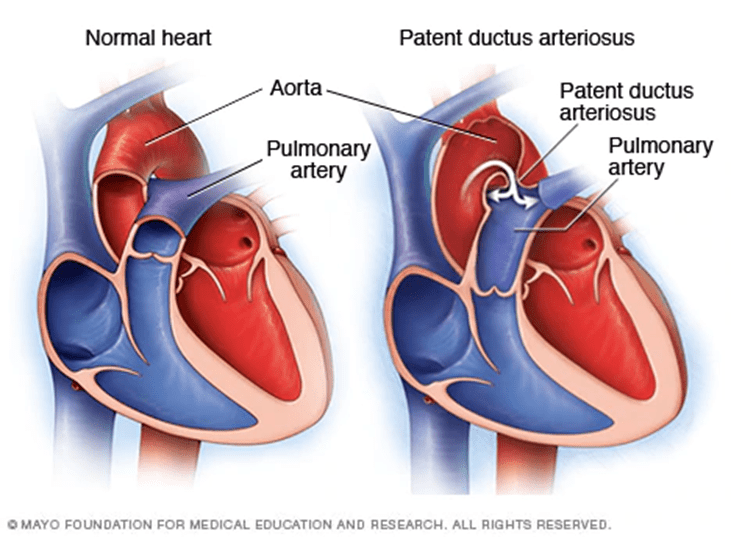
This defect is caused when the fetal artery that connects the aorta to the pulmonary artery does not close soon after birth. It increases pulmonary blood flow.
Patent Ductus Arteriousus (PDA)- Increased risk with premature babies. Causes hypoxia, a continuous machinery-like murmur and wide pulse pressures between systolic and diastolic pressures.
600
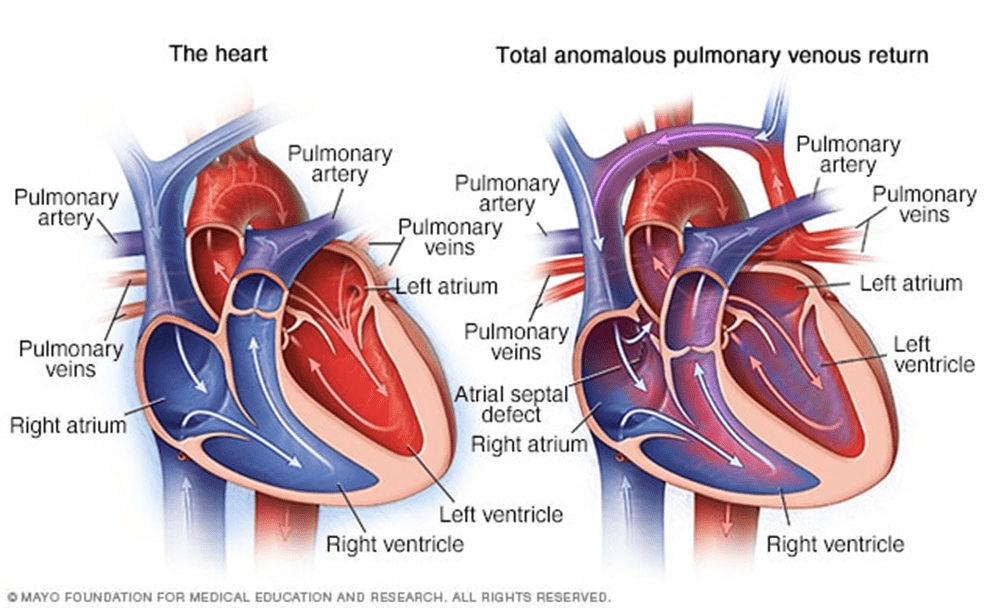
In this defect, pulmonary veins return oxygenated blood to the right atrium instead of the left atrium, causing mixing and cyanosis.
Total Anomalous Pulmonary Venous Return (TAPVR)